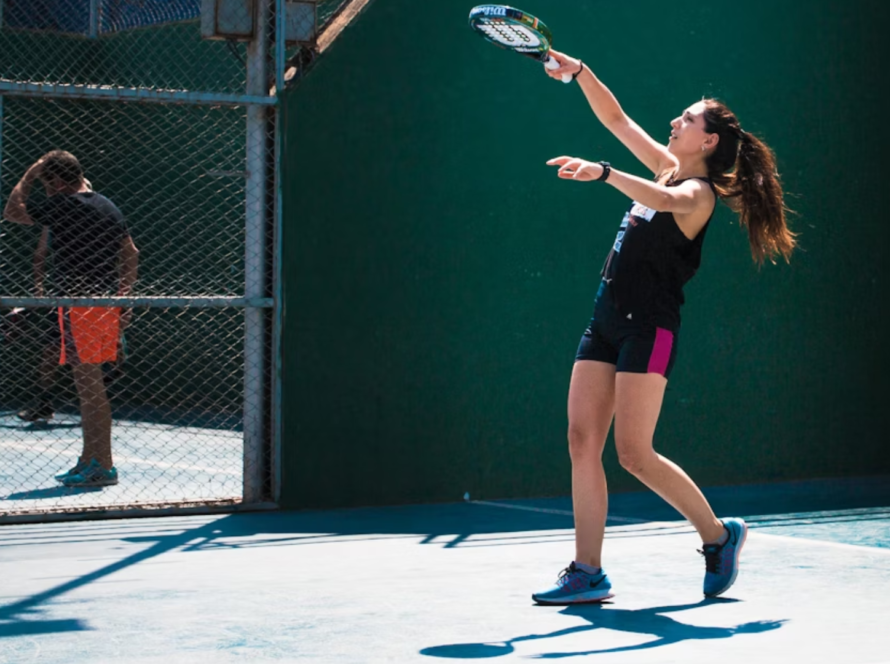
Whether you’re just getting hooked on pickleball or playing league nights like clockwork, your shoes are the one piece of gear that protects both performance and joints. The tough part? Most pairs don’t “die” overnight—they quietly lose grip, support, and cushioning until you’re sliding late on dinks or nursing a nagging knee.
This guide shows you exactly when to replace pickleball shoes, how long a pair really lasts, quick at-home tests to gauge wear, and smart ways to make your next pair go farther. If you can check two or more red flags below, it’s time to upgrade.

Quick answer: How long do pickleball shoes last?
Use these hour ranges as a realistic starting point (court hours, not calendar months):
- Recreational (1–2x/week, mostly indoor): 60–90 hours
- Competitive amateur (3–4x/week, mixed surfaces): 40–60 hours
- Tournament/5.0 level (5–6x/week, outdoor): 25–40 hours
Helpful rules of thumb:
- 1 hour of pickleball ≈ 3–4 “court miles.” If you know the running-shoe rule (300–500 miles), that translates to roughly 75–125 court hours for pickleball—right in line with lab findings.
- If you play 3+ times per week, consider models with a 6‑month outsole warranty (e.g., Asics Resolution 9, Babolat Jet Mach III, K‑Swiss Ultrashot/Express). If you wear through the outsole rubber to the midsole within six months, you can often claim a free replacement.
- Outdoor acrylic courts chew rubber 2x faster than indoor wood or sport tile. Adjust expectations accordingly.
Set a phone reminder to do a 60‑second shoe check after every 40–50 hours on court.
The complete checklist: key signs you need new pickleball shoes
Outsole & tread (traction and braking)
Your outsole is your “brakes.” When it goes, late stops and slips follow.
- Shiny-spot cue: High‑wear zones that reflect light like polished plastic signal a ~30% drop in grip.
- Edge rounding: If the outsole’s sharp 90° edge is now beveled, lateral braking distance increases—think 4–6 inches later on a plant.
- Pattern matters: Herringbone ridges that’ve flattened can’t channel dust; omni-court dots that pancake act like tiny marbles on acrylic courts.
- Mid‑pivot wear: Backhand dinker? Inspect the medial ball of the foot (big-toe area), not just the toe tip.
- The tilt test: Set shoes on a table and look from behind. If a shoe leans inward or outward, one side of the outsole is gone—your mechanics are being pulled off-center.
Do a short split-step and first step. If you feel a half-inch slide before traction “bites,” your outsole is past prime.
Midsole & shank (cushioning, rebound, and stability)
This is the hidden structure that keeps your joints happy and your foot stable under torque.
- Thumb press: Press a thumb into the midsole foam; slow or minimal rebound = dead foam.
- Crease audit: Deep horizontal folds along the midsole wall mean significant rebound loss.
- Shank snap: Flex the shoe. A healthy TPU shank gives a crisp, springy “snap.” Mushy or silent flex suggests fatigued torsional support.
- Stack-height drop: After 50 hours, many shoes lose 2–3 mm of heel stack. That subtle drop changes knee angle and can aggravate joints if you keep pushing.
The “taco test.” If the shoe folds too easily at the midfoot, support has faded.
Upper & lacing (lockdown and containment)
Loose feet slide inside the shoe—bad news for blisters and quick direction changes.
- Eyelet ovalization: Elongated metal or fabric eyelets let laces slip. If your laces loosen mid-point, your lockdown is gone.
- Overlay peel: Heat and sweat can lift fused overlays. Once the edges curl, grit gets in and small tears become big ones fast.
- Mesh transparency: Hold the forefoot to light. If you can see your sock color clearly, the mesh is blown and lateral containment is compromised.
At-home test: Lace up, then tap the heel and forefoot on the floor. If your foot shifts with each tap, you’ve lost containment.
Interior & insole (comfort and friction)
Inside wear is easy to ignore until it causes hot spots or blisters.
- Insole “footprint”: Pull out the insole. If your foot is embossed like memory foam, the PU layer is packed out and no longer supporting you.
- Heel pocket blow-out: Torn heel collar lining or exposed foam equals friction—and blisters.
- Odor boomerang: If smells return half a day after washing/drying, the interior fabric is breaking down and will split soon.
At-home fix (temporary): Athletic tape on a frayed heel collar can buy a session or two—but plan a replacement.
Fit & body-feedback cues (your body is the messenger)
Often the earliest signs are on you, not the shoe.
- New calluses in odd spots = changing pressure points from worn cushioning or tilt.
- Micro-slip test: During a quick split-step, do you slide before traction engages? Time to retire them.
- Balance drill: Stand on one foot, eyes closed, for 10 seconds. More wobble than in new shoes suggests degraded platform stability.
- New aches post-play: Shins, knees, or hips complaining lately? Don’t just blame the court—check your midsoles and outsole geometry.
If two or more of the above boxes get a yes, replace your pickleball shoes.
Special circumstances that shorten (or extend) shoe life
Surface: outdoor vs. indoor
- Outdoor acrylic/asphalt contains abrasive grit that doubles rubber wear versus wood or sport tile.
- UV + heat soften rubber compounds. Leaving shoes in a 120°F car for an afternoon can reduce hardness and grip measurably. Don’t bake your shoes.
Climate & sweat
- High humidity and salty sweat speed up adhesive fatigue and overlay delamination. Rotate pairs and fully dry between sessions.
Foot type & bodyweight
- Over‑pronators and players over 200 lb often compress medial midsoles faster. Expect earlier “tilt test” failures; plan for sturdier models and more frequent checks.
Storage
- After play, stuff with cedar shoe trees or crumpled paper to re‑expand the upper as it dries. Tossing collapsed shoes in a bag sets permanent creases and shortens life.
Pro-level hacks to make your pickleball shoes last longer
- Rotate two pairs: Foam recovers more rebound after a full day off. Alternating pairs can meaningfully extend usable life and keep feel more consistent day to day.
- Match sole to surface: Use clay-style or dust-friendly herringbone on powdery outdoor acrylics; use non-marking gum rubber indoors.
- DIY toe-drag shield: Mix a small amount of car bumper epoxy with rubber dust and apply to your drag zone. It outlasts many off-the-shelf toe guards.
- Midsole “wake-up”: A 5‑minute tumble (no heat) with two tennis balls can fluff the strobel and provide a short-lived rebound bump before an important match.
- Clean smart: Brush out dust after every session; a thin film of grit works like sandpaper on rubber.
- Never in a hot car: Heat accelerates rubber and glue breakdown. Air-dry at room temp.
- Dry thoroughly: Remove insoles, open laces, and let shoes dry completely between plays to prevent fabric rot and stink.
Choosing your next pair: a quick buyer’s guide
Match the surface
- Outdoor acrylic/asphalt: Look for durable rubber compounds (often branded as AHAR+, Adiwear, XDR).
- Indoor wood/sport tile: Non‑marking gum rubber with siped herringbone for clean, quiet grip.
Weight vs. support
- Sub‑12 oz shoes feel quick but typically last ~20% fewer hours.
- The 13–14 oz “sweet spot” balances durability, support, and speed for most rec players.
Midsole tech
- EVA blends deliver plushness; TPU or Pebax plates add propulsion and stability but can stiffen the ride. If you’re newer or prefer comfort, choose balanced cushioning without overly rigid plates.
Toe-drag reinforcement
- Chronic toe-dragger? Look for reinforced toe caps and wraparound rands (often named PGuard, R‑DYWRAP, Durawrap).
Warranty value
- If you play three or more times per week, a 6‑month outsole guarantee can dramatically lower annual shoe costs. Keep purchase proof and photograph wear as you approach the deadline.
Pro tip: Try on late in the day (feet swell). Bring your game socks and orthotics if you use them. You want secure heel lock, midfoot wrap, and a forefoot that’s snug side‑to‑side but with a thumb’s width in front of your longest toe.
Red‑flag poster checklist (printable)
- Outsole pattern is flat or shiny in high‑wear zones
- Outsole edges rounded; braking feels late on hard stops
- Midsole doesn’t rebound to a firm thumb press
- Shoe folds too easily at midfoot (“taco test”)
- Eyelets stretched; laces won’t stay tight
- Upper mesh shows daylight or a toe‑drag hole is forming
- New blisters at heel or lace bite across the tongue
- Slip or half‑inch slide on split‑step before grip engages
- New aches in shins, knees, or hips after play
If two or more boxes are ticked → time to replace.
FAQs
Q1: How many hours do pickleball shoes typically last?
A: Most players fall between 40–90 court hours depending on frequency, surface, bodyweight, and play style. Outdoor grinders and toe‑draggers will be at the lower end; indoor rec players get more.
Q2: Can I use running shoes for pickleball?
A: Not recommended. Running shoes are built for forward motion, not lateral braking and quick pivots. Court shoes have flatter, wider platforms, more torsional support, and grippier patterns for side‑to‑side play.
Q3: How do I break in new pickleball shoes?
A: Keep it simple: wear them around the house for an hour, then do a light drill session (dinks, split‑steps, shuffles). Most modern uppers break in within 1–3 outings. If hotspots persist after three sessions, the fit may be off.
Q4: Will premium insoles extend shoe life?
A: Quality insoles can improve comfort and support, especially if the stock insole is packed out. They won’t restore dead midsoles or bald outsoles, but they can bridge you to your next pair without aggravating feet and knees.
Q5: Are 6‑month outsole warranties worth it?
A: If you play 3+ times a week or wear through outsoles quickly, yes. They can cut your annual shoe cost roughly in half. Just note the fine print: you typically must wear through to the midsole within six months.
conclusion
Your pickleball shoes quietly protect both performance and orthopedic health. Make a habit of quick visual checks and body‑feedback tests so you don’t slide into injury territory without noticing. For most dedicated players, budgeting for 2–3 pairs per year is far cheaper than a single physical‑therapy bill.
Do a 60‑second shoe audit today. If two or more red flags pop up, upgrade now—and use the rotation and care tips above to squeeze more wins (and hours) out of your next pair.