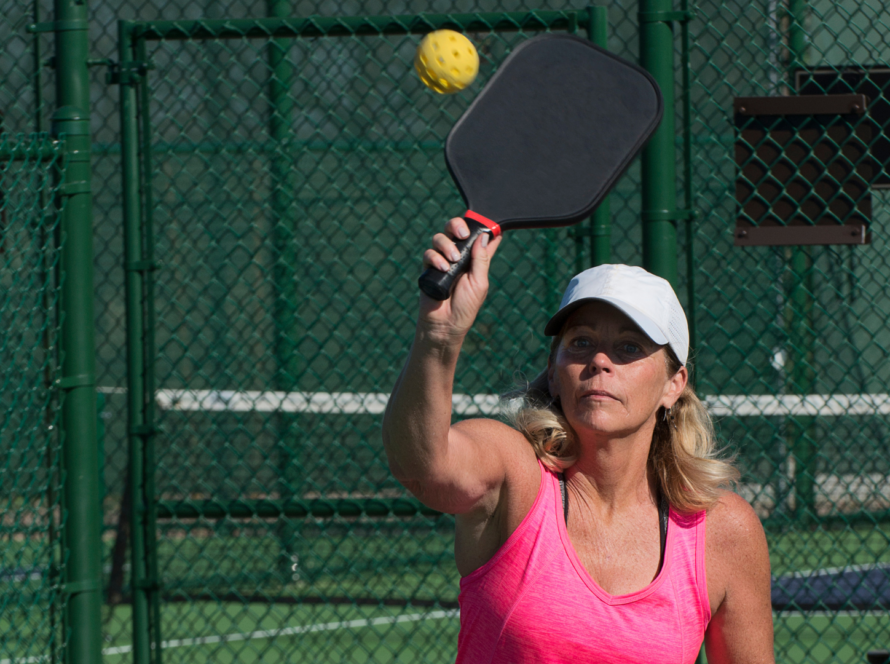
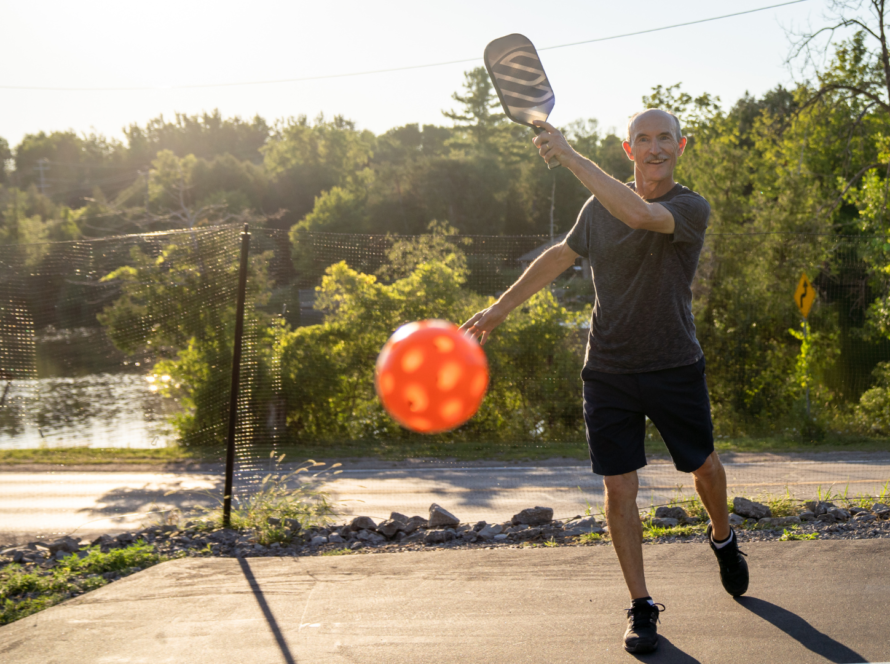
If you learned pickleball in doubles and think singles is just “more running,” think again. Yes, the court is the same, but the tactics, serving patterns, and shot choices can feel like a different sport. Flip that around and many singles-first players get surprised by doubles’ soft game, stacking, and lightning-fast hand battles at the kitchen.
This guide distills the essential rule differences, the biggest on-court strategy shifts, and the practical drills and gear tweaks that help beginners and intermediates jump confidently between singles and doubles. Wherever you are on your pickleball journey, use this as your go-to reference to play smarter and win more.

The core rules that don’t change
Good news: most of the rulebook applies equally to both formats.
- Court size is identical: 20’ x 44’ including lines. There’s no “skinny singles” court like badminton. (USA Pickleball Rulebook §2.B.1–2.B.3)
- Net height is 36″ at the sidelines and 34″ at the center. (§2.C.2)
- The non-volley zone (the “kitchen”) is the same, as are ball/paddle specifications, line-call and fault definitions.
- Let serves were removed in 2021 and remain removed in both singles and doubles.
Translation: the court and equipment don’t change. What changes is how you use them.
The big rule differences you’ll feel on day one
Team structure and court coverage
- Singles: It’s 1 v 1, and you’re responsible for 880 square feet of court.
- Doubles: It’s 2 v 2. Partners typically hold a forehand-in-the-middle alignment.
Singles rewards speed, depth, and passing shots; doubles rewards teamwork, soft control, and coordinated positioning.
Serving and rotation in singles vs doubles
Singles
- You always serve from the even/right service court when your score is even; from the odd/left when your score is odd.
- If you lose a rally while serving, it’s an immediate side-out to your opponent. No “second server.” (Rulebook §4.B.4)
Doubles
- To start the game, only the player on the right (even) court serves (the “first-server exception”). After that, every time your team regains the serve, you get two serves—one for each partner. (Rulebook §4.B.5)
- Partners may “stack” to keep preferred forehands in the middle. More on that below.
In both formats, only the serving side can score. “Rally scoring” has been tested in some pro events but is not in the USA Pickleball Rulebook.
How to call the score (and avoid confusion)
- Singles uses a 2-number call: server’s score, then receiver’s score (e.g., 9–6).
- Doubles uses a 3-number call: server’s score, receiver’s score, then server number (1 or 2). Example: “7–9–2.”
- In refereed doubles, the referee will show one finger or two to indicate which server is live.
Beginner-friendly checkpoints:
- In singles, look at your score. Even = serve from right. Odd = left.
- In doubles, confirm who served last on your team so you know whether you’re server 1 or 2.
- If you’re on the receiving team and you’re confused, ask for a score confirmation before the serve.
Strategy shifts: how to play winning singles vs doubles
Third-shot philosophy
- Singles: The goal is depth and pace—pin your opponent behind the baseline and set up the next ball.
- Doubles: Most teams aim for a third-shot drop to earn the kitchen. The tempo often goes soft-slow-fast rather than continuous power.
Actionable tip:
- Singles: Groove a heavy topspin drive off both wings. Aim deep through the middle hip to limit your opponent’s angles.
- Doubles: Practice touch. Your third-shot drop doesn’t need to be fancy—just soft and unattackable, landing near the opponent’s kitchen line.
Court positioning patterns and movement
Singles
- Start in a “T” stance just behind the baseline (centered on the centerline).
- After any wide ball, recover toward the centerline quickly.
- Time your split-step right before your opponent strikes; average reaction windows are about 0.38 seconds at higher levels.
Doubles
- Move as a pair in “connected triangles.” Ideal spacing is roughly 6–8 feet side-to-side and 2–3 feet front-to-back.
- Stacking: Commonly used when a righty/lefty pair wants both forehands in the middle, or when one partner’s backhand is much stronger on a specific side. Teams may stack full-time or selectively (often on serve when the score is odd).
Shot selection and the soft game
Singles
- Emphasize serve and return depth. A deep, heavy serve and a deep, high-margin return are worth far more than fancy dinks.
Doubles
- Learn to recognize and use doubles-only weapons like poaches and Ernes when you see soft, floaty balls near the sideline.
Pace of play (and why it matters)
- Singles often has longer breaks between points—servers retrieve deep balls themselves—so use that time to reset your breathing and plan the serve + first ball.
- Doubles flows continuously; focus on quick resets, communication, and shot tolerance (winning long dink exchanges with patience and shape).
Gear and physical considerations
Singles
- You’ll need more endurance and explosive footwork. Many singles-focused players prefer slightly heavier paddles (around 8.3–8.6 oz) for serve and drive power.
- Consider a shoe with more lateral stability and a bit of cushion for repeated baseline sprints.
Doubles
- Hand speed rules. Lighter paddles (about 7.6–8.0 oz) or quick-feeling thermoformed models can help in kitchen firefights and counter-attacks.
- Prioritize a grip that lets you change from continental to eastern forehand quickly for fast exchanges.
You don’t need a different paddle for each format—but if you specialize, a small weight or balance change can make a big difference in feel and results.
Advanced but useful things to know
- Separate ratings: Many systems track singles and doubles ratings separately (DUPR/UTPR) because the skill sets diverge.
- Timeout usage: Singles players tend to use timeouts later (score ≤ 8) for recovery; doubles teams take them earlier to break momentum.
- Foot-fault trends: About 80% of kitchen foot faults at the amateur level occur in doubles, simply because two bodies crowd the line more often.
- Tournament formats:
- Amateur brackets: typically best-of-3 games to 11, win by 2.
- Pro singles: often one game to 15, win by 2, on the winners’ side; two-of-three to 11 in medal rounds.
Common mistakes and quick-fix drills
Singles: Fix these first
- Mistake: Running through the shot and getting pulled off the court.
- Drill: Hit–Recover–Shadow. Your practice partner feeds you wide. You hit, then sprint back to the centerline and split-step as your partner prepares the next feed.
- Mistake: Shallow returns that let your opponent attack.
- Drill: Serve–Return Ladder. Place tape just beyond the opponent’s kitchen line. Aim every return beyond that line. Progressively narrow your targets while staying deep.
Doubles: Team upgrades
- Mistake: Drifting apart and leaving the middle open.
- Drill: “Rope-around-the-waist.” Use a light elastic band between partners to feel ideal spacing as you move together to the kitchen and side-to-side.
- Mistake: Panic-driving the third shot under pressure.
- Drill: 50 Consecutive Drops. Cooperate with partners to hit 50 uninterrupted third-shot drops before anyone is allowed to speed up. Build touch first, then layer in attacks.
Quick scoring and rotation examples
Singles example:
- Your score is 6 (even). You serve from the right. You win the point → 7 (odd). Next serve is from the left.
Doubles example:
- Score call “7–9–2” means your team has 7, opponents have 9, and the second server is serving. If you lose the rally, it’s a side-out to your opponents.
FAQ
Q: Is the singles sideline different?
A: No. Singles and doubles use the exact same sidelines in pickleball. That’s different from tennis and badminton.
Q: Why does the score sometimes have three numbers and other times two?
A: Two numbers = singles (or the very first serve of the match in doubles). Three numbers = doubles, where the third number identifies server 1 or server 2.
Q: Can I stack in singles?
A: No. Stacking only applies to doubles teams trying to place specific partners on specific sides for strategic reasons.
Q: Do I need a different paddle for singles vs doubles?
A: Not required. Singles players often prefer a bit more weight and power for serves and drives; doubles specialists may prefer quicker, lighter setups for hand battles.
Q: What’s more important to practice—dinks or drives?
A: For singles, prioritize serve/return depth and penetrating drives. For doubles, prioritize a reliable third-shot drop and consistent dinks—then learn to opportunistically speed up.
Conclusion: Pick your plan and own your format
The court doesn’t change—but your game should. In singles, think depth, power, and recovery to center. In doubles, earn the kitchen together, build soft control, and attack at the right time. Start by cleaning up your scoring and rotation, then add the drills above to build the skills that matter most.