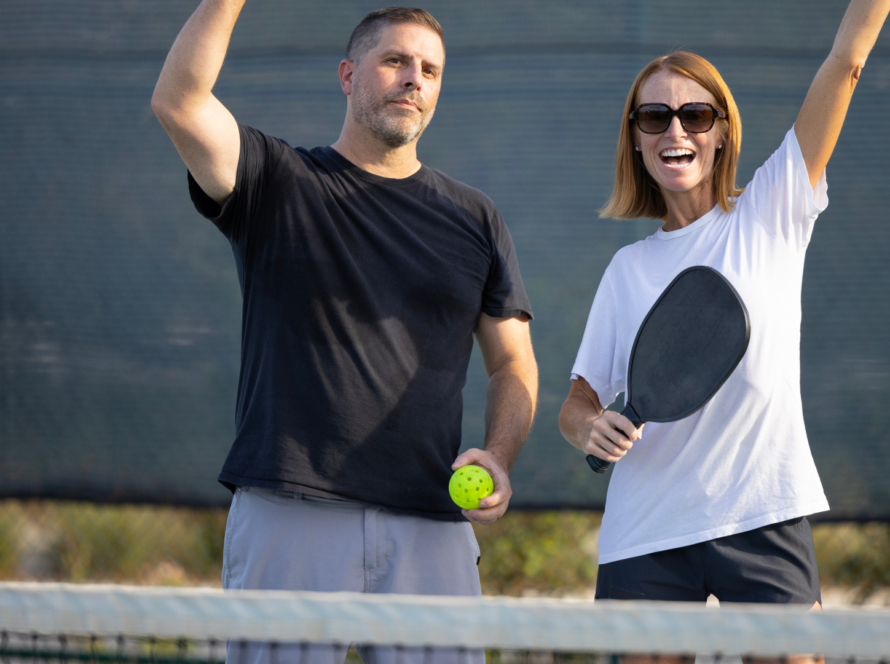
Pickleball looks friendly, but the movement demands are not. You’re shuffling, split-stepping, and changing direction hundreds of times. That’s a totally different world than steady, straight-line running.
So, can you wear running shoes for pickleball? You can in a pinch—but it’s not a good idea. The wrong shoe can increase your risk of ankle sprains, plantar fasciitis, knee stress, and slips, while also wearing out far faster on acrylic courts. Below, we’ll break down the biomechanical differences, the safety implications, and how to choose the right footwear for indoor and outdoor play.

The quick answer
- Short version: Running shoes are built for forward motion. Pickleball shoes (and tennis shoes) are built for multi-directional movement, side support, and court traction.
- What that means for you: Better stability, fewer slips, and fewer injuries when you wear court-specific shoes.
- Bottom line: If you play at least occasionally, a basic pair of court shoes is a smart investment.
Why running shoes aren’t built for pickleball
geometry and stability
- Running shoes: Higher heel-to-toe drop (often 8–12 mm) and soft, bouncy foams to cushion vertical impact.
- Court shoes: Lower drop (around 4–8 mm), denser midsoles, and torsional shanks/wraps to keep the midfoot from twisting.
On court, you need a lower, more stable platform—not a tall, soft one that collapses under side load.
containment
- Running shoes: Flexible mesh with minimal lateral reinforcement (great for swelling during long runs).
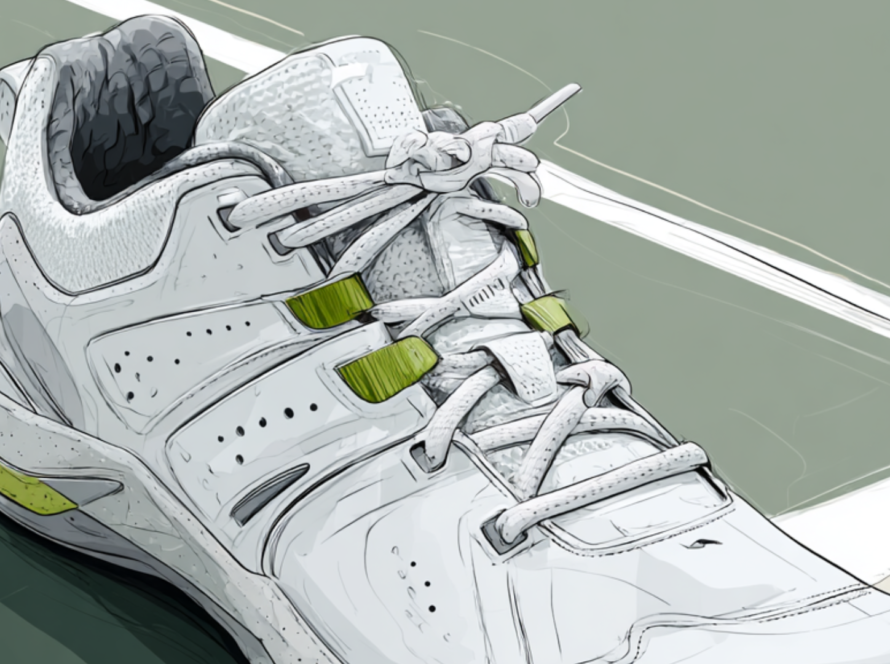
- Pickleball/tennis shoes: Rigid side panels, medial drag guards, and outriggers that keep your foot centered during lunges and split-steps.
That extra sidewall and outrigger are what prevent your foot from “spilling” over the edge of the midsole when you plant.
Weight that works for you
- Typical men’s running trainer: 9–10 oz (US 9).
- Typical court shoe: 11–14 oz.
That extra weight is the price of real lateral support and abrasion-resistant materials that survive toe drags and slides.
Safety first: what’s actually at risk
- Flared running heels can catch on a plant and act as a lever that rolls your ankle.
- Softer, high-stack midsoles can collapse asymmetrically on side loads, overstretching the plantar fascia and stressing the knee/hip with extra rotation.
If you’re a beginner or returning athlete, the safest path is a shoe purpose-built for multi-directional support.
Traction and outsole: grip where you need it
The court surface matters:
- Indoor pickleball (wood/Taraflex): Non-marking gum rubber with herringbone/hex patterns that channel dust works best.
- Outdoor pickleball (acrylic/hard court): Harder carbon rubber with herringbone or nub-herringbone hybrids resists abrasion in toe and lateral forefoot.
Durability matters too. Expect pickleball/tennis outsoles to last roughly 60–80 outdoor hours. Running shoes can bald out in 15–25 hours on acrylic.
Performance you can feel
- Faster first step: A kinesiology lab found players were about 0.12 seconds quicker to a lateral “go” cue in court shoes than in neutral running shoes—enough to win or lose kitchen-line battles.
What about “super shoes” with 80%+ energy return? Those numbers are measured in vertical compression. Pickleball loads are mostly shear. On a sideways push, bouncy foam wastes energy and can feel sluggish.
The sneaky cost of “making do”
- One $140 court shoe lasting 70–80 hours: ~$1.75/hour.
- One $160 carbon-plated running shoe chewed up in ~20 court hours: ~$8/hour—plus you’ve shortened its life for running.
Many premium court shoes carry 6-month outsole warranties. Running shoe warranties typically don’t cover court abrasion.
Not ready to buy “pickleball shoes”? Better substitutes
If you absolutely can’t get a pickleball or tennis shoe today, these are your next-best options:
- Cross-trainers: Better than running shoes for side support, but usually lack toe-drag protection and may have rounded edges.
- Volleyball shoes: Excellent choice indoors; don’t take them outdoors unless you accept faster wear.
- Basketball shoes: Good lateral stability, but heavier with taller stacks that can feel slow at the kitchen line.
Whenever possible, pick a tennis or pickleball shoe for outdoor hard courts—they share the same DNA.
How to choose the right court shoe (fit tips)
- Size: Often 1/2 size shorter than your running shoe to limit forward slide on hard stops.
- Width/lockdown: Snug midfoot without lace bite. Brands with 2E/4E options include New Balance, K-Swiss, and Fila.
- Heel counter: Squeeze it—look for minimal deformation.
- Flex: Bend at the ball of the foot, not the mid-arch.
- Breathability: Perforated synthetics or monomesh + TPU yarn uppers help on hot courts.
- Insoles/orthotics: Look for removable sock-liners and enough depth if you use orthotics.
Care and when to replace
- Keep outsoles clean: Mild soap and water remove dust that kills traction.
- Replace when:
- Tread depth is under ~1 mm
- The midsole feels “bottomed out”
- Upper creases extend to the midfoot
- For most rec players (3 hours/week), expect 4–6 months per pair.
2025 models to put on your shortlist
- Indoor:
- ASICS Gel-Rocket 11
- Mizuno Wave Enforce Tour 2
- Outdoor:
- Hybrid/lightweight:
- Budget (under $85):
- HEAD Grid 3.5
Tip: If it’s labeled “tennis” rather than “pickleball,” that’s usually fine for outdoor hard courts—same purpose-built platform and outsole.
FAQs
Q1: I only play once a week—are running shoes still a bad idea?
A: Yes. Injury risk is linked to the type of movement, not just the volume. Even one lateral cut in the wrong shoe can cause trouble. A basic, affordable court shoe offers far better protection and traction.
Q2: Can I just add an ankle brace to my running shoes?
A: Braces help, but they don’t fix outsole grip, heel flare, toe-drag durability, or midfoot torsion. Think of a brace as supplemental—not a substitute for proper footwear.
Q3: Are minimalist or barefoot shoes good for pickleball?
A: Not for most players. They lack cushioning and sidewall height; force-plate studies show higher peak plantar loads. Unless you’re an advanced, conditioned athlete on cushioned indoor floors, skip them.
Q4: Are tennis shoes okay for pickleball?
A: Absolutely—especially outdoors. Tennis and pickleball shoes share the same multi-directional support, low-to-the-ground feel, and hard-court outsoles.
conclusion
Running shoes excel at straight-line miles. Pickleball demands 360-degree movement, firm lateral support, court-tuned traction, and durable outsoles. If you want fewer slips, fewer sprains, and more confident footwork, invest in court-specific footwear—either pickleball or tennis shoes.
Ready to upgrade your footing? Try a court shoe built for your surface (indoor or outdoor) and feel the difference in your first step—and your next rally.