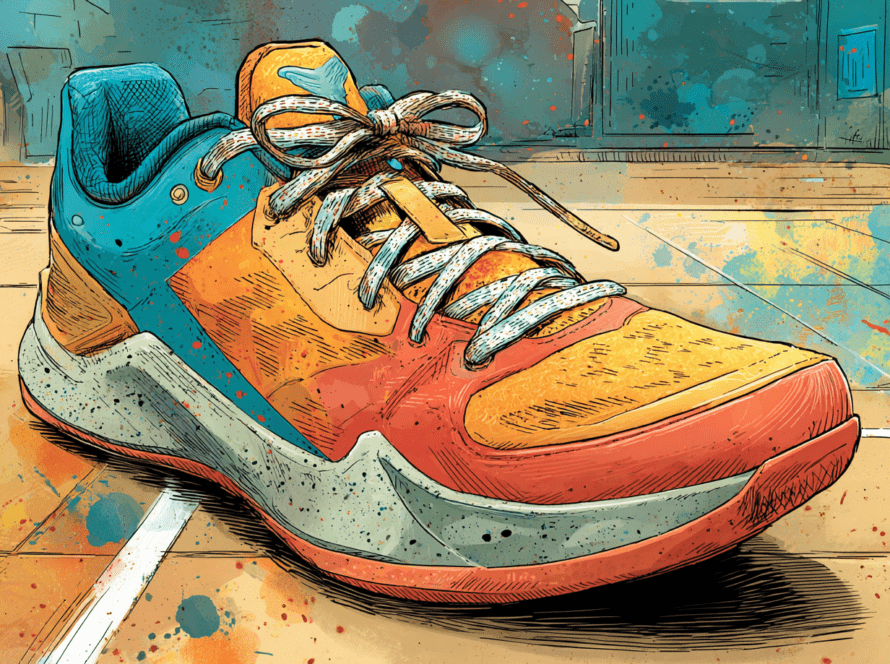
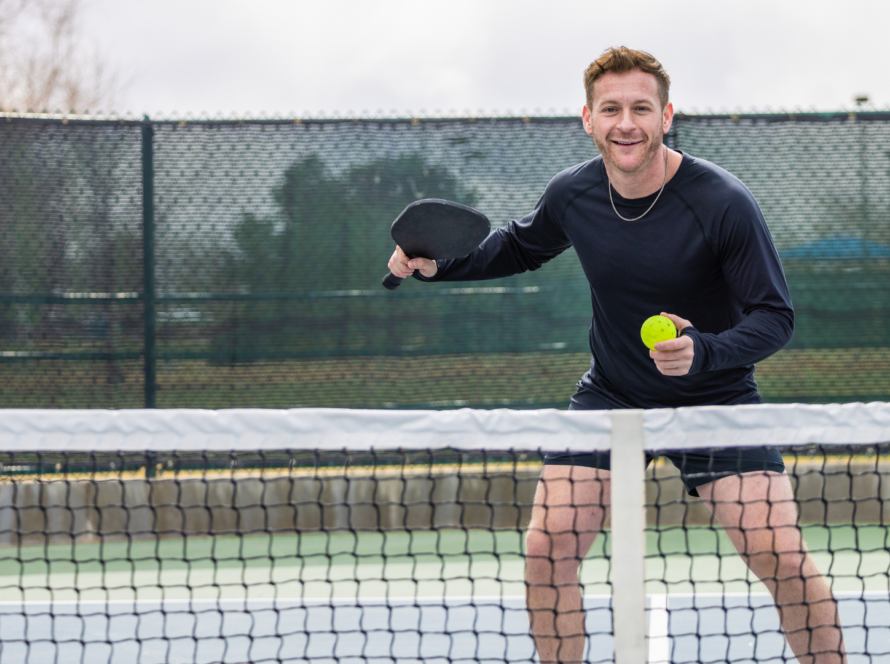
Pickleball is easy to pick up, but hard on your shoes. If you feel like you’re burning through pairs in a few months—or even a few weeks—you’re not imagining it. The sport’s side-to-side sprints, toe-drags, and abrupt stops put unique stress on footwear that most running or gym shoes simply aren’t built to handle.
This guide explains why pickleball shoes wear out so quickly, how to recognize when yours are past their prime, and the simple habits that can double their life. You’ll also find smart buying tips so your next pair lasts longer without sacrificing comfort or speed.
Why Pickleball Shoes Wear Out So Fast
1) Movement and play style
Pickleball’s movements are a durability gauntlet:
- Frequent split-steps, lateral shuffles, and hard decelerations create shearing forces that chew up the outsole and sidewalls.
- Toe-dragging on dinks and low volleys grinds away rubber at the big-toe (medial) edge.
- Singles play can mean 25–40% more total foot strikes per rally than doubles, accelerating wear.
- Heavier athletes (around 200 lb/90 kg and up) compress midsoles up to 35% more per landing than lighter players, flattening foam faster.
Translation: if you play singles, drag your toe, or are a powerful mover, your shoes will age in dog years.
2) Court surface
Where you play matters as much as how you play:
- Outdoor acrylic over asphalt has 4–5x the coefficient of friction of a maple gym floor. More grip = more abrasion.
- Painted silica-sand coatings act like sandpaper on herringbone treads.
- Indoor polypropylene tiles are less abrasive overall, but the seams can “cheese-grater” soft rubber when you skid.
If most of your hours are on outdoor courts, expect faster tread balding.
3) Materials and construction
Not all shoe tech wears the same:
- Outsoles
- Soft blown rubber feels grippy and light but can abrade up to 3x faster than high-density carbon rubber compounds (think Asics AHAR+, Babolat Michelin, Adidas Adiwear).
- Midsoles
- Traditional EVA loses roughly 25% of its bounce after 30–40 hours of hard play.
- TPU-based foams and pellets (e.g., Adidas Boost, New Balance FuelCell) keep energy return longer but can add weight.
- Uppers
- Lightweight engineered mesh often tears at flex points after repeated bending.
- Welded TPU overlays (“PGuard,” “Drag-guard,” “Kurim”) slow fraying, especially around the toe and medial forefoot—but they aren’t indestructible.
If you buy the lightest “speed” model, you’re probably trading away some lifespan.
4) Frequency and intensity
Using “hours on court” is a clearer durability gauge than “months owned.” As a rough guideline:
- Recreational indoor only: 50–60 hours
- Recreational outdoor: 60–80 hours
- League/competitive: 40–60 hours
- Tournament/pro: 25–40 hours
If you play 4 hours a week outdoors, that’s a new pair roughly every 3–5 months.
5) Care and usage habits
Little habits add up:
- Heat is a shoe killer. A 120°F car trunk can weaken EVA glue bonds in under 48 hours.
- Moisture plus bacteria can trigger hydrolysis in polyurethane components, causing midsole walls to crumble.
- Wearing your court shoes from the parking lot to the baseline grinds precious tread on rough asphalt.
How to Know When Your Pickleball Shoes Are Done
You don’t need a microscope—just a few simple checks:
- The “banana sole” test: Put the shoe on a flat surface. If it rocks side-to-side, your lateral edges have worn away.
- The midsole wrinkle test: Press your thumb into the midsole. If deep wrinkles remain after 10 seconds, the foam is “dead.”
- Persistent aches: Foot, shin, or low-back soreness that disappears when you switch to a newer pair is a red flag.
- Sounds and feel: Cracking or an audible “squish” in the heel can indicate a broken internal heel counter or strobel board.
- Bald spots or peeling at the toe: Especially on the big-toe side—classic toe-drag wear.
If two or more of these show up, it’s time to retire or demote the pair to practice use.
What Happens When You Keep Playing on Dead Shoes
Worn-out shoes don’t just look rough—they change how you move:
- Up to 20% reduction in braking efficiency, increasing slide length and the risk of ankle inversion sprains.
- Higher vertical loading rates through the foot and leg, raising the odds of plantar fasciitis, Achilles irritation, and shin splints.
- Edge wear that alters knee alignment (valgus) by several degrees, a risk factor for patellar tendinopathy in multi-directional sports.
In short: old shoes can tax your joints and slow your stops. Fresh tread is cheaper than an injury.
Pro Tips to Extend the Life of Your Pickleball Shoes
You can’t prevent wear, but you can slow it down.
- Rotate pairs
- High-volume players keep three pairs in different states: “game-day,” “practice,” and “almost done.” Rotations let foam rebound between sessions and spread abrasion across pairs.
- Add toe-drag protection
- Tuff Toe, Shoe Goo, or pre-made rubber toe caps can add 15–20 hours to the toe bumper if you drag on dinks and volleys.
- Upgrade insoles
- After-market PU or TPU insoles share the load with the midsole, often halving perceived breakdown while improving support.
- Brush the outsole
- A stiff nylon brush and mild soap every 3–4 sessions removes embedded grit that acts like sandpaper.
- Keep them cool and dry
- Don’t bake them in the car. Air-dry after sweaty sessions—newspaper stuffing speeds drying and helps deter bacteria.
- Wear travel shoes
- Use slides or runners from the parking lot to the court; many lots are rougher than the court itself.
- Track your hours
- Apps like CourtMileage or FitBodo can ping you at 50-hour intervals so you can replace proactively, not reactively.
How to Choose a More Durable Pickleball Shoe
When longevity is the priority, look for:
- Outsole
- Full-length high-density rubber (not segmented “contact pods”)
- Deeper tread (3 mm+) and a reinforced toe-bumper lip
- Upper
- Welded PU or Kurim overlays at the toe and medial forefoot
- Double-stitched rand if there’s leather/synthetic leather
- Midsole
- Dual-density setups: a firmer carrier foam with softer heel/forefoot inserts for comfort that lasts
- Fit and support
- Minimal heel slop; a locked-down heel reduces torsional stress on the upper
- A last that matches your arch height to reduce over-rolling and premature edge wear
- Warranty
- Some brands (K-Swiss, Babolat, Diadora) offer 6-month outsole guarantees—great if you burn through rubber quickly
- Weight vs. lifespan
- Every ounce shaved often means less rubber or foam. Decide if you’d rather sprint lighter or replace less often.
Pro move: If you’re between sizes, choose the fit that allows a secure heel lock with performance lacing; slippage chews up the upper and midsole edges fast.
Quick Wear Factors and Easy Fixes
- Outdoor asphalt and acrylic courts
- Accelerates abrasion vs. wood floors
- Fix: Choose high-durometer rubber and rotate pairs
- Hot climates (90°F+)
- Softens outsole and weakens adhesives
- Fix: Store cool; avoid trunk heat; air-dry thoroughly
- Higher body weight or powerful movers
- More midsole compression and faster foam fatigue
- Fix: Stiffer midsoles, supportive insoles, dual-density designs
- Heavy perspiration
- Moisture can degrade PU components
- Fix: Two-pair rotation; remove insoles; stuff with newspaper
- Ultra-light shoe models
- Less material = shorter lifespan
- Fix: Accept the trade-off or choose a “durability” line
- Toe-dragging
- Rapid wear at the big-toe side and toe bumper
- Fix: Toe guards, technique coaching, reinforced toe overlays
FAQ: Pickleball Shoe Durability
Q1: Can I use tennis shoes for pickleball?
A1: Yes—if they’re all-court or hard-court models. Avoid clay-court fishbone-only outsoles; they can be slippery on acrylic pickleball courts.
Q2: Are running shoes okay for pickleball?
A2: Not recommended. Running shoes are designed for straight-line motion and usually lack the lateral outrigger and wrap you need to resist rollovers.
Q3: Does a higher price mean better durability?
A3: Only sometimes. Budget court shoes under $80 often use softer rubber and single-density EVA, but some premium “speed” models cut material to save weight. Check the outsole compound, tread depth, and midsole type—not just MSRP.
Q4: How do I know when to replace—by months or miles?
A4: Track hours instead. For most players, 40–80 hours is the window. If you play 3–4 hours per week, plan on new shoes every 3–6 months depending on surface and intensity.
Q5: Is there an app to track shoe usage?
A5: Yes. CourtMileage and FitBodo (iOS/Android) let you log court time and send reminders at set hour thresholds.
The Bottom Line
Pickleball’s quick changes of direction, toe-drags, and gritty outdoor surfaces can flatten foam, bald tread, and tear uppers far faster than straight-line sports. The fix isn’t magic—it’s management. Monitor tread and midsole bounce, rotate pairs, protect the toe, brush out grit, and store your shoes cool and dry. When in doubt, replace early rather than risk a preventable injury.
Call to action: Do a 60-second shoe audit today. If your pair fails the midsole wrinkle or banana-sole test, demote it to practice, start a rotation, and set a 50-hour reminder in your phone or app. Your joints—and your game—will thank you.