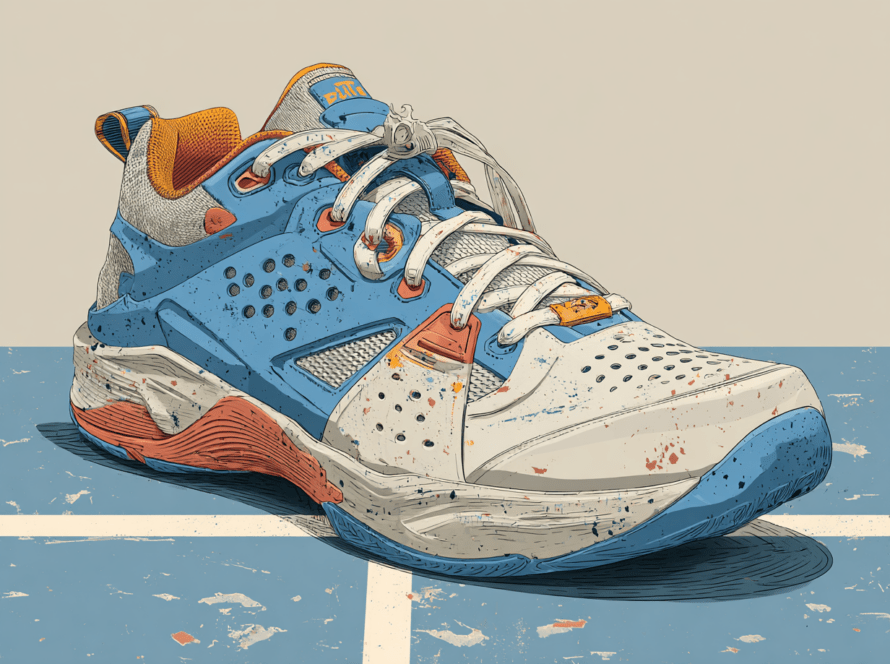
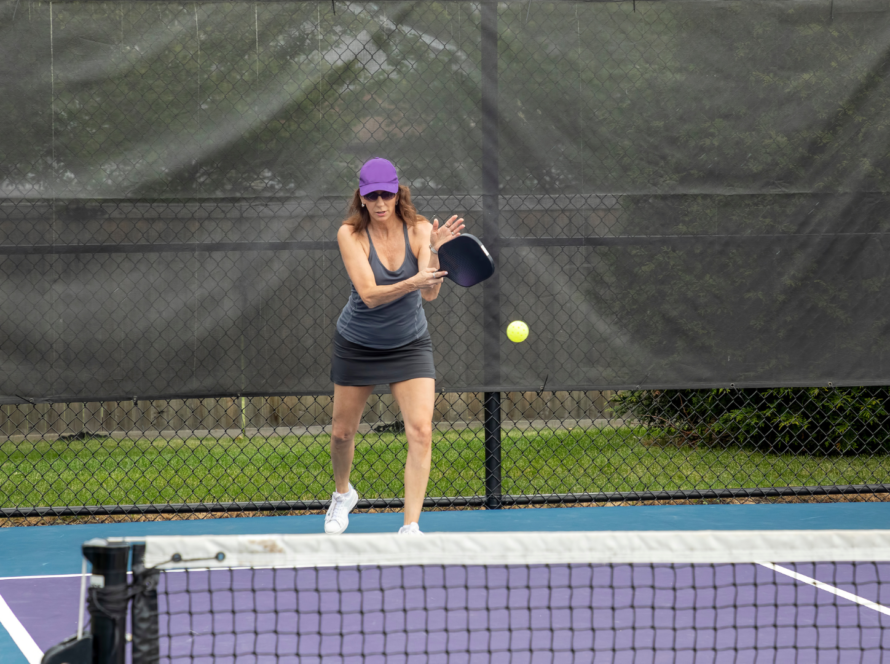
If you’re moving from casual games to consistent play, your footwear choice can make or break your pickleball experience. The right shoe helps you stop faster, change direction without slipping, and reduce the risk of ankle rolls and knee pain. The wrong one? It wears out fast on gritty courts and can leave you sore—or sidelined.
This guide breaks down pickleball-specific court shoes versus general cross-training shoes in plain English. You’ll get the key differences, lab-tested results, pro insights, a buying checklist, and care tips, plus answers to common questions about orthotics, wide feet, and indoor vs. outdoor play.
Use this as your one-stop resource to choose with confidence.

Pickleball Footwork Primer – Why Shoes Matter
- Peak ground-reaction forces during a kitchen-line lunge can exceed 3.1× your bodyweight—similar to tennis, but in shorter, sharper bursts.
- Recreational players wearing non-court shoes report 2.8× higher ankle inversion sprains.
Footwear isn’t a cosmetic choice in pickleball. Your shoes are a primary tool for stability, traction, and injury prevention on a 44×20-foot court.
Pickleball Shoes vs. Cross-Trainers: Side-by-Side Comparison
Here’s how pickleball court shoes stack up against general cross-training shoes where it counts:
Lateral torsional rigidity
- Pickleball: Medial/lateral TPU shank; approx. 20–35 N·m stiffness for side-to-side stability
Outsole compound
- Pickleball: High-carbon, abrasion-resistant rubber (DIN 75–80); non-marking indoor versions available
Traction pattern
- Pickleball: Full-length herringbone, modified chevron, or radial pivot disks for controlled slides and pivots
- Cross-trainer: Shallow met-flex grooves; typically no pivot point
Heel-to-toe drop
- Pickleball: 4–8 mm for a low, stable platform
- Cross-trainer: 8–12 mm, often influenced by running shoe design
Midsole foam
- Pickleball: Firmer EVA or PU with targeted gel/PEBA/air units for quick force transfer
- Cross-trainer: Softer single-density EVA for shock absorption—less stable laterally
Toe-drag protection
- Pickleball: Reinforced RPU/KPU wrap into the medial forefoot for dink-line scuffs
- Cross-trainer: Minimal protection; fabric often wears quickly
Weight (Men’s US 9)
- Pickleball: ~11.0–13.2 oz (310–375 g)
- Cross-trainer: ~12.5–14.8 oz (355–420 g)
Upper breathability
- Pickleball: Open mesh with welded overlays; vent ports near the arch
- Cross-trainer: Knit or closed mesh—can feel warm in long outdoor sessions
Heel counter
- Pickleball: Rigid internal/external 3D counter for heel lock
- Cross-trainer: Semi-rigid and more flexible
Orthotic volume
- Pickleball: Removable 4–5 mm insole with deeper heel cup—better for custom orthotics
- Cross-trainer: Often shallower, limiting orthotic fit
Cost (2025 typical)
- Pickleball: $85–$169 USD
- Cross-trainer: $60–$120 USD
Cross-trainers are jacks-of-all-trades for the gym. Pickleball shoes are purpose-built for lateral stability, traction, and durability on court surfaces.
Anatomy of Each Shoe Type
Upper
Pickleball shoes
- No-stretch engineered mesh with durable overlays (Durawrap-style)
- Low-profile collar padding to reduce ankle roll-over
- Extra eyelets to enable heel-lock lacing
Cross-trainers
- Knit or mesh sock-fit emphasizes comfort and flexibility
- Higher collar foam, but less structural side support
Midsole
Pickleball shoes
- Dual-density setups: firmer support under the arch for stability, softer crash pad at the heel for landings
- Midfoot shanks (e.g., ASICS Ultrashot 3, Adidas TORSION) to resist unwanted twisting
Cross-trainers
- Uniform EVA or “React/Floatride”-style foams
- Great for burpees and short runs; compress more during lateral moves
Outsole
Indoor pickleball
- Non-marking, translucent natural rubber
- Fingerprint/suction micro-patterns maximize grip on wood or PVC courts
Outdoor pickleball
- Tough, UV-stabilized carbon rubber similar to hard-court tennis
- Deeper flex grooves to handle dust and sweat
Cross-trainers
- Multi-surface pods that shine on rubberized gym floors
- Tread burns off quickly on textured asphalt and acrylic
Real-World Injury Data & Podiatric Insights
- Cleveland Clinic sports podiatrists recommend a shoe with a sub-7 mm drop and a lateral outrigger (flared sole edge) to cut inversion sprain risk about in half. Most pickleball shoes check both boxes; most cross-trainers don’t.
- Patellar tendinopathy risk increases with overly soft midsoles that delay force transfer. Firmer, court-specific foams help keep the knee happy.
Buying Checklist & Fit Hacks
Use this quick checklist when you try on shoes:
- Aim for a thumbnail-width of space up front plus a sturdy toe bumper for drag.
- Pinch test: squeeze the upper at midfoot. Minimal folding = better support.
- If you use orthotics, start with a 4–6 mm drop model to offset added heel lift.
- Women’s models run narrower at the heel. Don’t downsize into men’s unless length matches.
- Do a figure-8 shuffle in-store. If you slide, the fit is too loose.
- Break-in plan: 2–3 one-hour sessions. Court shoes soften as heat builds in the materials.
Bring your match socks and orthotics to the store. Your fit depends on both.
Care, Rotation & Replacement Schedule
- Clean uppers with mild soap. Air-dry away from direct sun—UV degrades PU glues.
- Replace when you notice:
- Bald outsole at the pivot point
- Midsole creases deeper than ~5 mm
- Heel counter collapses under thumb pressure
- Average life:
- Outdoor: 60–75 court hours
- Indoor: 90–120 court hours
Sustainability & Price Considerations
- Materials: Brands such as Diadora and New Balance incorporate bio-based EVA and recycled meshes.
- Resoling: Rare for court shoes due to cupsole bonding—most aren’t designed to be resoled.
Frequently Asked Questions
Q: Can I just wear tennis shoes for pickleball?
A: Yes. Modern tennis shoes share most of the same stability and outsole traits. Many “pickleball” models are tuned tennis platforms with lighter uppers. If you play frequently, choose a hard-court tennis or pickleball-specific shoe for durability and traction.
Q: What’s the difference between indoor and outdoor pickleball shoes?
A: Indoor pairs use non-marking gum or translucent rubber with extra grip for wood/PVC floors. Outdoor pairs use harder, UV-stable compounds and deeper tread patterns to handle dust and textured acrylic/asphalt. Match the outsole to your primary court.
Q: I have wide feet. What should I look for?
A: Seek wide lasts (2E/4E). Examples include New Balance 996v5 Wide and K-Swiss Express Light Pickleball Wide. Avoid tight knit sock uppers; they rarely stretch enough laterally for strong side-cuts.
Q: Do pickleball shoes work with custom orthotics?
A: Yes—look for removable 5–6 mm PU insoles and a deep heel cup. Models like ASICS Gel-Resolution 9 (Pickleball) and Babolat Propulse Fury tend to accommodate orthotics well.
Q: Are cross-trainers okay if I only play occasionally?
A: For infrequent, social play, a supportive cross-trainer can work. If you notice heel slip, warm feet, or fast outsole wear, upgrade to a court-specific model.
Which Shoe Should You Buy?
If you’re playing more than once or twice a month, pickleball-specific court shoes (or solid hard-court tennis shoes) deliver measurable gains in stability, traction, and durability—and reduce injury risk compared to general cross-trainers. Cross-trainers are great in the gym, but pickleball asks for lateral control on abrasive surfaces. Equip for the sport you’re playing.
Try on two or three pickleball court shoes side-by-side, do a figure-8 shuffle test, and pick the pair that locks your heel, feels stable on the edges, and matches your primary court surface.
Your ankles, knees, and win column will thank you.