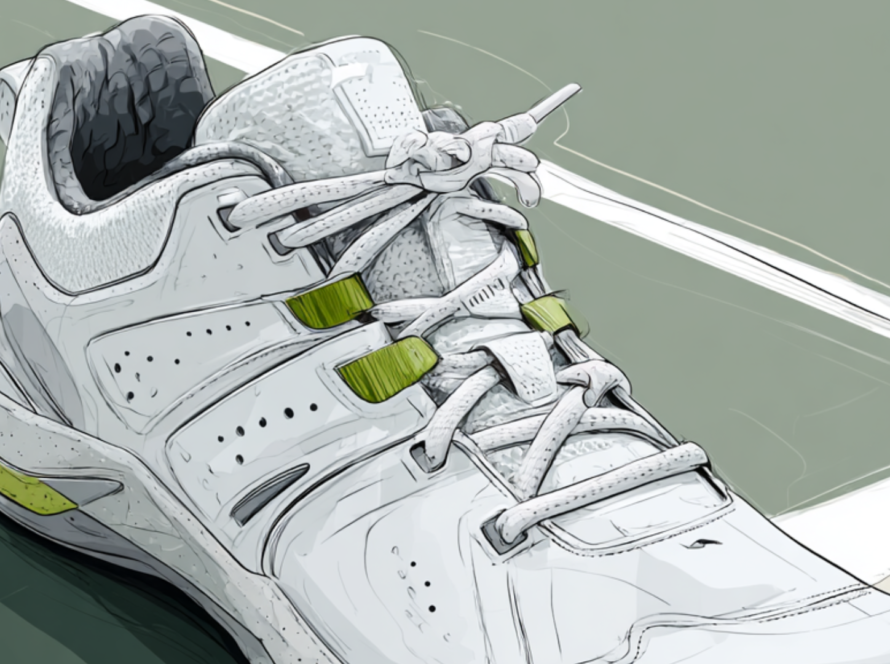
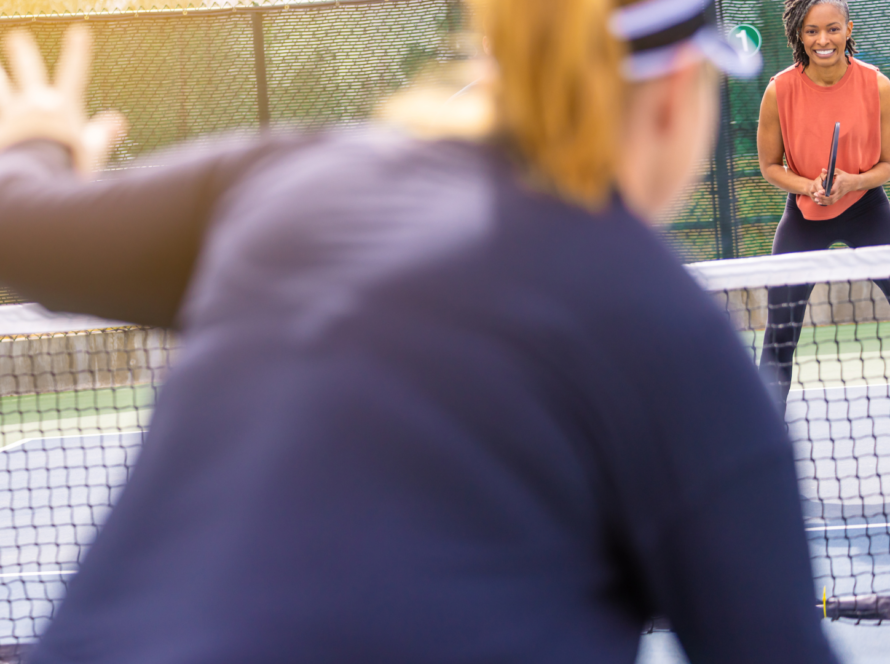
Indoor pickleball is fast, fun, and deceptively demanding on your feet and ankles. Every rally asks you to stop, start, and slide with control—especially on gym floors that can be slick or dusty. That’s why your footwear choice isn’t just about comfort; it’s a performance and safety decision.
The data backs it up. Most points include significant lateral moves, and the forces when you plant and push can spike to several times your body weight. In short: the wrong shoes make you work harder and increase your injury risk. The right indoor court shoes help you grip, change direction, and stay stable without beating up your joints.

Why Footwear Matters for Indoor Pickleball
Pickleball looks linear, but it’s a 360-degree sport:
- Indoor players change direction every 1.3 seconds on average.
- Peak ground-reaction forces during a hard plant-and-push can hit 3–4× your body weight.
Running Shoes vs. Indoor Pickleball Shoes: What’s the Real Difference?
Running shoes are built for straight-line cushioning and toe-off efficiency. Indoor pickleball shoes (also called court shoes) are engineered for multi-directional control on wood or PVC floors. Here’s how they differ and why it matters:
Outsole Rubber and Tread
- Running: Carbon-blown rubber designed for asphalt. Can squeak and slide on gym sealants.
- Court: Softer, non-marking gum or herringbone rubber with better slip resistance on hardwood (often meeting ASTM F1677-05). Many include a circular pivot point under the ball of the foot for smoother turns.
Flex and Stability
- Running: Flex grooves run front-to-back for forward motion.
- Court: Multi-directional siping supports lateral cuts and quick stops.
Midsole Height and Drop
- Running: Higher stack (often 30 mm+) with 8–12 mm heel-to-toe drop for shock absorption.
- Court: Lower stack (around 18–22 mm) with 0–6 mm drop to keep you closer to the floor for stability and better court feel.
Upper and Containment
- Running: Breathable mesh that can stretch laterally.
- Court: Reinforced overlays, thermoplastic wings, or a rand that locks your forefoot on side-to-side moves.
Torsional Rigidity
- Running: More torsional flex to roll through a stride.
- Court: TPU shanks to limit twisting and reduce mid-foot strain on cuts.
Weight
- Running: Typically 7–10 oz.
- Court: Usually 10–13 oz—but the trade-off is noticeably better stability.
Running shoes are great for forward mileage; indoor pickleball shoes are built for quick, controlled, lateral moves.
No Court Shoes Yet? Better Interim Options
If you’re upgrading soon but need something safer than runners today:
- Cross-training shoes: Look for “studio” or “HIIT” models with a medial outrigger and flat, non-marking soles.
- Volleyball shoes: Purpose-built for hardwood with tacky gum rubber—excellent for indoor pickleball.
- Badminton/squash shoes: Low-profile, ultra-grippy, and very stable for lateral work.
6 Signs Your Shoes Are Wrong for Indoor Courts
- Heel rollover or ankle “wobble” when you land from a dink volley.
- Black scuff streaks on the floor (a dead giveaway your outsole isn’t non-marking).
- Lots of squeal but little bite when you push off.
- Hot spots or blisters along the inner arch (often due to upper stretch and poor containment).
- Heel lift when you lunge or split-step.
- Outsole tread has gone smooth or the pivot area is polished flat.
If you recognize two or more of these, it’s time to switch.
How to Choose Indoor Pickleball Shoes: A Simple Checklist
- Look for “non-marking” on the outsole or product page.
- Flat, grippy tread with a visible pivot circle under the forefoot.
- Lateral outrigger or a flared midsole edge for stability on cuts.
- A firm heel counter that doesn’t collapse when pinched.
- Fit that allows a thumbnail-width up front but zero heel slippage.
- Replace shoes every 60–70 on-court hours—or earlier if the outsole loses bite.
Fit tips:
- Bring your actual court socks to the store.
- Try shoes late in the day when feet are slightly swollen.
- Mimic a split-step and a side shuffle; your foot should feel “locked in” without pinching.
- If you use orthotics, confirm the insole is removable and the shoe has enough depth.
Recommended Indoor Pickleball Shoes (2024)
There’s no single “best” shoe for everyone. Start with these well-regarded models and match them to your needs:
- ASICS Gel 9: Budget-friendly stability with a wraparound PGUARD toe cap.
- K-Swiss Express Light: Wider toe box, DURAWRAP guard, and a pickleball-specific outsole.
- Acacia Dinkshot II: Honeycomb tread, antimicrobial insoles; designed by former badminton engineers.
- Babolat Jet Mach 3 All-Court: Michelin rubber and lighter-than-average feel for a court shoe (around 10.2 oz).
- Mizuno Wave Momentum 3 (volleyball): Wave plate for shock dispersion and a seamless knit upper—great grip on hardwood.
- New Balance 1006: Available in 2E and 4E widths—orthotic-friendly and a favorite for wider feet.
Price range: typically $75–$160. If you play three or more times per week, rotate two pairs to let midsoles rebound and extend lifespan.
Match Your Foot Type (and Prevent Pain)
- Over-pronators (flatter arches):
- Look for models with strong midfoot support or compatibility with custom orthotics.
- Popular picks among clinicians include New Balance 806 and ASICS GAME FF.
- High arches / rigid feet:
- Seek shoes with removable insoles and additional cushioning (e.g., Yonex Power Cushion line).
- Plantar fasciitis:
- Use a heel-lock (runner’s loop) lacing method to reduce heel slip.
- Consider a small 1/8-inch felt heel lift to unload the fascia.
- If pain persists, consult a podiatrist for a personalized orthotic plan.
Comfort isn’t “softness.” It’s secure containment plus the right cushioning for your arch type.
Care, Maintenance, and Court Etiquette
Keep your indoor pickleball shoes grippy and hygienic with simple habits:
- Wipe soles with a damp microfiber towel before play to remove dust and boost traction.
- Air-dry after sessions; avoid hot cars—heat can separate the midsole glue.
- Replace insoles every other shoe replacement cycle to control odor-causing bacteria.
- Dedicate a pair to indoor courts only. Many gyms (YMCA, churches, rec centers) require indoor shoes and will fine or turn away players with street shoes.
Frequently Asked Questions
Q: Can I wear outdoor pickleball shoes indoors?
A: You can, but it’s not ideal. Outdoor shoes use firmer rubber and more aggressive tread for gritty surfaces. On hardwood they can “grab” too abruptly, increasing knee torque. An indoor-specific or hybrid outsole is best.
Q: Do I need women-specific indoor pickleball shoes?
A: Many women benefit from a slimmer heel fit with enough forefoot room. Brands such as Babolat and K-Swiss offer women’s lasts that reduce heel slip. If you experience heel lift in unisex models, try a women-specific version.
Q: Are zero-drop or minimalist court shoes a good idea?
A: They exist (e.g., Whitin Court) but are still niche. Transition gradually to avoid calf/Achilles strain, and only if you already tolerate low-drop trainers well.
Q: How do I confirm a shoe is non-marking when shopping online?
A: Look for “non-marking” in the description and photos of a gum or translucent outsole. Check user Q&A and reviews—players often report whether a shoe leaves scuffs.
The Big Picture: Performance Now, Fewer Injuries Later
- Running shoes deliver forward cushioning; indoor pickleball shoes deliver 360° stability.
- Proper court shoes can reduce ankle-sprain risk significantly, help you stop and start safely, and protect the court surface.
- Comfort and fit drive performance—try on late in the day, test a split-step, and lock in a heel that doesn’t budge.
- Don’t wait for your shoes to “feel dead.” Traction and stability often decline around 50–70 hours, even if they look fine.
Ready to level up? Pick one model from the list that matches your foot type, order two sizes to nail the fit, and dedicate the pair to indoor play.
Your movement will feel sharper, your joints will thank you, and you’ll get more confident on every lateral step.