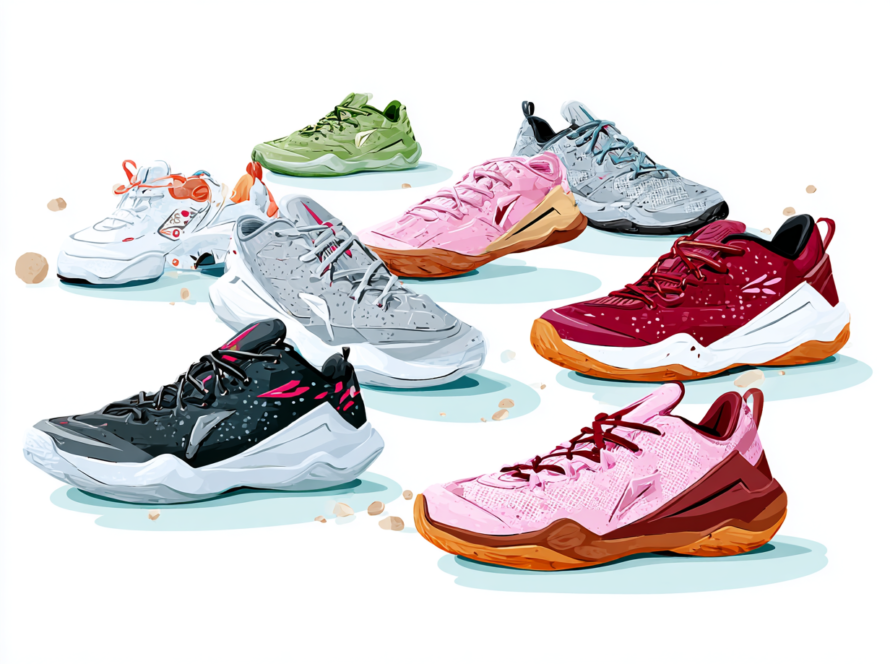
Indoor pickleball plays faster and tighter than outdoors. The courts are slicker, dust builds up, and sideways movement is constant. The right indoor pickleball shoes can be the difference between planting confidently for a volley and sliding out on a key point.
This guide breaks down what actually matters—from traction and cushioning to fit and durability—using lab-backed insights and real-world tips. Whether you’re buying your first pair or upgrading for competitive play, you’ll leave knowing exactly what to look for (and what to skip).

Understand Your Indoor Court (and Why It Changes Your Shoe Choice)
Most indoor pickleball is played on maple hardwood sealed with polyurethane, poured urethane, or PVC sport tiles. These surfaces typically sit between 0.55 and 0.70 on the Coefficient of Friction (COF) scale. Translation: you need an outsole designed to grip in that range, not a soft, outdoor-style rubber that can feel too sticky or smear on clean hardwood.
Key considerations:
- Dust happens. Hardwood collects dust that instantly reduces traction. Outsoles with fine, micro-siping channels shed dust better than flat herringbone patterns.
- Non-marking required. Many facilities check for a “NON-MARKING” logo or a white-bottom stamp. If your shoe doesn’t have it, you may be turned away at check-in.
- Weight matters, but stability matters more. The best indoor pickleball shoes balance lightness with side-to-side support for constant lateral shuffles.
Pro tip:
- “Slippery gym day? Wipe soles on a barely damp microfiber between points—it increases COF noticeably for the next rally.”
The Features That Actually Matter
1) Outsole traction and torsional control
- Lateral torsion plates: Look for embedded plates that prevent your foot from twisting during aggressive cuts. Examples include Diadem’s X-Torsion Bar and Wilson’s 4D Support Chassis.
- Durometer sweet spot: An outsole hardness of 55–60 A (Shore) gives you the best balance of indoor grip and wear resistance.
- Tread that sheds dust: Fine channels or micro-siping patterns release dust and keep contact consistent.
- Non-marking rubber: Essential for indoor courts and facility rules.
2) Cushioning that lasts (midsole chemistry)
- EVA is light and cheap but packs out quickly.
- TPU-blend foams (Adidas Lightstrike, New Balance FuelCell, Nike React) hold their bounce two to three times longer.
- E-TPU (BASF Infinergy), found in K-Swiss Hypercourt Express 2, offers high energy return and resilient cushioning.
3) Heel-to-toe drop and ankle collar geometry
- Heel-to-toe drop: 4–9 mm is typical for indoor. Near 4 mm offers great court feel; closer to 9 mm adds comfort for heavier athletes and high-mileage players.
- Achilles watch-out: If your Achilles is tight, avoid ultra-low drops (0–3 mm).
- Ankle collar shape: Sculpted “shark-fin” collars (seen in Head Motion Pro, Babolat Jet Mach III) help keep the ankle centered without restricting movement.
Get the Fit Right (No, It’s Not Just Length)
- Measure more than length: Use a Brannock device to check width and instep volume. High-volume feet often need deeper toe boxes even at standard widths.
- Shop after 3 p.m.: Feet swell 3–5% by late day—size for game time, not 9 a.m.
- Leave ¼ inch at the toe: About 6 mm between your longest toe and the front wall prevents black toenails during hard lunges.
- Women’s lasts are different: Women’s versions from Nike, New Balance, Asics, and Head have narrower heels and slightly higher arches. Downsizing a men’s model rarely fits the same.
- Socks and braces change fit: Double-yarn performance socks add roughly 1 mm of volume; ankle braces (Nike Zoom GP Challenge 1, Zamst A2-DX) may require a half-size up.
Editor’s Top Indoor Pickleball Shoes for 2025
Light & Speed (quick cuts, fast feet)
- Asics Gel-Rocket 11: Lightweight with reliable indoor traction.
- Babolat Jet Mach III All-Court: Snappy feel; great for lateral movement.
- New Balance FuelCell 996v5: Propulsive TPU-blend foam with good stability.
Cushion & Support (comfort over long sessions)
- Wilson Rush Pro 4.0: 4D Support Chassis helps stop unwanted twisting.
- Yonex PC Eclipsion 5: Stable and protective with responsive cushioning.
- K-Swiss Hypercourt Supreme: E-TPU bounce and a supportive platform.
Wide or High-Volume Feet
- Tyrol Drive-V Pro (EE): Built for wider forefeet without feeling sloppy.
- SQAIRZ XRZ (wide forefoot patent): Ample toe splay and forefoot space.
- New Balance 840v5 (4E): Deep, accommodative fit for orthotics and braces.
Best Budget (under $100)
- Adidas GameCourt 2: Reliable value and clean, non-marking outsole.
- Head Sprint Team 3.5: Lightweight feel without breaking the bank.
- Asics Upcourt 5: Solid entry-level traction for gym floors.
Women-Specific Highlights
- NikeCourt Vapor Pro 2: Fast feel with supportive heel lock.
- Diadem Edge 18 Women’s: Court-specific stability features.
- Skechers Viper Court Pro 2.0 (Women): Plush underfoot with secure upper.
Weight targets: aim for ≤ 12 oz/340 g (men’s 9) and ≤ 10 oz/285 g (women’s 8) for a lively indoor feel.
Insoles and Orthotics That Actually Help
- Rigid polypropylene shells (e.g., Tread Labs Dash) stabilize over-pronation and are heat-moldable for a dialed fit.
- Metatarsal pads relieve “forefoot burn” during long dink exchanges.
- Evidence-backed: Custom orthotics have been associated with lower stress-injury rates in court athletes.
- Make sure the shoe has a removable insole if you plan to use orthotics, and leave enough volume in the toe box.
Warranties, Budgeting, and Cost-Per-Hour
Wear guarantees worth noting:
- K-Swiss: 6-month outsole guarantee on Hypercourt Express 2 and Ultrashot 3.
- Adidas: AdiWear Plus program replaces pairs worn through the outsole within 180 days.
Cost-per-hour formula:
- Price ÷ expected indoor court hours (typically 80–120 hours per pair).
- Example: $150 ÷ 120 hours = $1.25/hour—often cheaper than burning through two $90 pairs in the same time.
Maintenance and Rotation for Grip and Longevity
- 48-hour rule: EVA foams need roughly 48 hours to rebound fully. Rotating two pairs can extend cushion life by about 25%.
- Quick cleaning: Baby wipes or a microfiber cloth with a 50/50 water-isopropyl mix restores tack fast.
- Store smart: Use a breathable mesh bag. Trapped sweat breaks down adhesives faster than court abrasion.
- Hygiene bonus: A weekly UV shoe sanitizer reduces bacteria growth and helps preserve materials.
- Track your hours: Most players hit 80 hours in 4–5 months; set a phone reminder every session.
Injury Prevention: Smart Checks and Lacing Tweaks
Common indoor issues and what helps:
- Lateral ankle sprains: Choose shoes with stout collars and torsion plates; consider ankle braces if you’ve sprained before.
- Plantar fasciitis: Look for arch support and resilient cushioning (TPU/E-TPU).
- Medial knee irritation: Stable platforms and balanced heel-to-toe drops can reduce unwanted knee valgus.
Quick at-home tests:
- Single-leg squat: If your shoe collapses inward (medially), you may need more support or a different last.
- Side shuffle: Watch for midfoot twisting; torsion plates make a difference.
Lacing techniques:
- Runner’s knot (heel lock) for slippage.
- Box lacing to relieve pressure on high insteps.
Eco-Minded Options
- Recycled uppers: Adidas Adizero Cybersonic 2 and Wilson Kaos Swift incorporate 50%+ ocean-recycled plastics.
- Low-VOC manufacturing: Mizuno’s solvent-reduction initiatives significantly cut emissions. If sustainability is a priority, check brand transparency pages.
Often-Overlooked Accessories
- Performance socks: Double-yarn Coolmax blends (Balega Enduro, Thorlo Pickleball) manage moisture and add light cushioning—remember they increase shoe volume slightly.
- Ankle braces: Ultra Zoom or Zamst A2-DX fit most mid-cut shoes; size up half if needed.
- Traction helpers: Court Grabbers clip to laces for on-demand outsole cleaning (legal in sanctioned play).
When to Replace Your Indoor Pickleball Shoes
Watch for these signals:
- Outsole balding: Tread disappears at the pivot under the big toe.
- Midsole compression lines: Deep wrinkles that don’t rebound after a day off.
- Tilt test: Set the shoe on a flat surface; if it rocks laterally, the midsole is compressed unevenly—it’s time to replace.
Quick-Reference Checklist
- Non-marking outsole, 55–60 A hardness
- Dust-shedding tread pattern (micro-siping)
- Reinforced sidewalls + torsion plate
- TPU or E-TPU responsive midsole
- Heel-to-toe drop that suits your Achilles (4–9 mm typical)
- Mesh/knit upper with medial overlays for stability
- Fit: ¼-inch toe space, snug heel, width options
- Removable insole (orthotics-ready)
- Weight target: ≤ 12 oz men, ≤ 10 oz women
- Warranty or cost-per-hour considered
FAQs
Q1: Can I use volleyball or badminton shoes for indoor pickleball?
A: Often, yes. Many volleyball and badminton shoes are built for similar hardwood traction and lateral movement. Just confirm they’re non-marking, have a supportive sidewall/torsion system, and fit your foot shape. If you pivot aggressively, tennis/pickleball models may last longer under toe drags.
Q2: How often should I replace indoor pickleball shoes?
A: Expect 80–120 indoor court hours per pair, depending on your weight, movement style, and outsole hardness. If you see outsole balding, lasting midsole creases, or the shoe fails the tilt test, it’s time.
Q3: What heel-to-toe drop is best for indoor pickleball?
A: Most players do well between 4–9 mm. Choose the lower end for court feel and quicker transitions, the higher end if you want more cushion or have sensitive calves/Achilles.
Q4: Do I need wide shoes or can lacing fix it?
A: Lacing tweaks (box lacing) can relieve top pressure, but if your forefoot feels cramped or you have numb toes, a true wide or high-volume model is the better solution.
Q5: What makes a shoe “non-marking”?
A: Non-marking outsoles use rubber compounds that don’t leave scuffs on hardwood. Look for “NON-MARKING” or a white-bottom stamp; many facilities require it.
The Bottom Line
If you play indoors, prioritize traction that handles dust, side-to-side stability (torsion plate + reinforced sidewalls), and cushioning that won’t pack out after a month. Get the fit right—length, width, and volume—and consider rotating two pairs to extend life and maintain grip.
Ready to upgrade? Start with one model from the category that matches your needs (Speed, Support, Wide, or Budget), use the checklist above in-store, and log your court hours.
Your feet—and your game—will thank you.