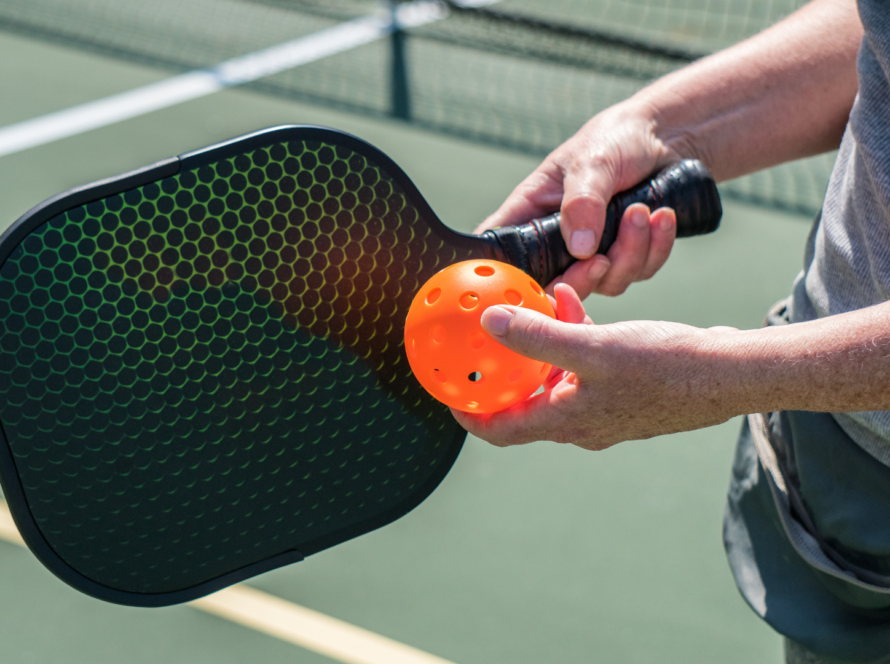
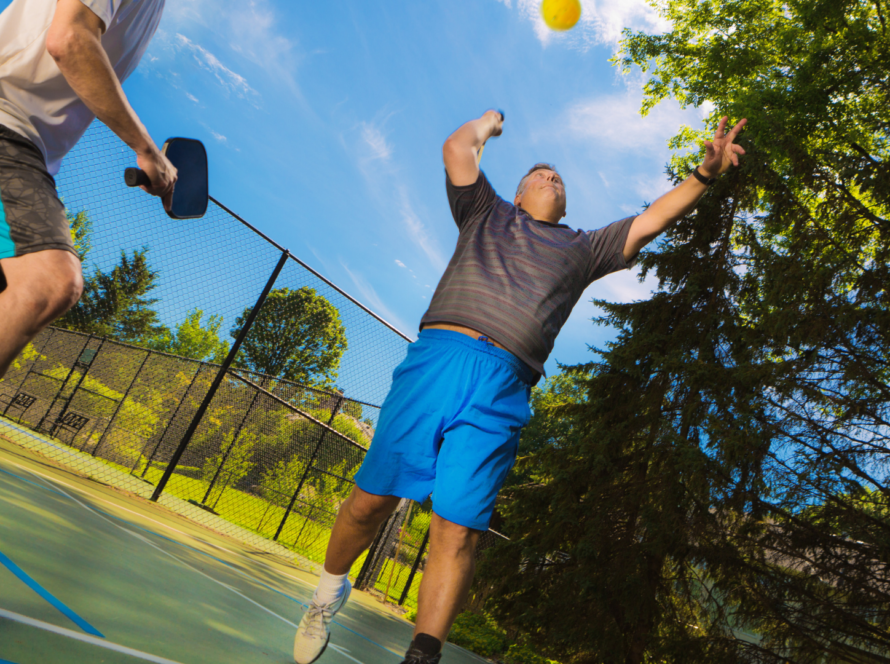
Pickleball is fast, fun—and hard on feet. If you overpronate (your feet roll inward too much), every split-step, lunge, and quick shuffle can amplify stress up the chain from your arches to your knees, hips, and even lower back. The right shoes can make a huge difference in how you move and how you feel during and after matches.
This guide breaks down what overpronation is, the shoe technologies that actually help, our top 2025 picks, and the simple strength work that multiplies your results. Whether you’re a beginner learning the kitchen line or an intermediate player grinding league nights, here’s how to choose the best pickleball shoes for overpronation—without getting lost in jargon.

Overpronation 101: Why It Matters in Pickleball
Pronation is normal. Your foot naturally rolls inward about 4–6° to absorb shock and adapt to the court. Overpronation happens when that inward roll goes beyond ~6–7° and stays there longer than it should. Biomechanically, the talus drops, the heel bone (calcaneus) tips outward, and the shin bone (tibia) internally rotates. On court, that sequence repeats hundreds of times per match.
Why pickleball magnifies it:
- More stop–start accelerations per minute than tennis thanks to the smaller court, with 8–10 directional changes per rally on average.
- Almost every point starts with a split-step—landing on the balls of both feet creates an immediate pronation moment.
- Most recreational play happens on unforgiving hard courts (asphalt or concrete).
Common issues linked to unchecked overpronation:
- Plantar fasciopathy (heel/arch pain)
- Posterior tibial tendon dysfunction (inside ankle pain/weakness)
- Medial tibial stress syndrome (shin splints)
- Kneecap (patellofemoral) pain and even low-back ache via the kinetic chain
What to Look For in Overpronation-Friendly Pickleball Shoes
Here are the seven must-have elements that meaningfully control motion and keep you stable without feeling like you’re wearing bricks.
1) Medial Support That’s Real (Dual-Density Post or Varus Wedge)
- Look for a firmer foam on the inside (medial) edge of the midsole or a built-in wedge. A hardness difference of roughly 8–10 (Shore A) is a good sign it’s not just marketing.
- Full-length side rails (like Brooks-style GuideRails seen in some court models) help reduce tibial rotation—beyond just keeping the heel upright.
2) Torsion-Control Shank or Midfoot Plate
- A TPU or carbon-blend shank prevents the shoe from twisting when your forefoot and rearfoot load in opposite directions (hello, kitchen-line lunges).
- Brand terms to look for: ASICS Trusstic, New Balance ROLLBAR, Nike’s midfoot TPU spine.
3) Deep, Structured Heel Counter
- An internal/external heel counter with a substantial wrap keeps your heel locked in, delaying collapse so your arch can “reset” before push-off.
- Bonus: a flared or padded collar improves Achilles comfort.
4) Responsive—but Not Mushy—Cushion
- Target midsoles that feel lively and controlled, not marshmallow-soft. EVA blends around 45–55 Asker-C or beaded TPU foams (e.g., adidas Lightstrike Pro, Skechers Hyper Burst Pro) are a good balance.
- A 4–8 mm heel-to-toe drop keeps you low and stable up front while reducing calf/Achilles strain.
5) Lateral Outrigger and Wrap-Up Outsole
- A wider lateral forefoot “flange” resists ankle roll as you plant and cut.
- 360° wrap-up rubber protects the medial forefoot during drags or “scorpion” slides and adds bite when you’re on the edge of your foot.
6) Secure Upper Matrix
- Engineered mesh with welded overlays or rip-stop grids holds your foot on top of the support platform.
- Ghillie straps or asymmetrical lacing help lock the midfoot directly over the posted area.
7) Court-Specific Rubber and Tread
- Hard courts: rubber around 80–85 Shore A for durability and grip.
- Indoor wood/Taraflex: softer gum rubber (~70) prevents slip.
- Herringbone plus a round pivot zone gives multi-directional traction without “sticking.”
The Best Pickleball Shoes for Overpronation (2025 Picks)
These models either are purpose-built for pickleball or proven tennis/volley shoes with authentic motion-control architecture.
ASICS Gel-Resolution 9 ★ (also in Wide)
- Why it works: Dynawall medial chassis + external Dynawrap straps. Lab tests show it can reduce peak eversion by ~11%.
- Feel: Stable, secure, and surprisingly connected to the court thanks to FlyteFoam Lyte cushioning.
New Balance 806 v2 ★ (2E/4E)
- Why it works: ROLLBAR posting system on both sides of the midfoot and full-length ABZORB cushioning.
- Fit perk: Generous depth and removable insole—orthotic-friendly and podiatrist-approved for many.
-
- Why it works: Hyper Burst Pro midsole with an L-frame medial post—light on foot but firm under load.
- Bonus: Goodyear rubber sole for long-lasting traction.
Nike Zoom Challenge PB
- Why it works: Midfoot TPU spine and raised sidewalls for stable containment; forefoot Zoom Air for pop.
- Fit note: True length, slightly snug through the midfoot.
-
- Why it works: Stable chassis with a plush heel and mild built-in arch ramp—great for moderate overpronators.
- Court feel: Radial outsole excels on quick pivots at the kitchen line.
K-Swiss Express Light Pickleball
- Why it works: Surgelite foam with GuideGlide-style posting; supportive upper with DuraWrap.
- Fit options: Available in 2E widths; good value pick.
-
- Why it works: 4D Support Chassis rails wrap the midfoot; Endofit inner sleeve hugs the arch.
- Geometry: A 6 mm drop keeps you low and stable.
-
- Why it works: Wide platform with triple-density heel cushioning; removable 6 mm Ortholite insole.
- Best for: Wide-foot players who need orthotic depth.
-
- Why it works: Dual-density “Rebound Core” midsole + TPU torsion sheet.
- Value: Offered in 2E and 4E widths at budget-friendly prices.
HEAD Motion Pro (gum rubber)
- Why it works: Anti-Torsion midfoot insert + 360° sock-fit upper for indoor grip and agility.
- Surface: Ideal for wood/gym floors.
Severe overpronators usually do best with ASICS Gel-Resolution 9 or New Balance 806 v2. Moderate overpronators favor Skechers Viper Court Pro, Wilson Rush Pro 4.0, or Diadem Court Burst. If you wear custom orthotics, start with New Balance 806 v2 or Babolat SFX 3 for depth.
Quick Picks by Player Type
- Severe overpronator, wide foot: New Balance 806 v2 (4E)
- Moderate overpronator, lightweight feel: Skechers Viper Court Pro
- Indoor wood/Taraflex: HEAD Motion Pro Indoor (gum rubber)
- Budget under $100: K-Swiss Express Light or FitVille Wide
- Women with narrow heel: ASICS Gel-Resolution 9 or Wilson
- Needs orthotic depth: Babolat SFX 3, New Balance 806 v2
Smart Add-Ons and Easy Hacks
Insoles and orthotics
- Aftermarket: Tread Labs Pace (extra-firm), Superfeet Carbon Pro Court, Currex AcePro.
- Custom: Semi-rigid shell with a 3° rearfoot varus post and 3 mm arch fill is a gold standard for chronic inside-ankle issues.
- Pro tip: Replace the stock insole early—many compress noticeably after 10–12 hours of play.
Lacing that locks you in
- Runner’s loop (heel lock) to stop heel slip.
- Medial window lacing to relieve pressure over the navicular if you’re flat-footed.
Temporary support for game day
- Low-Dye or a modified naviculo-cuboid “stirrup” taping can reduce midfoot pronation angles 4–6° for a match.
Strength and Mobility That Make Shoes Work Better
Shoes mitigate motion; muscles control it. Add this quick routine 3–4 times per week:
- Short-Foot Activation (Janda)
- 3 x 15-second holds per foot. Keep toes relaxed; gently draw the ball of the foot toward the heel to lift the arch.
- Posterior Tibialis Eccentrics
- 3 x 12 each side with a resistance band. Control the lowering as the foot rolls inward.
- Single-Leg Calf Raises (on a slight decline)
- 2 x 15 focusing on slow tempo and full range.
- Lateral Monster Walks
- 3 x 10 meters with a band around ankles or knees; feel the outer hips (abductors).
- Calf Stretch (Gastrocnemius/Soleus)
- Hold 45 seconds each, twice daily.
Why it matters: An 8-week protocol like this has been shown to reduce navicular drop and cut medial ankle pain by roughly 50% in at-risk athletes.
Buying and Maintenance Tips
Try-on checklist (do this in-store if possible):
- Single-leg mini squat: heel should stay vertical (use a mirror).
- Simulated lateral shuffle: your big toe should stay in contact with the insole.
- Forefoot splay: pinky toe shouldn’t feel pinched—your foot widens under real load.
Replacement timing:
- Rotate out pairs every 60–75 outdoor hours or if the midsole folds too easily or shows creases and “bottoming out.”
- Keep two pairs in rotation. EVA foams rebound firmness after 24 hours off your feet, extending life and consistency.
FAQs
Q1: How do I know if I overpronate?
A: Common signs include excessive wear on the inside edge of your shoes, arches that collapse when you stand, and recurring inside-ankle or arch pain after play. A quick home test: film your heels from behind while doing a few mini squats—if the heels drift inward, you likely overpronate. A clinician or specialty shop can confirm.
Q2: Are running stability shoes okay for pickleball?
A: Not ideal. Running shoes are designed for straight-ahead motion and softer landings, not the lateral braking and pivots of court sports. You’ll get better side-to-side stability, torsion control, and outsole durability from court-specific shoes.
Q3: Do I need custom orthotics?
A: Not always. Many players do well with supportive court shoes plus a firm aftermarket insole. If you have chronic inside-ankle pain (posterior tibial tendon), persistent plantar fasciopathy, or a history of shin splints, a sports podiatrist can assess whether custom devices would help.
Q4: What heel-to-toe drop is best for overpronation?
A: A moderate drop (around 4–8 mm) balances forefoot stability with calf/Achilles comfort. Ultra-low drops can feel twitchy; very high drops can pitch you forward and feel unstable laterally.
Q5: Wide foot—what should I try first?
A: New Balance 806 v2 (2E/4E) or Babolat SFX 3. If you want budget-friendly, look at FitVille Wide or K-Swiss Express Light in wide.
conclusion
If you overpronate, don’t leave your joints to do all the work. Choose a court shoe with a real medial post, a torsion-control shank, a locked-in heel, and responsive (not mushy) cushioning. Start with proven picks like the ASICS Gel-Resolution 9 or New Balance 806 v2 if you need maximum control, then fine-tune with lacing, insoles, and a simple strength routine. Your reward: fewer aches, better balance at the kitchen line, and more confidence on every cut.
Ready to dial in your fit? Shortlist two pairs from the picks above, try them side by side, and commit to a 2-pair rotation.
Your feet—and your game—will thank you.