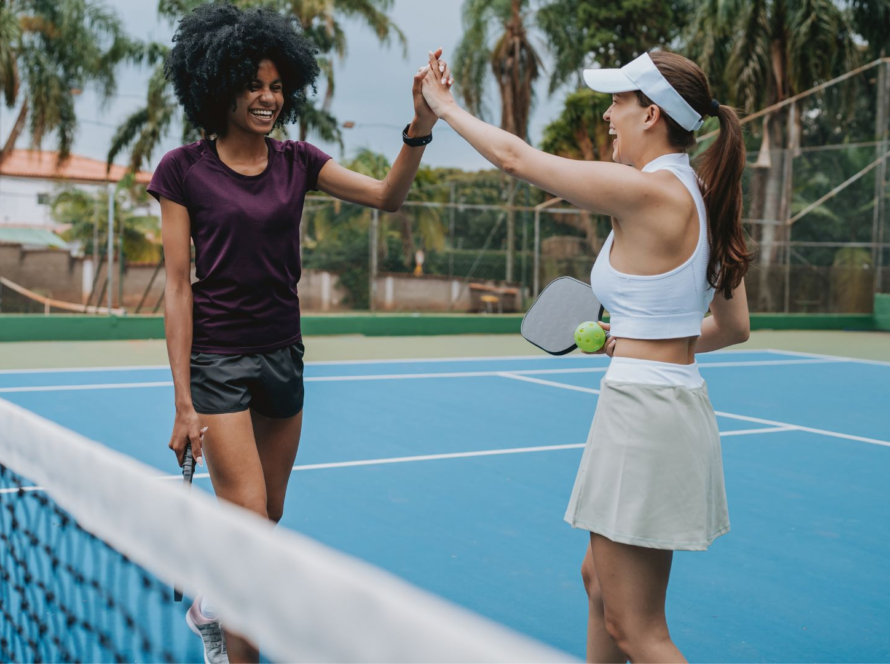
If you’re moving from running shoes to pickleball shoes, you’re about to feel a big difference—both in your game and your joints. Pickleball involves explosive starts, stop-on-a-dime changes of direction, and more lateral work than most newcomers expect. The right court-specific shoe can make you faster, safer, and more confident from your first serve to your last dink.
This guide breaks down what matters (and what doesn’t) when choosing pickleball shoes. You’ll learn the key features, how to size them correctly, the difference between indoor and outdoor models, budget ranges, and our updated “Best for…” picks for 2025.

Why Court-Specific Pickleball Shoes Matter
Pickleball looks simple—until you play a real point. Then you realize why regular trainers don’t cut it.
Biomechanics in plain English
- A single point can stack up to 300° of total hip rotation and 30+ lateral micro-steps in under 10 seconds.
- Peak shear force on the ankle hits 1.7–2.2× your body weight—similar to tennis, but delivered in shorter, sharper bursts. Your shoes have to “catch” the foot quickly to keep you stable.
Why running or walking shoes fail on court
- Flex grooves run front-to-back, not side-to-side—bad for lateral moves.
- Heel drops of 10–12 mm pitch you forward and destabilize side steps.
- Outsoles use foam or blown rubber that polishes smooth on acrylic or sport tiles in just a few sessions, killing grip.
Bottom line: Court shoes are built for traction, stability, and controlled slides. Running shoes are built for straight-ahead cushioning. Pick the right tool for the job.
Key Technical Features (What to Look For)
Outsole compounds and tread
Outdoor courts (asphalt/concrete)
- Look for dense carbon rubber and modified herringbone patterns.
- Example: Michelin DIN20 rubber on Babolat outsoles is known for durability.
Indoor courts (wood or synthetic gym floors)
- Softer gum rubber or tacky TPU provides that “stick” for fast stops.
- Circular pivot points under the ball of the foot help with quick spins. HEAD’s Motion Pro is a textbook example.
Tip: Choose “non-marking” soles for indoor play.
Midsole cushioning and ride
- EVA foam: lighter, lively feel; breaks in faster.
- PU foam: denser, longer-lasting; more protective under frequent play.
- Common brand tech you’ll see:
- ASICS GEL for impact absorption
- adidas Lightstrike/Boost for a springy ride
- Nike Zoom Air for pop underfoot
- Skechers Hyper Burst (nitrogen-infused) plus Arch Fit insoles for comfort
Choose more cushioning if you’re heavier, play frequently, or feel joint soreness. Go lower and firmer for maximum court feel and quick transitions.
Shank and torsion control
- A TPU or Pebax shank bridges the midfoot to limit over-twisting.
- Benefits: better edge-to-edge stability, less strain on the plantar fascia, and smoother footwork when you plant and push off.
Uppers and drag protection
- Thermo-welded mesh balances breathability and structure.
- Rubberized or PU welds on the medial toe guard against toe drags and slides.
- Callouts: K-Swiss DuraWrap Flex, Diadem DragGuard.
Heel counters and ankle collars
- Rigid external heel counters help align your heel bone (calcaneus) for a locked-in feel.
- Memory-foam collars reduce Achilles rubbing and blister risk.
- Examples: SQAIRZ XRZ and ASICS AHAR Plus heel tech.
Fit and Sizing Tips (Don’t Skip This)
- Measure feet at day’s end.
- Stand and check for about a half-thumbnail of space in front of your longest toe.
- Expect a snug, “contained” court-shoe feel—tighter than running shoes, but not painful.
Width options to know:
- Wide/2E: FitVille, New Balance 1006, K-Swiss Express Light 2.
- Narrow: Nike Vapor Pro 2 Pickleball is a strong low-volume pick.
Smart lacing tricks:
- Runner’s loop: Locks the heel to prevent slippage.
- Box lacing: Reduces pressure on a high instep across the top of the foot.
Break-in should be quick—one to two sessions. If you’re still numb or pinched after two outings, swap sizes or models.
Indoor vs. Outdoor Pickleball Shoes
Traction feel
- Indoor: sticky, gum-like grip for clean stops.
- Outdoor: grippy but slightly harder compounds to resist abrasion.
Durability
- Outdoor models last longer under rough court surfaces.
- Indoor compounds trade some lifespan for premium traction.
Typical weight
- Indoor shoes trend a bit lighter (around 11 oz men / 9 oz women).
- Outdoor pairs are slightly heavier (12–13 oz men) due to denser rubber.
Pro tip: Many players end up with one pair for each surface after 4–6 months.
Special Foot-Care Considerations
- Plantar fasciitis: Choose a rigid shank and 8–10 mm heel drop.
- Picks: ASICS Gel-Resolution 9, Diadora Trofeo 2.
- High arches: Look for orthotic-friendly models with swappable insoles.
- Flat feet/over-pronation: Seek motion-control sidewalls.
- Picks: Skechers Viper Court Pro 2.0, New Balance CT-Rally.
- Bunions/Hallux rigidus: Wide toe boxes help.
- Picks: FitVille, Altra Volley.
If you use custom orthotics, remove the stock insole and ensure the shoe has enough volume to avoid cramping.
Sustainability and Ethics
- Recycled content: adidas Barricade Parley uses 50% ocean-reclaimed plastics.
- Animal-free: Most 2025 K-Swiss and Diadem models are fully vegan.
- Take-back programs: Nike “Move to Zero” and On-Running’s Cyclon accept worn-out court shoes for recycling/reuse.
Maintenance and Lifespan
- Clean with a soft brush and mild soap; never machine wash (heat can delaminate glues).
- Air-dry for 24 hours; avoid direct sun over 120 °F, which can crystallize EVA foam.
- Replace every 60–75 on-court hours, or sooner if:
- Tread is bald at the pivot point.
- Midsole shows deep, horizontal creases.
- You feel new knee or shin soreness after play.
How Much Should You Spend?
- Entry-level: $65–$90 (e.g., K-Swiss Court Express, Fila Volley Zone)
- Mid-tier sweet spot: $95–$140 (e.g., Diadem Court Burst, Skechers Viper Court Pro 2.0)
- Flagship tech: $150–$190 (e.g., ASICS Gel-Resolution 9, Babolat Jet Mach 3, adidas Barricade Parley).
Our 2025 “Best for…” Picks
- Best Overall Beginner: Diadem Court Burst
- Best Budget: K-Swiss Express Light 2
- Most Cushioned Ride: Skechers Viper Court Pro 2.0
- Best Arch Support: ASICS Gel-Resolution 9
- Best Wide Option: FitVille Wide Pickleball Shoe
- Best Ankle Stability: SQAIRZ XRZ
- Best Outdoor Durability: Babolat Jet Mach 3
- Best Indoor Grip: HEAD Motion Pro
- Lightest Weight: Nike Vapor Lite 2 Pickleball (10.5 oz / 298 g, men’s 9)
- Eco Pick: adidas Barricade Parley (recycled ocean plastics)
Note: Availability and sizing can vary—try on two sizes when possible and bring your game socks.
Common Beginner Mistakes (And Easy Fixes)
- Treating court-shoe sizing like running shoes
- Fix: Expect a closer hold; use the runner’s loop to lock the heel.
- Not re-lacing after warm-up
- Fix: Feet expand—re-tie before games to prevent forefoot slide.
- Waiting too long to replace shoes
- Fix: Follow the 60–75 hour rule and watch for tread/balance changes.
Quick-Reference Checklist
- Lateral support and rigid sidewalls
- Non-marking, court-specific outsole
- Cushioning that matches your body weight and play frequency
- Correct width and half-thumbnail toe room
- Tread matched to indoor or outdoor courts
- Break-in within 1–2 sessions
- Room for custom orthotics if needed
- Sustainability features (if that matters to you)
- A price you’re comfortable scuffing on day one
FAQs
Q1: Can I wear tennis shoes for pickleball?
A: Yes—tennis shoes are designed for similar lateral movements and are a safer choice than running shoes. If you play primarily indoors, look for non-marking outsoles with good tack. For outdoors, durable carbon rubber is key.
Q2: How long do pickleball shoes last?
A: Most players get 60–75 on-court hours. Heavy play, outdoor surfaces, and toe dragging shorten that window. Replace when pivot points go bald or your joints start to feel “beat up” after sessions.
Q3: Do I need different shoes for indoor and outdoor courts?
A: If you play both regularly, it helps. Indoor shoes offer stickier grip; outdoor shoes are tougher. Rotating pairs also lets foam rebound between sessions, extending lifespan.
Q4: What’s the fastest way to break in new court shoes?
A: Wear them around the house for an hour, then do a light drill session. Re-lace after warm-up and check toe room. True court shoes should feel game-ready within 1–2 outings.
Q5: Should I add aftermarket insoles or orthotics?
A: If you need extra arch support or have foot conditions, yes. Look for “orthotic-friendly” models with removable insoles and enough volume to fit your insert without cramping.
Conclusion: Your Next Step
Pickleball rewards quick feet and stable landings. The right shoe gives you confident traction, lateral support, and joint-friendly cushioning—so you can focus on strategy, not sore shins. If you’re unsure where to start, grab one reliable all-court pair (like the Diadem Court Burst or ASICS Gel-Resolution 9), then add a second set tailored to your main surface.
Ready to level up? Try on two sizes, bring your game socks, test lateral cuts in-store, and commit to replacing shoes around the 60–75 hour mark. Your body—and your win column—will thank you.