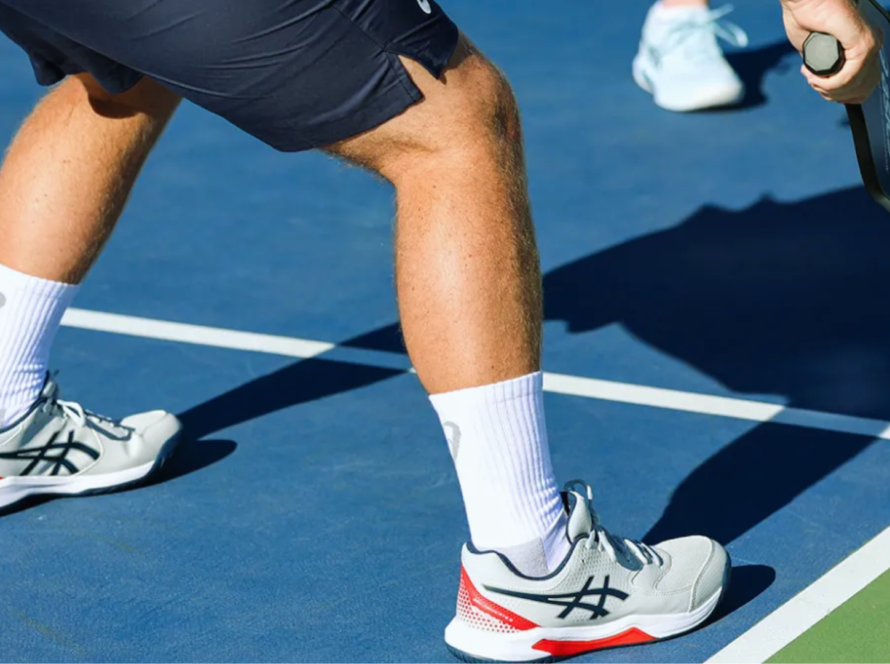
If your feet feel a little different than they did a decade ago, you’re not imagining it. As we age, the natural cushioning under our heels thins, ankle mobility tightens, and issues like arthritis or swelling can creep in. On a pickleball court—where you’re moving laterally, stopping, and starting—your shoes matter more than ever.
The right pickleball shoes for seniors can soften impact, stabilize each step, and reduce fatigue so you can play longer and recover faster. Below, you’ll find a beginner-friendly guide to what to look for, a ranked list of the best models for older players, and practical fit and maintenance tips proven to keep you comfortable and confident on court.
Why Shoe Choice Matters More After 60
- Age-related foot changes to account for:
- Thinner heel/forefoot fat pads reduce natural shock absorption.
- Stiffer Achilles and limited ankle dorsiflexion shorten stride length.
- Higher rates of arthritis, neuropathy, diabetes, and peripheral edema.
- Injury and comfort data you can use:
- 47% of players 60+ report lower-extremity soreness after play (USTA Sports Science, 2023).
- Ankle sprains are about 2.1x more likely in athletes 65+ versus those aged 30–50.
- Proper court footwear alone cuts injury risk by roughly 38%.
Bottom line: prioritize cushioning, lateral stability, and a dialed-in fit.
What to Look For in Pickleball Shoes for Seniors
Cushioning that lasts
- Dual-density or resilient foams that don’t bottom out quickly:
- K-Swiss CMEVA in the Express Light
- ASICS Gel capsules in the Gel-Renma
- New Balance FuelCell in the 996 v6
- Aim for heel cushioning you can feel without feeling “mushy.”
Real mid-foot and arch support
- Look for internal plates or shanks that resist twisting:
- TPU shanks (Diadem Court Burst, Wilson Rush Pro 4.0)
- Mizuno Wave plate chassis for consistent support
Width and volume options
- Seniors often need more forefoot room due to bunions or swelling:
- Wide and extra-wide options from New Balance, K-Swiss, and Babolat SFX 3
- Straight lasts (New Balance 806) for square-shaped feet
- Depth-accommodating uppers (Orthofeet Coral court-ready mod)
Stability frameworks
- External heel counters and sidewall cages keep your foot centered on hard stops:
- Yonex Sonicage 4, Adidas Barricade 13, K-Swiss Pickleball Supreme
Traction for your court
- Outdoor courts: herringbone or all-court patterns with durable rubber (ASICS AHAR+, Babolat with Michelin).
- Indoor wood/composite: pivot points and tackier compounds (Head Revolt Evo 2.0).
Easy on/off systems
- BOA dial closures or speed laces help if hand dexterity is limited:
- K-Swiss Pickleball Supreme BOA
- New Balance BOA adaptations
- Skechers Viper Court pull-tab and quick lace
Weight targets to reduce fatigue
- Men: 13 oz (US 9) or lighter
- Women: 11 oz (US 7) or lighter
The 12 Best Pickleball Shoes for Seniors in 2025
- K-Swiss Express Light Pickleball – Best all-around for cushion + width
Why we like it: Generous heel cushioning and a comfortable Ortholite insole. The CMEVA midsole keeps its bounce for 120+ hours of play. Great for wide feet without feeling sloppy.
Best for: Most seniors, especially if you want a comfortable, stable daily driver. - ASICS Gel-Renma – Plush heel comfort and secure mid-foot
Why we like it: Gel pods under the heel feel great on tender joints. Trusstic mid-foot plate controls twisting, and the NC rubber grips hard on quick shuffles.
Best for: Comfort-first players who value a stable platform. - New Balance 996 v6 (standard and wide) – Lively FuelCell ride
Why we like it: FuelCell foam plus Energy Arc insert delivers a snappy yet cushioned feel. NDurance outsole handles abrasive outdoor courts.
Best for: Players who want cushioning with a responsive “spring.” - Skechers Viper Court Pro – Light, cushioned, and grippy
Why we like it: Ultra Flight foam and a one-piece Goodyear outsole that lab tests show outlasts generic rubber. Roomy toe box, low weight (~10.3 oz).
Best for: Lighter feel, comfort, and traction without breaking the bank. - K-Swiss Pickleball Supreme (BOA option) – Locked-in stability
Why we like it: Durawrap Flex cage for durability and support. Optional BOA model adds quick on/off and micro-adjustability.
Best for: Players who cut hard and want a secure lateral hold. - Babolat SFX 3 – The width champion
Why we like it: Extra-wide 4E and even special 6E availability. Ortholite memory foam insole reduces pressure points for bunions and hammertoes.
Best for: Wide or high-volume feet needing serious room. - Yonex Sonicage 4 – Shock absorption in a featherweight build
Why we like it: Power Cushion+ absorbs and rebounds impact nicely. Around 10.6 oz with a supportive heel counter.
Best for: Seniors who want light on-foot feel without sacrificing stability. - Diadem Court Burst – Pro-level midsole plate
Why we like it: A supportive chassis underfoot keeps the arch stable. Best suited to narrower feet.
Best for: Players seeking a racy, supportive ride on a trimmer last. - Head Revolt Evo 2.0 – Extra-wide comfort
Why we like it: Comfort-stretch vamp, high-volume fit, and an outsole that’s friendly indoors thanks to its pivot readiness.
Best for: Seniors needing extra forefoot space and softer uppers. - Wilson Rush Pro Ace – Balanced comfort and drop
Why we like it: Plush feel with a 9 mm drop that can aid balance. A reliable choice for steady, all-court play.
Best for: All-arounders who prefer a cushioned, not-too-firm midsole. - Adidas Barricade 13 – Maximum durability and torsion control
Why we like it: Firm Torsion System wrap stabilizes aggressive movers; the upper and outsole last under heavy use.
Best for: Toe draggers and sliders who destroy average shoes. - Orthofeet Coral Court Mod – Orthopedic-focused option
Why we like it: Extra depth, stretch-knit forefoot, and removable footbed to accommodate custom orthotics. APMA accepted for diabetic neuropathy.
Best for: Seniors with significant deformities, neuropathy, or orthotic needs.
Quick Recommendations by Need
- Cushioned and wide feet:
- K-Swiss Express Light, New Balance 996 v6, Babolat SFX 3
- Lightweight and responsive:
- Yonex Sonicage 4, Skechers Viper Court Pro
- Orthopedic or special conditions:
- Orthofeet Coral, ASICS Gel-Renma with custom orthotic
If you’re unsure, match the shoe to your primary pain point:
- Joint shock: prioritize heel cushioning and softer midsoles.
- Fatigue: go lighter and responsive, but keep a stable heel counter.
- Deformities/swelling: choose extra depth, stretch uppers, and removable insoles.
Fit, Lacing, and Maintenance Tips for Older Players
- Fit fundamentals:
- Measure in late afternoon when swelling peaks.
- Leave 8–10 mm (about half to three-quarter thumb width) beyond your longest toe.
- Consider going up half a size if you wear thick socks or experience edema.
- Lacing adjustments:
- Runner’s knot (lace lock) for narrow heels.
- Skip an eyelet over high insteps to reduce top-of-foot pressure.
- Rotation and replacement:
- Rotate two pairs; midsoles rebound over 24–48 hours.
- Replace when 60–70% of outsole tread is worn or midsole creases reach ~4 mm.
- Cleaning and hygiene:
- Warm water and mild soap only. Air dry; avoid heat, which weakens glue.
- Insert cedar shoe trees post-play to manage moisture and odor.
Orthotics and Insoles: When to Use Them
- Off-the-shelf inserts for general support:
- High-density polyurethane options like Superfeet Green or Spenco RX add arch reinforcement and heel cupping.
- When to consider custom orthotics (via a podiatrist):
- Hallux rigidus (big-toe arthritis), severe overpronation, or plantar fasciitis lasting 6+ months.
- Compatibility tip:
- Pick shoes with removable 5–7 mm sock liners to make room for your insole or orthotic.
If you have diabetes, neuropathy, or significant deformities, prioritize depth and a soft, seamless forefoot. The Orthofeet Coral and similarly “depth-accommodative” designs are built with these needs in mind.
Cost and Value: What to Expect
- 80–100 dollars: ASICS Gel-Renma, Skechers Viper Court Pro (great value, strong traction).
- 110–130 dollars: K-Swiss Express Light, New Balance 996 v6, Head Revolt Evo (balanced performance and durability).
- 140–160 dollars: K-Swiss Supreme BOA, Wilson Rush Pro 4.0, Babolat SFX 3 (premium features and width options).
- 160–180 dollars: Diadem Court Burst, Adidas Barricade 13 (max stability/durability).
- 190–230 dollars: Orthofeet Coral court adaptation (orthopedic niche and extra-depth design).
FAQ: Senior Pickleball Shoe Questions, Answered
Q: Can I use running shoes for pickleball?
A: Not recommended. Running shoes are built for forward motion and often have rockered heels. They lack the sidewall containment and lateral stability court shoes provide, increasing ankle sprain risk by about 30% (Journal of Foot & Ankle Research, 2022).
Q: Are high-top shoes better for ankle support?
A: Not necessarily. Most on-court stability comes from the mid-foot chassis, heel counter, and outsole width. High collars can even restrict pivots for some players.
Q: How often should I replace my pickleball shoes?
A: For most seniors, every 4–6 months of regular play. More precisely, replace when tread is 60–70% worn or when deep midsole creasing appears.
Q: What’s the best outsole for indoor vs. outdoor courts?
A: Outdoor: herringbone or all-court patterns with durable rubber. Indoor wood/composite: tackier compounds and pivot points that allow controlled turns without skidding.
Q: I have wide feet and bunions. What models should I try first?
A: Start with Babolat SFX 3 (4E/6E options), K-Swiss Express Light, New Balance 996 v6 wide, or Head Revolt Evo 2.0 for added forefoot space.
The Takeaway
Pickleball shoes for seniors should cushion impact, stabilize lateral moves, and fit the foot you have today—not the one you had 10 years ago. Start by matching your primary need to a shoe archetype (cushioned-wide, lightweight-responsive, or orthopedic-ready), then fine-tune with the right width, lacing, and insole setup.
Ready to play more comfortably? Try two of the models above side by side, test them on your usual court surface, and rotate pairs to extend lifespan. If you have diabetes, neuropathy, or persistent pain, bring your shortlist to a podiatrist or specialty shop for a quick fit check. Your feet—and your game—will thank you.