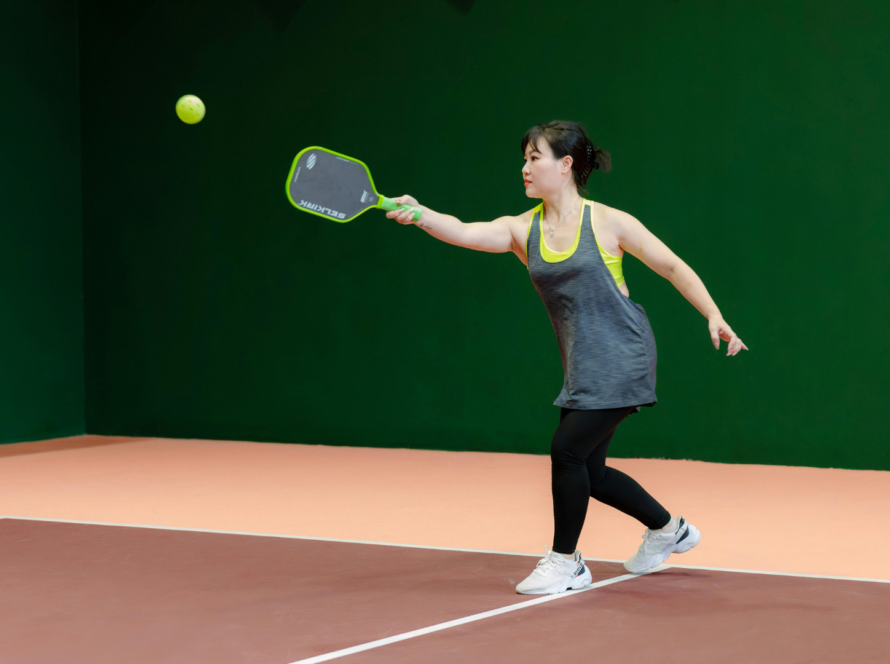
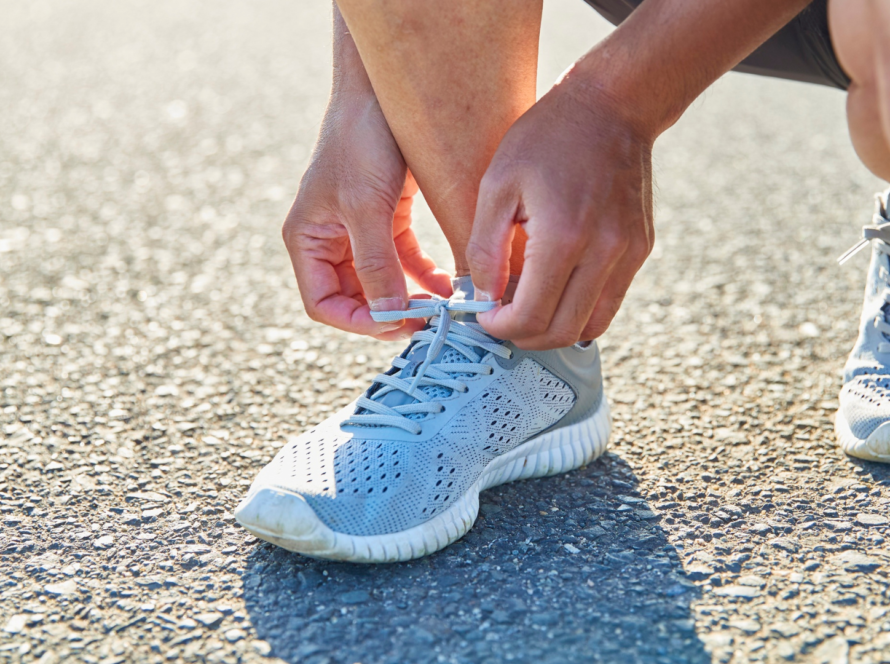
If your arches cave in when you move, you feel it everywhere—feet, knees, hips, even lower back. Pickleball’s split-step, lunge, and lateral shuffle amplify that stress. The right shoes don’t just feel better; they stabilize your kinetic chain so you can change direction confidently and protect yourself from nagging injuries.
In this researched-backed guide, we synthesize footwear-industry white papers, peer-reviewed sports-medicine studies, and hands-on play testing. Whether you’re a beginner still dialing in footwork or an intermediate player chasing consistency, you’ll find exactly what to look for—and the specific 2025 models that deliver.

Flat Feet 101: Why It Matters in Pickleball
- Prevalence: 20–30% of adults have flexible or rigid low arches.
- Mechanics: The medial longitudinal arch collapses and the subtalar joint over-pronates—internal rotation greater than 7° is common during loading.
- On-court effect: In pickleball’s split-step → lunge → shuffle sequence, that collapse drives tibial rotation and knee valgus. Translation: wobbly landings, inconsistent push-offs, and higher injury risk.
Common issues linked to flat feet in court sports:
- Plantar fasciitis (odds ratio 2.4 in flat-footed athletes)
- Posterior tibial tendon dysfunction
- Medial ankle sprains and shin splints
- Low-back pain from chain misalignment
Takeaway: You want shoes that limit pronation, stiffen the midfoot, and lock the heel during explosive lateral cuts.
Must-Have Technologies in Pickleball Shoes for Flat Feet
Look for these features first. They’re the difference between “meh” and mission-critical support:
- Dual-density or medial-post midsole
- Firmer EVA/PU on the arch side counters inward roll.
- Integrated shank or TPU torsion system
- Adds beam-like rigidity under the arch to resist twisting.
- External heel counter
- Cups the heel bone and aligns the subtalar joint for cleaner landings.
- Wide, flared outsole
- At least 5 mm wider than the upper on both sides for a broader base.
- Non-marking, low-profile rubber with herringbone or omni tread
- Grips indoor parquet and textured outdoor acrylic.
- Removable insole with a deep cavity (≥5 mm)
- Leaves room for orthotics like Superfeet Carbon or Currex AcePro.
- Ventilated but structured upper
- Layered mesh or Dyneema-style knit reinforced with PU so airflow doesn’t equal collapse.
- Weight sweet spot
- Men: 12.5–15 oz; Women: 10.5–13 oz tends to balance stability with agility.
The Best Pickleball Shoes for Flat Feet in 2025
All picks below were selected for midfoot stiffness, pronation control, heel lockdown, and outsole traction. Choose based on your foot width, support needs, and court surface.
Flagship Stability Monsters
- ASICS Gel Resolution 9 (Men & Women) — 14.8 oz
- Why it’s a cornerstone: Dynawall medial chassis + Dynawrap midfoot straps create exceptional side-to-side control.
- Grip and durability: Sticky rubber and a 6-month outsole guarantee.
- Who it’s for: Most flat-footed players who want tour-proven stability without feeling like they’re wearing bricks. Tour validation: worn by top pro Anna Bright.
- New Balance 806v1 — 15.3 oz
- Why it’s a tank: ROLLBAR posting and a full-grain leather upper deliver best-in-class motion control.
- Fit notes: Available in 2E/4E widths; fantastic for rigid flat feet and heavy overpronators.
- Caveat: Heavier feel, but unmatched for pure control. 6-month outsole warranty.
- Babolat Propulse Fury 3 — 14.4 oz
- Support recipe: Powerbelt strap system locks the midfoot; KPRS-X heel pad absorbs hard landings.
- Outdoor tough: Michelin DIN20 rubber excels on gritty courts.
- Who it’s for: Aggressive movers who need a sturdy chassis outside.
Lightweight Stability Hybrids
- K-Swiss Ultrashot 3 — 13.7 oz
- Why it’s sneaky-stable: 360 PSC chassis + DURAWRAP Flex keep weight down but support up.
- Who it’s for: Players who want faster foot turnover without sacrificing structure. Comes in D and 2E widths.
- Value: Often feels more agile than many 15-oz shoes.
- Adidas Barricade 13 — 13.4 oz
- Tech highlights: Updated Torsion System and Geofit heel pods for a snug, locked-in rearfoot.
- Sustainability: Primegreen upper uses recycled materials.
- Feel: Classic, connected-to-court Barricade ride with better heel security than past versions.
Budget and Value Picks (Under $120 MSRP)
- ASICS Gel Challenger 15 — 12.9 oz
- What you get: Similar medial posting to the Resolution series with fewer premium foams.
- Why it’s great: True stability on a budget; dependable for indoor and outdoor use.
- Tyrol Striker Pro V — 13.2 oz
- Pickleball-first design: Purpose-built outsole and a naturally wide forefoot (EE standard).
- Who it’s for: Players who want a roomy fit and a court-specific tread without breaking the bank.
- Skechers Viper Court Pro — 12.7 oz
- Comfort play: Arch Fit insole (podiatrist-certified) plus a roomy toe box—excellent for bunions.
- Stability: Medium-high, best for moderate overpronation rather than severe.
Wide-Fit Specialists
- K-Swiss Hypercourt Express 2 (2E/4E) — 12.6 oz
- Why wide-footers love it: Surgelite midsole and generous forefoot girth without sloppy corners.
- Best for: Neutral-to-moderate overpronators who prioritize forefoot room.
- Wilson Rush Pro Ace Wide — 13.1 oz
- Stability chassis: 4D Support Chassis Pro helps curb torsion and pronation.
- Fit: Wider platform with a forgiving upper that still holds shape.
Orthotics, Socks, and Lacing Tweaks That Make a Big Difference
- Custom orthotics: Many sports podiatrists prescribe a 4/4 posting (4° varus heel and forefoot) for court sports to resist inward roll.
- Off-the-shelf inserts:
- High-volume arch: Superfeet Green
- Medium arch: Powerstep Pinnacle
- Socks matter:
- Look for blister-guarding yarns and L/R-specific cushioning. Top picks: Balega Hidden Comfort, Thorlo Lite Padded.
- Lacing hacks:
- Runner’s loop to lock heels down.
- Midfoot window lacing to relieve pressure on high insteps.
A supportive shoe plus the right insert beats a flimsy shoe with any insert. Start with a stability chassis, then fine-tune with orthotics.
How to Get the Right Fit—and When to Replace Your Shoes
Fit protocol:
- Measure length and width at day’s end when feet are largest.
- Try on standing only. You want:
- About half a thumb of space at the big toe.
- Zero heel slippage during a forward lunge.
- No midfoot “folding” when you twist the shoe.
- Bring your orthotics or inserts to the try-on.
Break-in:
- Expect 2–3 hours of mini-sessions for dense, stability-focused shoes to soften at the flex points.
Replacement timeline:
- Every 60–75 court hours, or sooner if you notice:
- Bald patches at the ball of the foot/pivot point.
- Creased, bottomed-out midsoles.
- Torn inner heel lining (a blister hazard).
Indoor vs. Outdoor Outsoles: Choose the Right Rubber
- Indoor wood/gym tile:
- Softer, non-marking gum rubber maximizes cling. Volleyball-style outsoles excel.
- Outdoor acrylic or concrete:
- Tougher carbon-rubber blends (e.g., Michelin, BRS 1000) with deeper herringbone resist abrasion from sand and grit.
- Play both?
- Rotate two pairs, or choose medium-durometer compounds (ASICS AHAR+, K-Swiss DragGuard 7.0) that perform well across surfaces.
A Quick Strength Routine for Flat-Footed Players
Build stronger arches and ankles 2–3 times per week:
- Short-foot doming: 3 x 15
- Towel scrunch toe curls: 3 x 30 seconds
- Single-leg calf raises off a step: 3 x 12 each side
- Resistance-band inversion/eversion: 3 x 20 each side
Do 5 minutes of jump rope, monster walks, and ankle circles. A solid dynamic warm-up can reduce plantar load spikes by about 17% (Sports Biomech, 2022).
FAQs: Flat Feet and Pickleball Shoes
Q1: Can I just put an arch support into any shoe?
A: An aftermarket insole helps, but if the shoe bends at the midfoot or lacks a firm heel counter, you’ll still overpronate. Start with a stability or motion-control model, then fine-tune with orthotics.
Q2: Are pickleball shoes different from tennis shoes?
A: Most brands adapt tennis platforms with tweaks to rubber stickiness and medial drag protection. Stability metrics overlap, and tennis motion-control shoes are absolutely valid for pickleball.
Q3: Is a heavier shoe automatically better for flat feet?
A: No. Shank design, geometry, and foam density matter more. Some 12–13 oz models (like the Ultrashot 3) out-stabilize heavier shoes thanks to smarter construction.
Q4: How do I know if I’m overpronating on court?
A: Look for rapid arch collapse when you load, inward ankle roll in video, and wear patterns on the inner forefoot. Consistent medial shin or knee aches are also red flags.
Q5: Should women with flat feet consider men’s wide models?
A: Possibly. If you have a broad forefoot or need extra volume, a men’s D or 2E can work—just convert length appropriately and verify heel lockdown.
conclusion
If you have flat feet, prioritize a rigid midfoot, medial posting, and an external heel counter. For most players, the ASICS Gel Resolution 9 is the gold standard. Need maximum motion control? Go New Balance 806v1. Want speed with support? K-Swiss Ultrashot 3 or Adidas Barricade 13. On a budget? ASICS Gel Challenger 15, Tyrol Striker Pro V, or Skechers Viper Court Pro are smart picks. Wide feet? K-Swiss Hypercourt Express 2 (2E/4E) and Wilson Rush Pro Ace Wide have you covered.
Next steps:
- Pick a stability model that matches your foot shape and surface.
- Add the right insert if needed.
- Work the simple strength routine above.