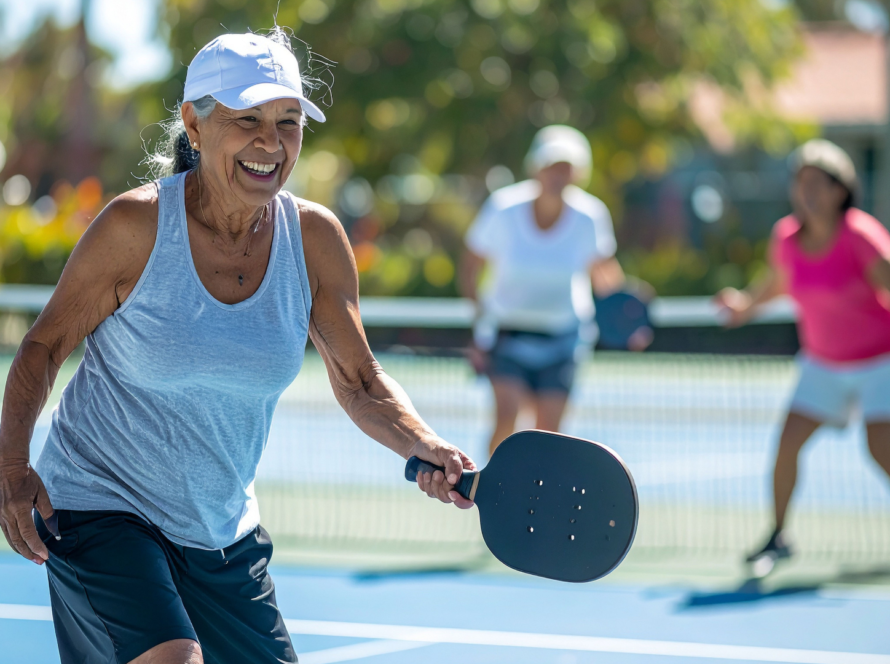
Concrete and asphalt are the toughest surfaces you can play pickleball on—both for your body and your shoes. They offer almost no energy return, they’re abrasive, and they heat up fast in summer. Translation: your joints take more of a beating, and your outsoles grind down much sooner than they would indoors.
The fix isn’t one magic shoe. It’s choosing a hard-court-specific build: harder rubber, real sidewall protection, torsional stability, and enough cushioning—especially up front—to handle hours on unforgiving ground. This guide simplifies what to buy, how to fit it, and how to make it all last longer, with the best 2025–26 models for every budget and foot shape.

Why concrete courts chew up shoes (and knees)
- Minimal energy return: Concrete barely compresses, so your foot, ankle, and knee absorb much more impact per stride.
- High friction: Abrasive texture sands rubber fast; cheaper outsoles can lose tread shockingly quickly.
- Heat build-up: Hot slabs accelerate foam compression and can weaken adhesives—especially in midsummer.
What that means for you:
- Choose high-durometer (harder) rubber outsoles.
- Look for torsional stability (midfoot shanks/plates) and lateral flanges to resist rollovers.
- Prioritize thicker forefoot cushioning for dinks, resets, and split-steps.
Must-have tech for outdoor hard courts
- High-carbon, high-durometer rubber:
- Michelin DIN 35 (Babolat), AHAR+ (Asics), NDurance (New Balance 996 v5), Goodyear rubber (Adidas), DragGuard/DuraWrap (K-Swiss).
- Wrap-up outsole or lateral flange:
- Helps prevent side-wall blow-outs during emergency slides. Seen in Asics Gel-Resolution 9, Wilson Rush Pro 4.0, Nike GP Challenge Pro.
- Midsole “energy” plate:
- TPU/Pebax plates add snap and stability (Asics Twistruss, Adidas EnergyRods, Wilson 4D-Support).
- Toe-drag protection:
- PU skins or regrind rubber around the big toe side (Prince T22, Head Revolt Pro 4.5).
- Subtle rocker geometry:
- Easier transitions and less forefoot torque (Asics Solution Speed FF 3, Franklin ACV Pro, Nike Vapor/GP series).
The best pickleball shoes for concrete (2025–26)
Below are field-tested picks organized by tier. All models are compatible with pickleball movement patterns on outdoor hard courts.
Elite tier (top performance and tech)
-
- Why it’s great: Featherweight with lively “snap” and strong heel rubber. Excellent all-rounder for quick movers.
- Watch-outs: Narrow through the midfoot; try before you buy if you have wide feet.
- Best for: Players who want speed without giving up stability.
-
- Why it’s great: Michelin DIN 35 outsole is a durability king; Kevlar-reinforced upper holds shape.
- Watch-outs: Cushioning is on the firm side for heavier players.
- Best for: Aggressive players who destroy outsoles and prefer a locked-in, fast feel.
-
- Why it’s great: One of the most stable platforms for lateral lunges; easy break-in.
- Watch-outs: Runs warm in peak summer.
- Best for: Players prioritizing stability and support; available in 2E wide.
-
- Why it’s great: Thick Zoom cushioning, rigid lateral wing, and outstanding toe spring for quick starts.
- Watch-outs: Higher heel-to-toe drop; try it if you like a “lifted” heel feel.
- Best for: Players who want plush impact protection without sacrificing court feel.
Upper mid-tier (durable, supportive, slightly heavier)
-
- Why it’s great: Tank-like outsole and a squared forefoot that lets your toes splay naturally.
- Watch-outs: Heavier and stiff out of the box; break-in needed.
- Best for: Power players and durability seekers, especially in wide sizes.
-
- Why it’s great: Goodyear outsole plus Torsion System equals excellent lockdown and side-to-side control.
- Watch-outs: Stiffer upper; expect a multi-hour break-in.
- Best for: Players who demand top-tier stability and predictable traction.
-
- Why it’s great: Plush midsole with instant comfort and very solid shock dampening.
- Watch-outs: Tread can wear faster for frequent toe-draggers.
- Best for: Weekend warriors and rec players prioritizing comfort on concrete.
Value picks (great performance under $130)
-
- Why it’s great: Light, breathable, with dependable drag protection; available in 2E and 4E.
- Watch-outs: Not as torsionally rigid as the Barricade or Rush Pro.
- Best for: Players wanting comfort and width options without breaking the bank.
-
- Why it’s great: NDurance rubber plus a lively FuelCell midsole; multiple widths (B/D/2E).
- Watch-outs: Medium toe box—not the roomiest.
- Best for: All-around players who want a balanced ride and reliable durability.
-
- Why it’s great: Legendary toe-drag durability and bargain street prices.
- Watch-outs: Heavy; feels “bricklike” to some.
- Best for: Budget-conscious players who shred the toe box.
Minimal/natural option
- Xero 360
- Why it’s great: Ultra-light, zero drop, and surprisingly grippy for court drills.
- Watch-outs: Essentially no dampening; use only if you’re conditioned for minimalist footwear.
- Best for: Natural-movement fans and training days, not long concrete sessions.
Special needs and scenarios
- Wide feet or bunions: FitVille WideCourt, New Balance 1006 (4E), K-Swiss Hypercourt (2E/4E).
- Heavier players (about 220 lb / 100 kg and up): New Balance Fresh Foam Lav V2, Adidas Cybersonic 2, Asics Gel-Resolution 9 (thicker forefoot stacks).
- Hot climates: Head Sprint Pro 3.5, Lotto Mirage 100 SPD (very breathable meshes).
- Dewy mornings or dusty courts: Saucony Blaze TR (trail-court hybrid) for extra bite when it’s slick.
Performance leaders at a glance
- Durability champs: Babolat Jet Mach 3, SQAIRZ XRZ, Adidas Barricade 13.
- Traction standouts: Franklin ACV Pro, Nike GP Challenge Pro, Wilson Rush Pro 4.0.
- Cushioning kings: New Balance Lav V2, Asics Gel-Resolution 9, Diadem Court Burst.
- Stability anchors: Wilson Rush Pro 4.0, Adidas Barricade 13, Babolat Propulse Fury 3.
- Speed/weight rockets: Asics Solution Speed FF 3, Mizuno Wave Exceed Tour 6, Babolat Jet Mach 3.
Fit and biomechanics: quick checklist
- Heel fit: Do the two-finger test. If you can easily slide two fingers down the heel collar, size down a half.
- Forefoot splay: Stand and spread your toes. The upper should “tent” slightly, not crease sharply.
- Pronation control:
- Overpronate? Look for sturdy midfoot support or a plate (e.g., Adidas Torsion).
- Supinate? Prefer flex-friendly forefoots (K-Swiss Hypercourt Supreme, Xero 360) and avoid overly rigid plates.
- Heel-to-toe drop:
- Low (4–6 mm): Quicker first step, more calf load.
- Standard (8–12 mm): More ankle-friendly and spreads impact better—good for concrete.
- Width decoding: B (narrow women), D (standard), 2E (wide), 4E (extra wide). Don’t rely on “wide friendly” claims—check the box label.
Make your shoes last longer on concrete
- Rotate two pairs: Give foams 24 hours to rebound; you’ll often gain ~15% more life.
- Watch for wear indicators:
- If the herringbone disappears across the ball of the foot, traction is compromised.
- Deep horizontal “smile” creases in the midsole = it’s time.
- Expect realistic lifespans:
- Frequent/elite play: 50–70 hours on concrete.
- Recreational play with premium rubber: 80–110 hours.
- DIY toe protection: A thin layer of Shoe Goo on your high-drag zone can buy another ~10 hours.
- Cleaning and storage:
- Hand-scrub with mild dish soap. Avoid hot water, heat guns, or dryers.
- Air-dry stuffed with newspaper; don’t leave in hot cars.
Insoles and socks that make a difference
Insole upgrades:
- Superfeet Carbon: Low-profile support that won’t crowd the heel.
- Spenco Rx Comfort: Extra Poron cushioning for heel bruise prevention.
- PowerStep ProTech Control: Firm cradle for persistent plantar fasciitis.
- Tip: Always remove the stock insole and check collar height after installing a new one.
Sock synergy:
- Summer: Thin, wicking quarter-crew (Balega Ultralight, Feetures Elite).
- Winter: Merino/Coolmax blend crew (Swiftwick Pursuit Seven).
- Blister control: Double-layer socks (WrightSock) can notably reduce friction.
Injury prevention you can use today
- Replace shoes before the outsole is half gone, especially at the ball of the foot.
- A subtle rocker at the heel can reduce Achilles load during quick stops.
- Lateral outriggers/flanges help resist ankle roll during wide kitchen reaches.
- After play: 90 seconds each side of calf and plantar fascia stretching to reduce flare-ups.
What to avoid on outdoor hard courts
- Knit-only lifestyle sneakers (e.g., casual runners): They collapse laterally under hard cuts.
- Deep trail lugs on dry courts: They can grab unpredictably and stress the knee.
- Ultra-cheap midsoles: Low-grade EVA packs out fast and loses support in a few sessions.
FAQ
Q1: Are tennis shoes okay for pickleball on concrete?
A: Yes. The movement patterns are similar, and many tennis shoes excel outdoors thanks to durable rubber, torsional support, and toe-drag guards.
Q2: How long should pickleball shoes last on concrete?
A: Expect 50–70 hours for frequent play and 80–110 hours for recreational play if you choose premium rubber compounds and rotate pairs.
Q3: Do I need a wide shoe or just a roomy toe box?
A: If your forefoot feels pinched or you see the upper crease sharply over your little toe, you likely need a true 2E/4E width—not just a “generous” standard last.
Q4: Can I use my custom orthotics in court shoes?
A: Usually, yes. Remove the stock insole first and verify you still lock into the heel without riding too high in the collar.
Q5 Are trail running shoes good for outdoor pickleball?
A: Only in damp or dusty conditions where extra bite helps. On dry courts, aggressive lugs can cause unpredictable grip spikes.
conclusion
Concrete rewards preparation. Pick a shoe with tough rubber, genuine side support, and enough forefoot cushioning to stay fresh late in matches. Fit it carefully, rotate pairs, and upgrade insoles and socks if you need extra support. If you’re unsure where to start, try the Asics Solution Speed FF 3 for speed, Wilson Rush Pro 4.0 for stability, or Babolat Jet Mach 3 for longevity.
Ready to dial in your setup? Grab one of the picks above, do the two-finger heel test at home, and commit to a simple rotation plan—you’ll feel the difference by next weekend.