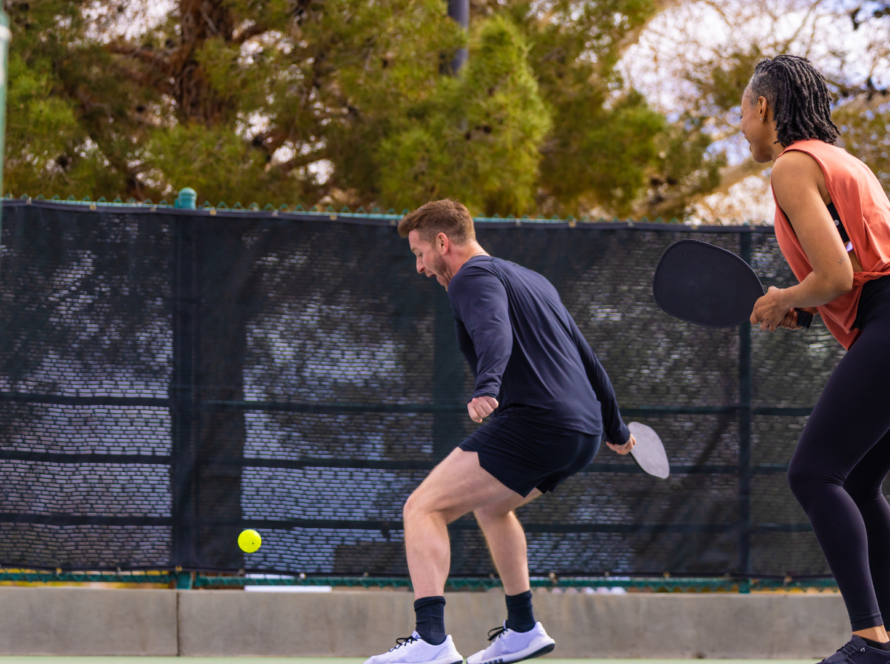
Pickleball is fast, fun, and footwork-heavy. If you’ve ever slipped on a dink, felt your ankles wobble on a split-step, or finished a session with sore arches, your footwear is likely the culprit—not your mechanics.
This guide breaks down what makes a true pickleball shoe different from tennis or running shoes, how to choose the right outsole for indoor vs. outdoor courts, and which models are earning buzz in 2025. You’ll also find fit solutions for common foot issues, simple traction tests you can do in-store, and a realistic timeline for when to replace your shoes.
Whether you play twice a week or you’re drilling daily, use this as your no-hype, beginner-to-intermediate pickleball shoe buying guide.

Why Pickleball Shoes Are Not Tennis Shoes (or Running Shoes)
Pickleball footwork is unique. Shoes built for it protect you better and help you move more efficiently.
- Movement pattern: Pickleball rallies are 70–90% lateral and diagonal. Tennis is closer to 60% lateral, and running is 90%+ straight ahead. Shoes must prioritize side-to-side stability.
- Lateral shank height: Pickleball shoes often wrap the shank higher along the inner and outer sidewalls to resist twisting during split-steps, lunges, and third-shot drops.
- Pivot-circle vs. herringbone: Many pickleball-specific outsoles add a small circular pivot under the ball of the foot for micro-pivots during dink volleys, instead of relying only on herringbone.
- Contact time and decelerations: Pickleball points are shorter (8–12 seconds) on a smaller court, which means more stop/starts per minute. The midsole must survive repeated shock cycles.
Running shoes are too linear and soft, and most tennis shoes don’t pivot as well at slow, close-range exchanges. Purpose-built pickleball shoes can reduce ankle rolls and give you more controlled grip.
Indoor vs. Outdoor Pickleball Outsoles (Quick Visual Test)
Match the rubber to your court for the best balance of grip and durability.
- Gum rubber (usually caramel): Best for indoor wood or sport-court floors. High tack, non-marking, but wears quickly outdoors.
- Carbon-infused or “Dura” rubber (usually darker): Best for outdoor concrete or coated asphalt. Slightly less sticky, but lasts 2–3x longer.
- Hybrid wave/tread: Great if you switch surfaces. Perimeters use outdoor compounds; center pods use tackier indoor rubber (e.g., Tyrol Drive V).
If you hear an aggressive squeak on gritty outdoor courts, the compound might be too tacky, increasing trip risk. Aim for progressive, not sudden, braking outdoors.
Anatomy of a Modern Pickleball Shoe
Understanding the components makes it easier to choose the right model.
Heel counter
- External TPU or carbon “cradle” that locks the heel (calcaneus) to prevent rear-foot wobble in split-steps and recovery moves.
Midsole stack (cushion + rebound)
- EVA: Light, budget-friendly.
- Injected EVA + TPU rods (e.g., Asics FlyteFoam, New Balance FuelCell): Balanced cushion/stability.
- Pebax plates or carbon wings (e.g., On The Roger Pro, Fila Speedserve): Premium energy return and torsional control.
Lateral wall flare
- 2–4 mm extra outsole width at the lateral forefoot helps reduce inversion sprain risk.
Uppers
- Mono-mesh: Light and breathable (e.g., Solution Speed FF 3).
- 4-way stretch knit with fused overlays: Comfort with structure (e.g., Diadem Court Burst, Skechers Viper Court Pro).
- 3D stitch-weld: Durable without bulky leather (e.g., Adidas Barricade 13).
Toe drag guard
- Textured PU films (e.g., K-Swiss DragGuard 7.0) resist abrasion for toe-draggers.
Insole/last
- Most stock insoles are 4–5 mm EVA. Upgrading to Currex Ace or Superfeet Carbon Pro can improve arch integrity and extend midsole life.
Specialty Fit Issues and Easy Fixes
Choose based on your foot shape and history, not just brand loyalty.
- Wide forefoot / narrow heel: New Balance 996v5 (2E), FitVille Wide, K-Swiss Court Express.
- High arches / plantar fasciitis: Asics Gel-Resolution 9, Skechers Viper Court Pro (supportive Arch Fit insole).
- Low arches / flat feet: Diadem Court Burst (full-length strobel board), Yonex Sonicage 4 (TPU shank support).
- Bunions / hallux rigidus: SQAIRZ XRZ and Babolat Jet Mach 3 with squared toe boxes reduce lateral squeeze.
Pro tip: If you use ankle braces, bring them when trying shoes to confirm volume and lockdown.
How to Check Real-World Traction in the Store
A 60-second test can save you from slippery or overly sticky misfits.
- On a polished tile aisle, set one foot at 45°.
- Flex your knee over your toe and gently twist.
- Minimal slippage = good for indoor. Loud squeak on rougher floors may be too grabby outdoors.
- For outdoor play, mimic a slide-stop on low-pile carpet. You want progressive, not abrupt, braking.
How Long Do Pickleball Shoes Last?
Use the “Rule of 70” as a quick compass.
- Typical lifespan: 60–80 on-court hours.
- Heavy players (≥190 lb) or toe-draggers: ~50 hours.
- Light, finesse players: up to ~90 hours.
- Replace when: The lateral forefoot tread is flush at the pivot point—lateral stability is gone and ankle-roll risk jumps.
Extend life by rotating two pairs (midsoles rebound better after 24 hours), which can add 15–20% more use.
Break-In and Care Tips
- Don’t “microwave” shoes—old myth that damages adhesives.
- Warm break-in: Wear around the house for 2–3 hours to let foams mold.
- Post-match: Stuff with newsprint or use cedar trees; avoid hot car trunks (heat cooks glue).
- Cleaning: Hand-wash uppers with mild soap; machine washing can break bond lines.
Shoe + Sock = A System
Technical socks can make a $120 shoe feel $30 better.
- Look for quarter or crew height, forefoot padding, and arch compression.
- Favorites: Swiftwick Flite XT, Thorlo TX-11.
- Expect roughly 30% lower blister risk vs. cotton.
Safety Add-Ons Worth Considering
- Runner’s loop lacing for 10–15% better heel lockdown.
- Ankle braces that fit inside mid-volume shoes—test with the shoe.
- BOA dial closures (Acacia, K2, Salming) for on-the-fly micro-adjustments as feet swell in heat.
Price Bands: What Extra Dollars Usually Buy
- Under $80: Basic EVA midsoles, synthetic uppers, minimal torsion control. Fine for 1–2x/week rec play.
- $80–$120: Dual-density foams, light TPU shanks, better rubber, and engineered mesh.
- $120–$160: Branded foams, carbon/glass-fiber shanks, pivot circles, and often 6-month outsole warranties.
- $160+: Pebax or nitrogen foams, full-length plates, BOA/sock collars, lighter weights, player-validated designs.
Eco Notes (If Sustainability Matters to You)
- Adidas Barricade 13: Upper includes Parley ocean plastic.
- Wilson Rush Pro 4.0 PB: Midsole with 21% sugarcane-based EVA.
- On The Roger Pro 2: Factory powered by renewables; send-back program to grind pairs into playground surfaces.
Quick-Hit Buying Checklist
Use this before you add to cart:
- Surface: indoor, outdoor, or hybrid?
- Foot width and volume
- Injury history: ankles, plantar fasciitis, knees
- Traction preference: tacky vs. slide-friendly
- Cushion vs. court feel (stack height)
- Budget and durability expectations
- Return window: at least 30 days for at-home tests
Future Tech to Watch
- 3D-printed midsoles (e.g., Adidas 4DFWD PB) tuned differently under lateral vs. medial edges.
- Smart insoles that flag worn-out outsoles (pilot programs are coming).
- Recyclable, single-polymer uppers bonded via ultrasonic welding for easier end-of-life processing.
FAQ: Pickleball Shoes
Q: Can I just wear my tennis shoes for pickleball?
A: You can, but pickleball shoes typically pivot better at the forefoot and provide higher lateral shank support for quick dinks and split-steps. If you play weekly, a pickleball-specific model reduces roll risk and improves control.
Q: What’s the difference between indoor vs. outdoor pickleball shoes?
A: Indoor shoes use tackier, gum-like rubber for wood and sport-court floors. Outdoor models use tougher, darker compounds that sacrifice a touch of stickiness for 2–3x durability on concrete/asphalt.
Q: How do I choose the right size and width?
A: Aim for a thumb’s width in front of your longest toe, snug midfoot/heel, and zero heel lift. If you have a wide forefoot but narrow heel, try models offered in 2E or shoes known for split-lasted forefoots (e.g., New Balance 996v6 2E).
Q: Are BOA dial closures worth it?
A: If your feet swell in heat or you like quick fit tweaks between games, yes. BOA closures (e.g., Acacia Dinkshot II) give even tension and micro-adjustments without retying laces.
Q: How long do pickleball shoes last?
A: Most players get 60–80 court hours. Watch the lateral forefoot pivot zone—when the tread goes flat there, replace to keep lateral stability.
CONCLUSION
The best pickleball shoes match your surface, movement, and foot shape. Start with the right outsole (indoor vs. outdoor), prioritize lateral stability and a controlled pivot, and solve for your specific fit needs. Rotate pairs, upgrade your socks, and replace on schedule to protect your ankles and keep your game sharp.