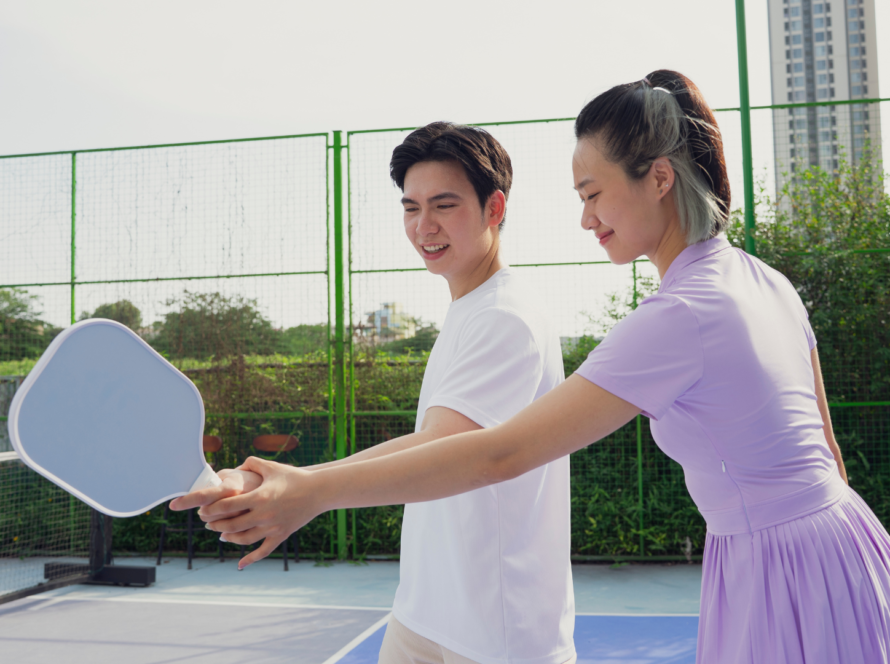
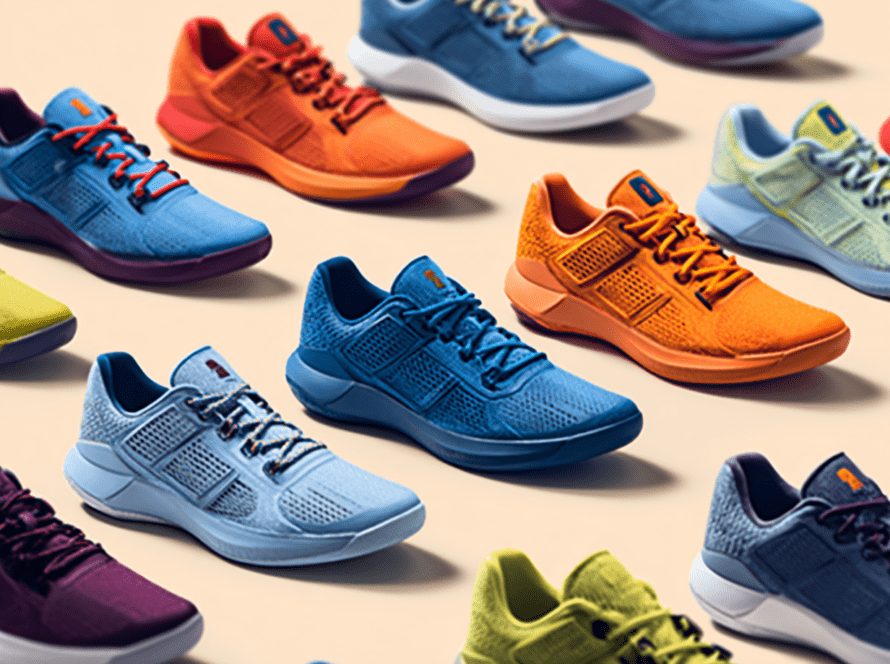
Pickleball is booming. U.S. participation has jumped from roughly 5 million players in 2021 to an estimated 13 million in 2025. More players and more court time mean more wear on your body—especially your feet and ankles.
If you’ve been playing in running shoes or whatever’s in the closet, this is your sign to upgrade. Pickleball asks your feet to stop, start, and slide laterally over and over. The right shoes keep you balanced, protect your joints, and help you move with confidence. The wrong ones? They don’t just scuff the court; they can scuff your ligaments.
This guide breaks down exactly what to look for, how to choose indoor vs outdoor models, how much to spend, and how to get the right fit—so you can play better and reduce injury risk from day one.

Why Footwear Matters in Pickleball
- Lateral shear forces in a typical rally can exceed 2.5× your body weight during the split-step and first shuffle.
- Running shoes are built for straight-ahead (sagittal) movement. Pickleball is mostly side-to-side. That mismatch leads to rolled ankles, arch strain, and sore knees.
Pickleball is a series of micro-shuttles—quick cuts, stops, and pushes. Your footwear needs to match that choreography: stable, grippy, and supportive in all directions.
What Makes a “Pickleball Shoe” a Pickleball Shoe?
Court shoes share some DNA with tennis and volleyball models, but pickleball-specific designs are tuned for frequent lateral movement, hard stops, and quick recovery steps.
Outsole: Grip That Doesn’t Mark or Melt
- Non-marking, high-durometer rubber (roughly 75–85A) for outdoor acrylic courts.
- Multi-directional herringbone or modified chevron tread that “bites” during shuffles and pivots.
- Indoor models use softer gum rubber for PU-coated wood or sport-tile floors.
What you’ll feel: confident traction without that “stick-and-trip” sensation.
Midsole: Cushion Without Losing Court Feel
- Dual-density EVA or polyurethane blends for shock absorption plus responsiveness.
- TPU shanks or torsion bars limit mid-foot twisting during lunges and wide pickups.
What you’ll feel: cushioned landings and stable push-offs.
Upper: Durable, Breathable, Quick On/Off
- Abrasion-resistant toe caps for drag on low volleys.
- Breathable mesh with welded overlays to keep weight in the sub-13 oz range (men’s size 9 target).
- A wider opening helps for rec-center culture—on, off, and back on court fast.
Last and Fit: Built for Side-to-Side
- Flatter last and 4–8 mm heel-to-toe drop for a neutral, ready stance.
- Slightly wider forefoot “splay zone” to accommodate lateral expansion on cuts.
Replaceable Insoles: Easy to Upgrade
- Many models now ship with removable, perforated Ortholite footbeds—handy if you use orthotics or prefer custom insoles.
Indoor vs Outdoor Pickleball Shoes
Choosing the right sole for your surface keeps you safe, fast, and sure-footed.
Indoor-only:
- Soft, sticky gum rubber
- Shallower tread (≤2 mm)
- Moderate ventilation (cool gyms)
- Average lifespan: 6–9 months (playing ~3×/week)
Outdoor-only:
- Hard, abrasion-resistant rubber
- Deeper tread (2.5–3 mm)
- Max airflow (sun/heat)
- Average lifespan: 9–12 months (playing ~3×/week)
Pro tips:
- Outdoor shoes can squeak and slide on dusty indoor courts because the rubber is too hard to “bite.”
- Indoor gum soles will shred quickly on rough outdoor surfaces like painted concrete or asphalt.
How Much Should You Spend? Cost, Lifespan, and Value
- Entry level ($60–$90): Solid non-marking sole and basic stability. Fine for casual play.
- Mid-tier sweet spot ($90–$130): Best blend of cushioning, stability, and durability for most players.
- Flagship/pro ($130–$170): Lighter foams, plates, and premium uppers for players who want every edge.
A quick ROI check: If you play 3 sessions a week for 2 hours, a $110 mid-tier shoe that lasts 10 months costs around $0.46 per playing hour—less than a can of pickleballs.
Time to replace when you see:
- Bald tread in pivot zones.
- Midsole feels “flat” and dead (hand-flex test shows less rebound).
- Upper wrinkling or leaning to one side (torsion breakdown).
Fit Checklist: Nail Your Size in 5 Minutes
Bring your actual playing socks and any orthotics to the store. Then:
- Traction test: Twist on a smooth floor. You want confident grip, not a sticky stop.
- Lockdown: During two-foot hops, your heel should lift less than 1/8 inch.
- Toe buffer: Leave about 1/4 inch from your big toe to the front bumper for swelling.
- Width check: In a lateral lunge, your foot shouldn’t bulge over the midsole edge.
- Orthotic fit: Make sure the removable insole isn’t too shallow for your insert.
Common Injuries and How Shoes Help Prevent Them
Ankle sprains (sudden inversion on a cut)
- Look for: rigid heel counters, lateral outriggers, supportive shanks.
Plantar fasciitis (repetitive shock and arch collapse)
- Look for: supportive midsoles, a last with built-in arch support, optional medial posting.
Patellar tendonitis (hard stops on stiff courts)
- Look for: responsive yet cushioned foams that absorb impact without feeling mushy.
Achilles strain (over-striding, poor heel fit)
- Look for: 4–8 mm drop, padded collar, secure heel cup.
Metatarsalgia (forefoot pain on hard courts)
- Look for: targeted forefoot cushioning pods, not just heel padding.
A proper warm-up plus proper footwear can cut ankle sprain odds dramatically—don’t skip either.
Top Brand Technologies to Know in 2025
- ASICS: Trusstic mid-foot stabilizer, AHAR PLUS rubber, FlyteFoam midsoles.
- K-Swiss: 180 PSC plantar support chassis, DragGuard toe wrap, Surgelite foam.
- Babolat: KPRS-X heel pad, Michelin DIN 35 compound, Power Straps.
- Head: HyBrasion+ outsole, Lateral Control frame, cooling vents.
- Wilson: Duralast HF outsole, 4D Support Chassis, R-DST+ cushioning.
- Skechers: Arch Fit insoles (podiatrist-certified), Goodyear rubber, HyperBurst foam.
- Adidas: Adituff toe guard, Bounce Pro foam, Torsion System.
- Tyrol: EVA midsole, anti-torsion plate, Vibram non-marking compound.
Use tech labels as a quick proxy for the shoe’s intent: stability systems and torsion plates for control; branded rubber compounds for traction and wear.
Quick Picks by Player Type and Schedule
Casual (<1×/week)
- What to buy: Entry-level court or tennis shoe with a non-marking sole.
- Budget: $60–$90
- Replace: Every 12–18 months or when the tread smooths out.
Regular (2–3×/week)
- What to buy: Pickleball-specific models with a TPU shank and lateral outrigger.
- Budget: $90–$130
- Replace: Every 8–12 months; rotate two pairs if you can.
Competitive (4×/week and tournaments)
- What to buy: Lighter, high-spec pickleball shoes with advanced foam and a stability plate.
- Budget: $130–$170+
- Replace: Every 4–6 months; alternate pairs to keep foam fresh.
Care Tips to Make Your Shoes Last Longer
- Alternate pairs. Foam needs 24–48 hours to fully rebound.
- Court-only rule. Wear slides to and from the venue; asphalt chews outsoles.
- Clean gently. Hand-wash midsoles with mild dish soap to reduce grime-related wear.
- Don’t cook them. Avoid hot car trunks—excess heat can un-bond glue.
FAQ: Pickleball Shoes, Answered
Q: Can I wear volleyball shoes for pickleball?
A: Indoors, yes—both use gum rubber and lateral shank support. Outdoors, no—the softer gum rubber burns off fast on rough surfaces.
Q: Are tennis shoes okay for pickleball?
A: As a stop-gap, yes—especially outdoors. But pickleball-specific shoes tune traction patterns, lateral stability, and torsional control to the sport’s constant side loads.
Q: I’m 65 and mostly dink—do I still need court shoes?
A: Yes. Players 60–78 have a higher statistical risk of falls. Proper court shoes with secure heel cups and stable platforms are a smart safety investment.
Q: Are there women-specific pickleball shoes?
A: Most brands offer women’s lasts (narrower heel, lower instep). Popular picks include K-Swiss Express Light Pickleball and Skechers Viper Court Pro W.
Q: What about minimalist or zero-drop shoes?
A: Not recommended for hard courts. Data show increased metatarsal stress injuries with minimalist designs under lateral loads.
Q: Can I use custom orthotics in pickleball shoes?
A: Usually yes—many have removable insoles. Bring your orthotics to the fitting and ensure the shoe’s volume and arch profile accommodate them without heel lift.
The Bottom Line
Purpose-built pickleball shoes deliver lateral stability, dependable traction, and torsional control—exactly what the sport’s side-load physics demand. The result: fewer rolled ankles, happier knees and arches, and more confident movement on every point. Tennis shoes can get you by, but pickleball-specific models are optimized for safety and performance.
Ready to upgrade? Try on indoor vs outdoor pairs depending on your court, bring your game-day socks and orthotics, and test for lockdown and forefoot room. For most players, a mid-tier pickleball shoe hits the best balance of value, durability, and support.
Feet don’t get a substitute player—protect them.