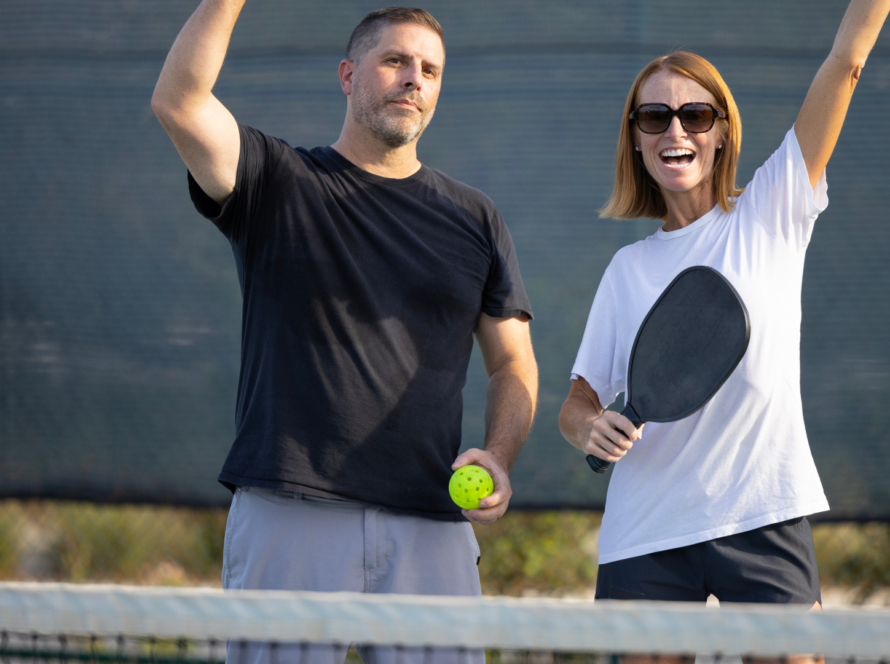
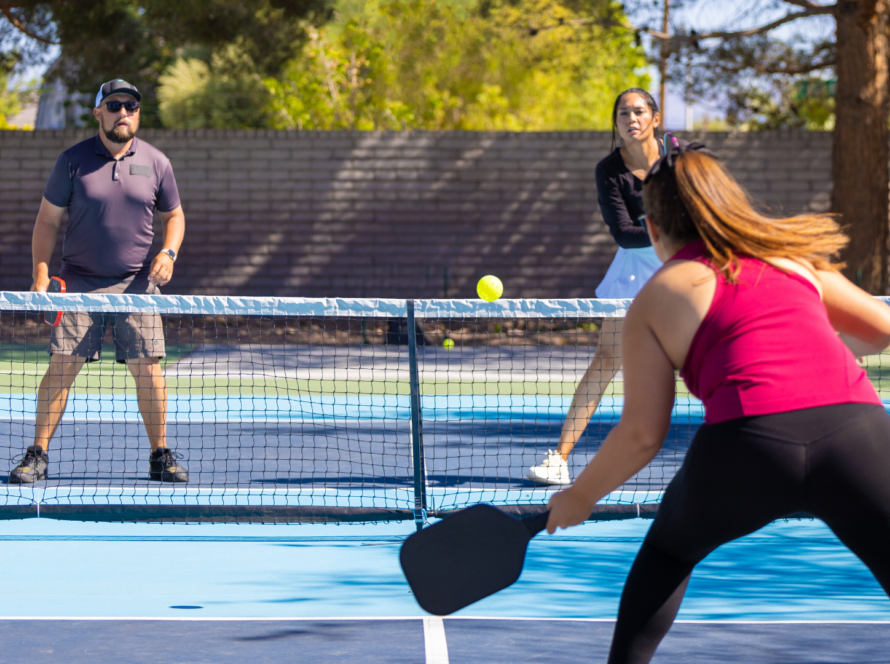
If you play pickleball like your life depends on getting to the kitchen first, you’ve probably looked at the ASICS Solution Speed line. I’ve been in the outgoing FF 2 for a while, so when the ASICS Solution Speed FF 3 dropped, I took it straight into split-step drills and poach-heavy games to see if the upgrade is real—or just a new number on the box.
Short answer: it’s real. The FF 3 feels like a running shoe snuck into a Pickleball chassis—lighter on your feet, grippier on dusty courts, and noticeably cooler during indoor sessions. There are trade-offs (durability took a small hit), but if your style is fast feet, fast hands, this update is built for you.
Let’s break down what actually changed and how it plays for beginner to intermediate pickleball athletes who want speed without wrecking their legs.

The 60-second verdict
- The ASICS Solution Speed FF 3 is around 7–8% lighter than the FF 2, with a subtle rocker in the heel that helps you roll into your next step faster.
- Traction is better—on dusty hard courts, it bites sooner, so you stop and change direction with less slide.
- Ventilation is way up. If indoor gyms roast your feet, the FF 3 will feel like a relief.
- Stability is “just enough” for quick cuts; if you’re a frequent ankle sprainer, look at ASICS Court FF 3 or Gel-Resolution 9 instead.
- Durability dips slightly versus the FF 2. If you grind shoes down fast or drag your toes, you’ll either rotate pairs or stick with the FF 2 closeouts to save cash.
What changed from FF 2 to FF 3 (and why you’ll feel it)
ASICS didn’t reinvent the wheel—they made the wheel spin faster.
- Lighter, springier ride: My men’s size 9 clocked in around 10.9 oz vs 11.6 oz on the FF 2. That half-ounce matters when you’re repeating short sprints to the NVZ.
- Softer foam + rocker heel: Same FlyteFoam compound, tuned a touch softer, with a 6-degree heel bevel. Translation: land softer, roll forward quicker, and your calves don’t feel as cooked after long rallies.
- SPEEDTRUSS replaces TWISTRUSS: Think of this as a better-tuned chassis under your midfoot. It’s stiff enough for push-offs but has a bit more twist flex than the FF 2, which helps you snap into your next step.
- Upper overhaul: The FF 3 goes to an engineered woven mesh (about 85% mesh with 50% recycled yarn) and fewer overlays. It wraps like a sock but breathes like a sieve—great for hot gyms or summer leagues.
- Toe box tweak: The heel and midfoot remain snug, but the toe box opens up slightly. If the FF 2 forced you to go up half a size, you might be true-to-size here.
- Better heel lock: ASICS added an asymmetrical padding pod and tied the laces to internal straps (DYNAWRAP 2.0), so the midfoot cinches without lace bite. I didn’t need a runner’s knot to stop heel slip.
“Feels like a Vaporfly had a Pickleball baby,” someone joked during testing—and honestly, that’s the vibe.
SPEEDTRUSS technology explained (in plain English)
SPEEDTRUSS is a forked support piece under your arch that acts like a torsion bar. When you plant and push laterally, it resists collapse so you can drive off the edge of your foot without wasting energy. Compared to the old TWISTRUSS, the new shank has wider “wings,” giving you a stable platform without turning the shoe into a brick. If you’ve ever felt a shoe fight you on quick direction changes, this is what keeps that feeling away.
On-court performance for aggressive pickleball
Traction you can trust on dusty courts
Dust is the enemy of confidence on hard courts and indoor acrylic. The FF 3’s computer-mapped AHARPLUS outsole grips better, stopping you shorter from full-speed slides. In practice, that meant I could attack a short ball, brake hard, and still be balanced to punch a volley. The shoe feels “bitey” in a good way—you start and stop with less delay, so you get to more balls and set your feet sooner.
The caveat: That grippy feel comes with slightly less rubber coverage and hollowed pods, which contributes to the lighter weight but also a bit faster wear.
Faster transitions, less calf burn
Between the softer foam, 10 mm drop, and heel rocker, the FF 3 rewards you for staying on your toes. The shoe feels eager to roll forward, which shows up on two moves pickleball asks you to repeat constantly:
- The explosive split-step into a diagonal lunge for a poach
- The recover-and-sprint from midcourt back to the baseline in singles
After back-to-back drill blocks, my calves felt fresher than they usually do in the FF 2. You’re getting just a touch more rebound underfoot and less “hang time” at heel strike.
Stability without the straightjacket
If you loved the FF 2’s lockdown, the FF 3 keeps that snug heel-and-midfoot wrap, thanks to DYNAWRAP 2.0. The twist flex is a hair softer, which actually makes toe-off quicker. It’s not a tank—if you’ve got a history of rolling ankles, a more structured shoe (ASICS Court FF 3, Gel-Resolution 9) is the safer pick. But for neutral movers who prize agility, the balance feels right.
Breathability that matters indoors
After 20 minutes of non-stop rallying in a warm gym, the FF 3 ran significantly cooler than the FF 2. If you’ve ever felt your feet baking in a shoe that “looks” breathable but isn’t, this is the opposite—the woven upper dumps heat fast. The trade: with fewer overlays, once you tear the mesh, the hole grows quicker. Chronic toe draggers, consider a toe guard patch from day one.
Fit and comfort: who it suits
- Sizing: True to size for most. If you upsized in the FF 2 for toe room, try your regular size in the FF 3.
- Width: Standard D for men, B for women. No wide 2E option. Wider feet should test the New Balance 996v5 or ASICS Gel-Resolution 9 in 2E.
- Arch feel: Neutral to low. If you have rigid high arches, a semi-curved insert (like Superfeet Carbon) can add support.
- Orthotics: Removable, full-length insole. The shoe accepts thinner 3–4 mm orthotics without feeling cramped.
- Break-in: Most players report a “ready in under an hour” feel. I was match-ready after one light session—faster than the FF 2 for me.
Durability and value: do the math
Here’s the honest bit: the FF 3 trades a little durability for speed and ventilation.
- Outsole: Expect slightly quicker tread wear than the FF 2, especially if you play gritty outdoor courts. Rotating pairs (alternate every 24 hours) helps the midsole rebound and can extend life by about 15%.
- Upper: The woven mesh resists initial tearing better than the FF 2’s overlay, but once it rips, it spreads faster. Toe draggers: add Shoe Goo or a Tuff-Toe patch early.
- Toe protection: ASICS upsized to PGUARD 2.0 with stitched coverage—more robust than the old glued cap.
Price-wise, the FF 3 launched at $140, while the FF 2 is often $85–$99 on closeout. If you average about 85 hours out of the FF 3 versus roughly 100 hours on the FF 2, you’re paying around 70 cents more per hour for the FF 3’s speed, grip, and breathability. Worth it if movement is your edge; if you’re on a tight budget, the FF 2 remains a steal.
Who should buy the Solution Speed FF 3 (and who shouldn’t)
Great match if you:
- Are a 4.0+ Pickleball convert playing aggressive pickleball—quick split-steps, hard brakes, and poaches are your bread and butter.
- Play singles or long-court coverage where acceleration and cushioning matter.
- Grind on indoor courts and want maximum airflow.
- Prefer a snug performance fit with a bit more toe room than the FF 2.
Think twice if you:
- Have a history of ankle sprains—lean toward ASICS Court FF 3 or Gel-Resolution 9.
- Are a heavy toe dragger—budget for toe guards or consider a more reinforced upper.
- Blow through outsoles every 6–8 weeks—durability-focused models (Babolat Jet Mach 3 with Michelin rubber) may be smarter.
How it stacks up against the competition
- Nike Vapor Pro 2: Slightly lighter, but with less cushioning and lower durability. The FF 3 feels more protective on hard courts.
- Adidas Adizero Ubersonic 4.1: Similar speed and a roomier fit but stiffer underfoot with less shock absorption.
- Babolat Jet Mach 3: The lightest feel and very durable rubber, but a narrow fit and a firmer ride.
- New Balance FuelCell 996v5: Plush cushioning, wider toe box, and a more stable feel—but heavier and not as nimble.
If you want the “running-shoe ride + court stability” mix, the ASICS Solution Speed FF 3 hits the sweet spot.
Style and colorways (2026 Q2)
Men get Sky/Peacoat/Safety Yellow, Celadon Tint/Hazard Green, plus a White/Slate Grey clay option. Women see White/Indigo Fog/Raspberry and Illusion Blue/Sunrise Red. Expect a Paris Pack around Roland-Garros with earthy accents if limited editions are your thing.
Tennis vs pickleball shoe differences—does it matter?
Pickleball asks for quicker, shorter bursts and more time near the kitchen line, so you feel shoe weight and traction tuning immediately. The Solution Speed line is “tennis-built,” but the FF 3’s lighter build, grippy outsole, and rocker-assisted transitions make it a natural fit for aggressive pickleball. You’re getting tennis-level stability without the brick feel many tennis shoes bring.
FAQ
Q1: Is the ASICS Solution Speed FF 3 good for indoor pickleball?
A: Yes. The FF 3 shines indoors thanks to excellent ventilation and a grippy outsole that bites better on dusty acrylic. If your gym floors run hot, this is a noticeable upgrade over the FF 2.
Q2: I have wide feet. Will the FF 3 work?
A: The FF 3 has a snug heel/midfoot with a slightly roomier toe box than the FF 2, but it’s still a standard width (D for men, B for women). No wide option is planned. Try the New Balance 996v5 or ASICS Gel-Resolution 9 in 2E if you need width.
Q3: Can I use custom orthotics?
A: Yes. The insole is removable, and the shoe accepts slim 3–4 mm orthotics without crowding. If you need more arch, pair with a semi-curved insert.
Q4: Clay vs all-court outsole—does it matter for pickleball?
A: Go all-court. Clay herringbone patterns are designed to release clay; on hard pickleball courts, the all-court rubber offers better braking and durability.
Q5: How long will the FF 3 last?
A: Expect around 80–90 hours on outdoor hard courts for most players, depending on body weight, movement, and court texture. Rotating pairs and patching high-wear zones can extend life.
conclusion
If your game lives and dies by first-step quickness and clean stops at the kitchen line, the ASICS Solution Speed FF 3 is the most compelling speed shoe update of 2026. It’s lighter, grippier, and cooler than the FF 2, with just enough structure to let you play aggressively without feeling boxed in. Budget hunters and durability hawks can still score the FF 2 at great prices, but if you want every movement advantage you can get, the FF 3 is the play.
Ready to move faster? Try the FF 3 in your true size, bring your preferred insoles, and do a few side-to-side bursts in-store—or order from a retailer with easy returns and test it on-court within your window. Your legs (and your poach) will notice the difference.