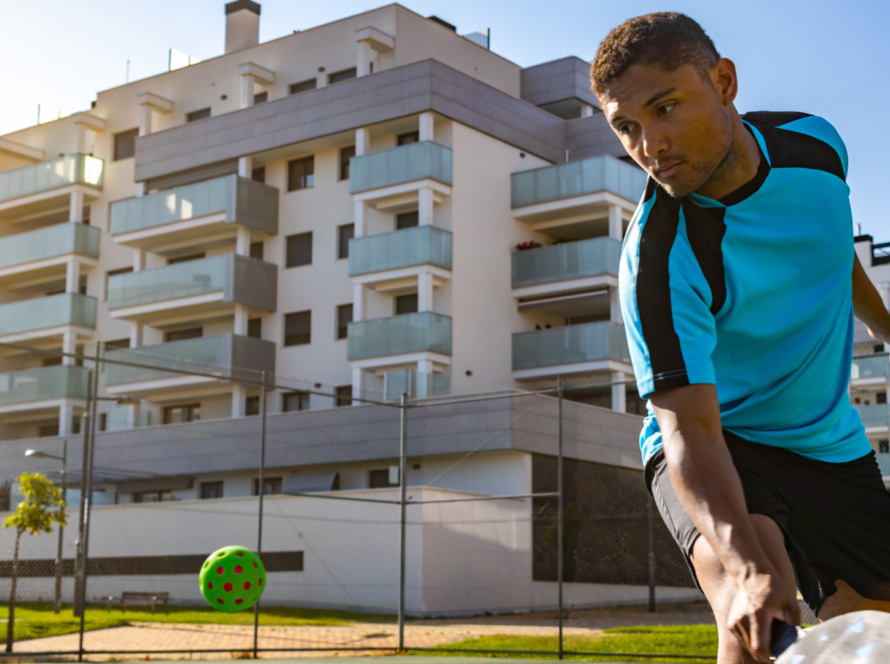
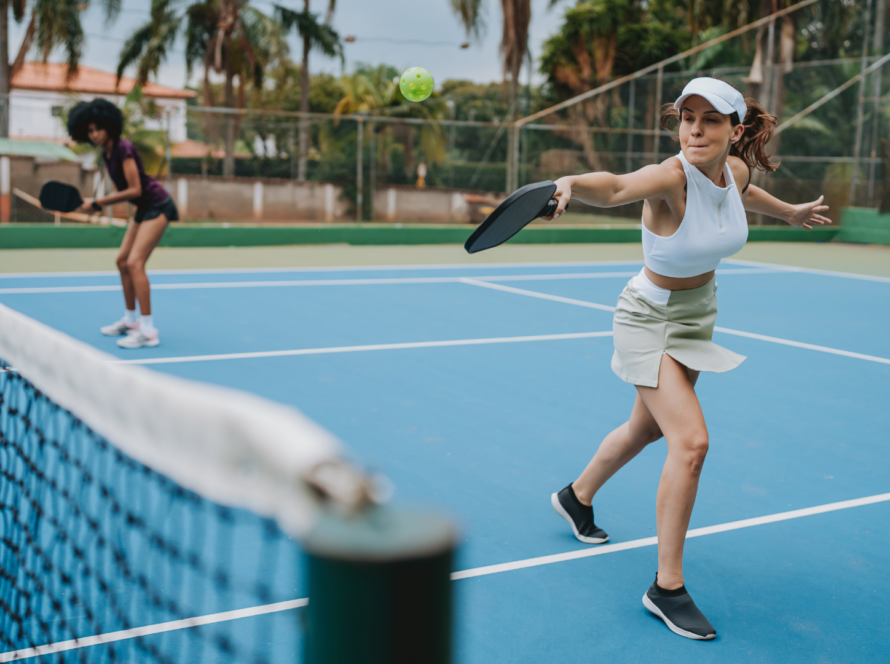
Knees grumbling after a few games? You’re not alone. Pickleball has plenty of quick cuts, stops, and pivots—great for fun, tough on joints. The right pickleball shoes won’t cure arthritis or old injuries, but they can reduce impact, control wobble, and make every step and lunge feel more confident.
This guide breaks down the must-know features (in plain English), adds a few research-backed nuggets, and gives you shoe recommendations for different needs and budgets. Whether you’re a beginner building good habits or an intermediate player chasing consistency, you’ll walk away with a plan to protect your knees and enjoy more pain-free play.

Why court shoes matter for your knees
- Pickleball is lateral. Running shoes are built for straight-ahead, heel-to-toe motion. Their curved (rocker) outsoles can tip or “roll” during side shuffles, forcing your knee to work overtime to stop that twist.
- Court shoes are flatter, torsionally stiffer, and tuned for side-to-side moves and pivots. That stiffness and sidewall support help limit internal knee rotation and valgus collapse—two common culprits behind sore knees.
What to look for in knee-friendly pickleball shoes
1) Shock absorption and stack height
- Aim for a cushioned midsole with real rebound. As a rule of thumb for cranky or arthritic knees, a heel stack around 25–30 mm with good energy return helps take the sting out of landings.
- Practical tip: If a shoe feels “dead” (you press the heel and it stays dented), skip it. Fresh foam matters.
2) Lateral stability and sidewalls
- Look for a firm heel counter, supportive sidewalls, and modest outriggers that flare 3–5 mm beyond the upper. This widens your base and limits ankle/knee wobble on hard plants.
- Note: Going too wide isn’t always better—over-wide edges can lever your knee awkwardly if you land on the outer rim.
3) Heel-to-toe drop (offset)
- Lower drop increases knee load during lunges. Research suggests each 2 mm reduction in drop can bump knee flexion moment a few percent.
- For arthritic or sensitive knees, a moderate 8–12 mm drop is a safe, comfortable sweet spot.
- Ultra-low or zero-drop court shoes are niche options and usually not ideal for sore knees unless you’re using custom orthoses and guided by a clinician.
4) Plate or shank design
- Carbon or TPU plates (torsion systems) add midfoot stiffness, which can reduce internal knee rotation during cuts.
- Balance is key: Very stiff plates may bother rigid feet. If you have forefoot sensitivity, seek “moderately stiff,” not “board-like.”
5) Fit and heel lock
- A secure heel reduces rearfoot motion, improving knee tracking. Use the runner’s loop (heel-lock lacing) to tighten the collar without crushing the midfoot.
- Your big toe should be able to engage. If the toe box pinches, you’ll lose push-off power and twist more at the knee.
Top pickleball shoes for sore knees (by category)
These picks blend cushioning, stable platforms, and reliable heel lock. Always try on, and do the in-store tests below.
Max-cushion + stable
- Hoka Court Elevate: “Max-cushion” feel with a high heel stack that soaks up impact yet stays laterally contained. Great for arthritic or heavy-impact players.
- Mizuno Wave Enforce Tour 2 AC: Wave plate + Enerzy foam, 12 mm drop; plush but structured ride.
- Yonex Power Cushion Eclipsion 5: Excellent shock reduction and shank support; a favorite among players with “bad knees.”
Stability-first with comfort
- Asics Court FF 3: Good torsion control, firm heel counter, and shock-absorbing GEL in key zones.
- Diadora Blushield Torneo 2: Damps medial/lateral shear well; a smooth, supportive feel.
- Prince T22.5: Tank-like stability and a secure upper; solid pick if you value lockdown over speed.
Pickleball-specific (2026)
- Wilson Rush Pro Ace PX: Support chassis + forgiving foam; versatile indoor/outdoor outsole.
- Babolat Jet Mach 3 Pickle: Cushioned heel pad and supportive woven upper—light but not flimsy.
- Acacia ProShot: Roomy toe box with honeycomb gel heel—good for wider forefeet.
Budget-friendly (often under $100)
- Head Revolt Pro 4.5: Legit cushioning and lockdown straps; terrific value when on sale.
- New Balance 696v5 (or NB 806 for more stability): Dependable feel and sizing breadth.
- K-Swiss Court Bravo: Affordable, with protective sidewalls that help resist roll and wobble.
If you’re taller/heavier (over ~200 lb/90 kg), you’ll generally feel better in “plush–stable” shoes (like Hoka Court Elevate, Asics Court FF 3, Yonex Eclipsion 4) versus feather-light speed models.
Smart tweaks before you buy new shoes
- Heel-lock lacing (runner’s loop): Reduces heel slip and rearfoot motion by a few millimeters—often enough to calm knee tracking.
- Thin heel pads: A 1 mm felt or Poron insert under the insole can soak extra impact without destabilizing your foot.
- Insoles and posting:
- Valgus knees (knock-kneed): Mild medial posting (4–6°) can reduce pain meaningfully.
- Varus knees (bow-legged): Try lateral posting or a wedged heel cup.
- Caution: Over-thick insoles (>6 mm) can lift you out of the heel counter and make you less stable.
- Silicone toe spacers: Help the big toe engage for a cleaner push-off and less tibial twist.
Match your shoe to your knee issue
- Patellar tendinopathy (jumper’s knee): Slightly lower drop (6–8 mm) plus forefoot cushioning to soften toe-off loading.
- Medial meniscus wear/tears: Stiffer shank + mild medial posting to limit rotation and collapse.
- IT band–related lateral pain: Prioritize a firm heel counter to reduce excess rearfoot eversion.
Always combine footwear with good mechanics, basic strength work, and sensible volume.
Test a pair in-store: a 2‑minute knee-friendly drill
- Midfoot twist: Hold the shoe at heel and forefoot and twist. You want moderate resistance (not floppy, not a board).
- Foam rebound: Press the heel and forefoot with your thumb. It should rebound quickly.
- Single-leg mini-squat: Does your knee track over the second toe without wobble?
- Quick side hops: Any “bottoming-out” or slappy feel? If yes, try a more cushioned or supportive model.
- Gentle pivot: If the outsole grabs so hard your knee tugs, choose a slightly less tacky tread.
Indoor vs. outdoor traction (and why it matters)
- Indoor gym floors: Go for reliable grip but smooth pivoting. Overly sticky rubber can yank on your knee during turns.
- Outdoor acrylic over concrete: Cushion coatings vary widely. On softer acrylic surfaces, consider dialing traction down a notch so pivots stay fluid.
- Rotating between indoor/outdoor outsoles can preserve the “right” traction feel and extend shoe life.
Women, size, and body-type notes
- Women tear ACLs more often than men and often present with more hip-to-knee valgus. Shoes with firmer medial sidewalls and a reliable heel lock help keep knees tracking over toes during cuts.
- Taller/heavier players experience higher landing forces. Choose cushioned-stable hybrids over ultra-light speed shoes to spare your knees.
When shoes aren’t enough
- Persistent swelling, catching, locking, or knee buckling—even in good shoes—warrants a medical check and possibly imaging.
- Don’t rely on pain-numbing meds to “push through.” Pain-free play is good; absence of swelling after play is better.
A quick note on sustainability
- If eco-credentials matter to you, look for bio-based midsoles or recycled uppers now appearing in court shoes. Some newer lines blend sustainability with the cushioning and support knees love.
FAQs
Q1: Can I just wear running shoes for pickleball if my knees hurt?
A: Not ideal. Running shoes are built for forward roll and can “rock” during lateral moves, increasing torsional load at the knee. Court shoes are flatter and torsionally stiffer to control side-to-side play.
Q2: What heel-to-toe drop is best for knee pain?
A: For most arthritic or sensitive knees, 8–12 mm feels best. Super low or zero-drop can increase knee demand during lunges, unless you’re using custom orthoses and have guidance.
Q3: How often should I replace my pickleball shoes?
A: A practical rule is about 60–80 hours of court time before cushioning meaningfully packs out. Write your start date on the tongue and check how your knees feel—if post-match ache is creeping back, it’s time.
Q4: Are plates (carbon/TPU) good or bad for knees?
A: Often good—torsion plates stabilize the midfoot and can reduce internal knee rotation on cuts. If your forefoot is sensitive or your arch is rigid, try “moderate” stiffness to avoid forefoot discomfort.
Q5: Will orthotics or wedges help?
A: They can. Mild medial or lateral posting, matched to your alignment (valgus vs. varus), often reduces pain. Keep additions thin to maintain heel counter grip, and consider a professional fitting if you’re unsure.
Bottom line
The best pickleball shoes for knee pain cushion impact, lock the heel, control side-to-side motion, and let you pivot without yanking your joints. Start with a cushioned, stable court shoe in the 8–12 mm drop range, test it using the 2‑minute drill above, and use small tweaks (heel-lock lacing, thin pads, targeted posting) to dial it in.
Ready to play longer with happier knees? Share this with your pickleball friend.