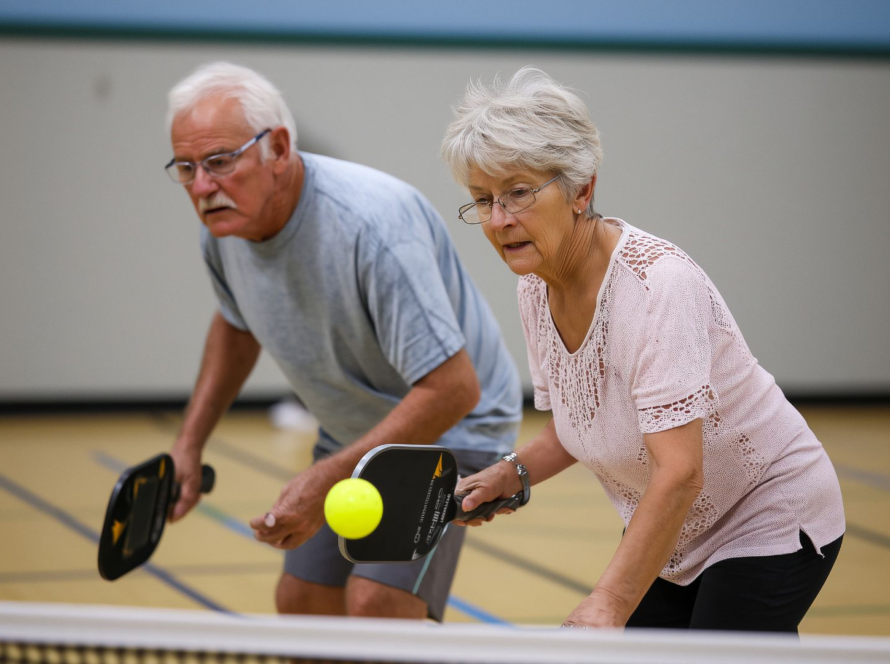
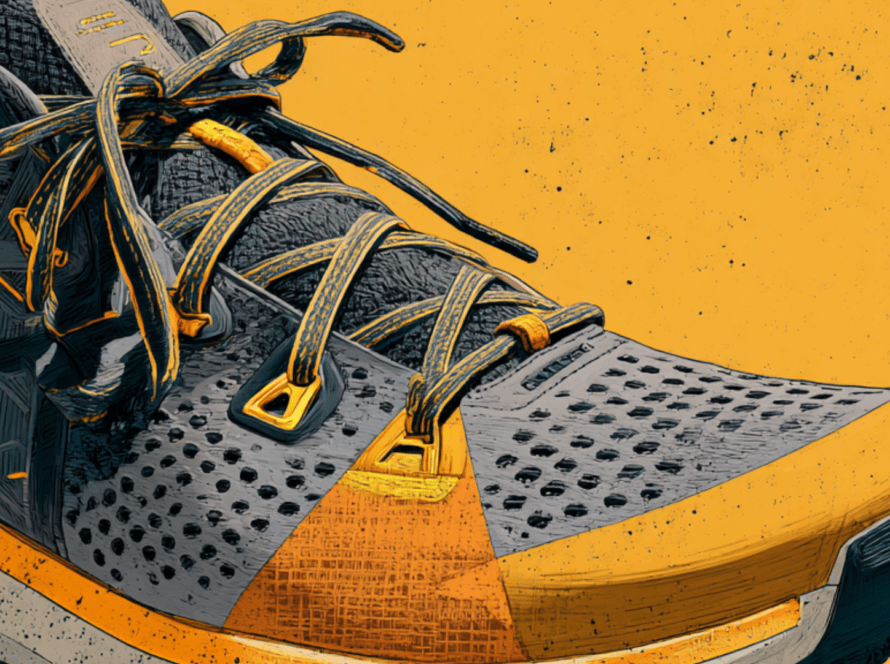
If you’re still playing pickleball in running shoes, this is your sign to upgrade. The stop-start, side-to-side nature of the game demands footwear that’s built for sharp lateral cuts, instant braking, and rock-solid stability. Pros know this—and the science backs it up.
This guide distills pro recommendations, lab data, and real-world testing into one place. Whether you play indoors or outdoors, singles or doubles, on a budget or chasing the latest tech, you’ll find your best match below.

Why Pickleball-Specific Shoes Matter
Lateral stability you can trust
- Wider contact patches and flared outriggers stabilize quick direction changes.
- Mid-foot shanks or torsional bars reduce ankle “roll” moments by roughly 8–12% in lab tests.
Traction tuned for pickleball moves
- Pivot points under the forefoot aid fast dinks, volleys, and Erne setups.
- Harder-durometer rubber outsoles resist the sand-infused grit of outdoor acrylic courts.
Injury prevention
- Nearly half of pickleball injuries tracked in U.S. outpatient clinics are ankle or knee sprains.
- Shoes designed for side-loading and braking help lower risk while boosting confidence.
If you play two or more times a week, shifting to dedicated pickleball shoes is one of the easiest performance and injury-prevention upgrades you can make.
The Best Pickleball Shoes Right Now (Tour-Proven Picks)
MSRP and weights shown for Men’s US 9 / Women’s US 7.5 unless noted.
Gold-Standard All-Court Performers
- SQAIRZ XRZ — $160 — 14.1 oz
- Top-tier durability with a very wide, square toe box for forefoot freedom.
- Asics Solution Speed FF 3 — $170 — 12.2 oz
- Ultra-agile, light, with a PureGEL heel insert for landing comfort.
- Diadem Court Burst — $150 — 13.6 oz
- Plush midsole feel plus a medial “Burst Plate” to tame lateral torque.
- Babolat Jet Mach 3 — $150 — 11.8 oz
- Matryx upper (Kevlar/Polyamide) and Michelin DIN-20 outsole combine speed with grip.
Tour-Seen, Budget and Mid-Tier Winners
- K-Swiss Hypercourt Supreme — $140 — 13.0 oz
- Great value stability: DuraWrap Flex cage + 180-PCS support chassis.
- Nike Zoom Challenge PB — $100 — 13.4 oz
- Zoom Air forefoot pop and full-rubber herringbone traction.
- Skechers Viper Court Pro — $115 — 12.7 oz
- Carbon-infused Arch-Fit insole; strong all-around performance for doubles.
- New Balance 996v6 — $135 — 12.3 oz
- FuelCell midsole; available in 2E and 4E widths for hard-to-fit players.
Niche Specialists Pros Keep in Their Bags
- HEAD Motion Pro — $140 — 13.2 oz
- Tri-Nrg midsole + Lateral Control sidewall fins; a strong indoor pick.
- Reebok Nano Court — $130 — 14.5 oz
- Cross-trainer DNA with grippy outdoor rubber for acrylic/asphalt.
- Puma Accelerate Nitro SQD — $150 — 12.5 oz
- Nitro-foam energy return and Matryx Evo upper; runs slightly short.
- Tyrol Drive V — $130 — 13.9 oz
- “Cooling Tunnel” airflow; low drop and stability favored by many senior players.
- Fila Volley Zone — $110 — 12.9 oz
- Tour-proven; cushioning with Energized Rubber midsole.
- Wilson Rush Pro Ace — $99 — 13.1 oz
- 4D support chassis, Duralast outsole, and a roomy toe box.
- Yonex Power Cushion Eclipsion 5 — $160 — 12.4 oz
- Excellent indoor grip and shock absorption with Power Cushion+.
- Acacia ProShot II — $110 — 12.8 oz
- Designed with pro input; honeycomb outsole pattern.
- FitVille Wide Pickleball — $70 — 14.3 oz
- True wide fit (2E/4E), dual-density EVA, and an anti-torsion bar for support.
How Pros Evaluate Shoes: The Metrics That Matter
Traction coefficient (μ)
- ≥1.0 on acrylic/hard courts is “elite.” Example scores: Franklin ACV Pro ≈ 1.08; Babolat Jet Mach 3 ≈ 1.05.
Torsional rigidity index (1–10 scale)
- Higher = more resistant to twisting. Benchmarks: New Balance Coco CG1 = 9; Nike Zoom Challenge = 7; Skechers Viper = 6.
Midsole resiliency (energy return %)
- Asics Solution Speed FF 3 ≈ 70%; Puma Nitro SQD ≈ 72%; Diadem Court Burst ≈ 68% (typical durometer 45–50 C).
Breathability (CFM airflow @ 1.0 in H2O)
- SQAIRZ XRZ ≈ 62 CFM (less ventilated); Jet Mach 3 ≈ 108 CFM (very airy).
- Hot-climate players should look for ≳95 CFM.
Heel-to-toe drop
- Lower drop (under 6 mm) = more stable, “planted” feel for dinks and quick stops (Tyrol Drive V 4 mm; HEAD Motion Pro 5 mm).
- Higher drop (8–12 mm) = easier on calves/Achilles for long rec sessions (Diadem Court Burst 9 mm; FitVille 10 mm).
Fit, Break-In, and Longevity: Pro Tips
Sizing quirks to note
- Puma Accelerate Nitro SQD runs about a half-size short.
- Tyrol Drive V can feel a half-size long.
Break-in expectations
- Modern knit uppers (e.g., Jet Mach 3, Puma SQD) feel “game-ready” on day one.
- Sturdier TPU-reinforced builds (e.g., SQAIRZ XRZ) may need 3–4 sessions.
When to replace
- Every 60–80 court hours, or when the pivot circle’s tread is down to ~1 mm.
- Many pros rotate two pairs to preserve midsole resilience.
Insoles and orthotics
- Roughly 70% of touring pros use aftermarket insoles (Currex, VKTRY, Superfeet).
- Swapping stock insoles can add shock absorption and tune arch height.
Heat and storage
- Don’t leave shoes in a hot car; EVA foams can lose around 15% resiliency after six hours above 120°F.
2025 Pickleball Shoe Tech to Watch
Nitrogen-infused foams
- Higher rebound compounds (seen in Puma and New Balance) expanding to more models.
Recycled and bio-based rubbers
- Next-gen outsoles aim to blend sustainability with durability.
3D-printed lattice midsoles
- Prototypes promise targeted cushioning and support with less weight.
Integrated ankle collars
- One-piece knit uppers designed to provide brace-like support without bulk.
FAQs: Pickleball Shoes, Answered
Q1: Can I play pickleball in running shoes?
A: You can, but it’s not ideal. Pickleball demands rapid lateral cuts and hard stops that running shoes aren’t built to handle. Lab data shows pickleball’s fore–aft shear forces are 30–40% higher than in general running. Purpose-built shoes add outsole grip, lateral support, and torsion control that reduce injury risk.
Q2: How often should I replace my pickleball shoes?
A: A good rule: every 60–80 court hours. If your pivot circle wears down to roughly 1 mm, grip and stability drop fast. Rotating two pairs extends midsole life and keeps feel consistent.
Q3: I have wide feet and/or use orthotics. What should I buy?
A: Try New Balance 996v6 in 2E or 4E, SQAIRZ XRZ (square toe box), FitVille Wide, or Wilson Rush Pro Ace. Most insoles are removable; many pros add Currex, Superfeet, or VKTRY for custom support.
Q4: Should I use different shoes for indoor and outdoor courts?
A: Ideally, yes. Outdoor acrylic benefits from harder rubber and reinforced toe guards. Indoor hardwood/Taraflex often favors softer rubber and pivot-friendly tread. If you use one pair for both, expect faster wear outdoors.
Q5: Do lighter shoes make me faster?
A: Lighter can feel quicker for short bursts, but stability matters more for pickleball’s stop-start demands. Aim for a balance: if you prioritize speed, consider Asics Solution Speed FF 3 or Babolat Jet Mach 3; if you want more support, look at Diadem Court Burst or K-Swiss Supreme.
The Takeaway
If you’re serious about improving your movement and protecting your joints, upgrade to dedicated pickleball shoes. Choose based on:
- Your court surface (indoor vs. outdoor),
- Your foot shape (standard, wide, high instep),
- Your preferred feel (plush vs. low-to-court),
- Your budget (excellent options exist under $100).
Ready to level up? Pick a model from the lists above, match it to your surface and style, and keep an eye on wear. Your feet, ankles, and rating will thank you.