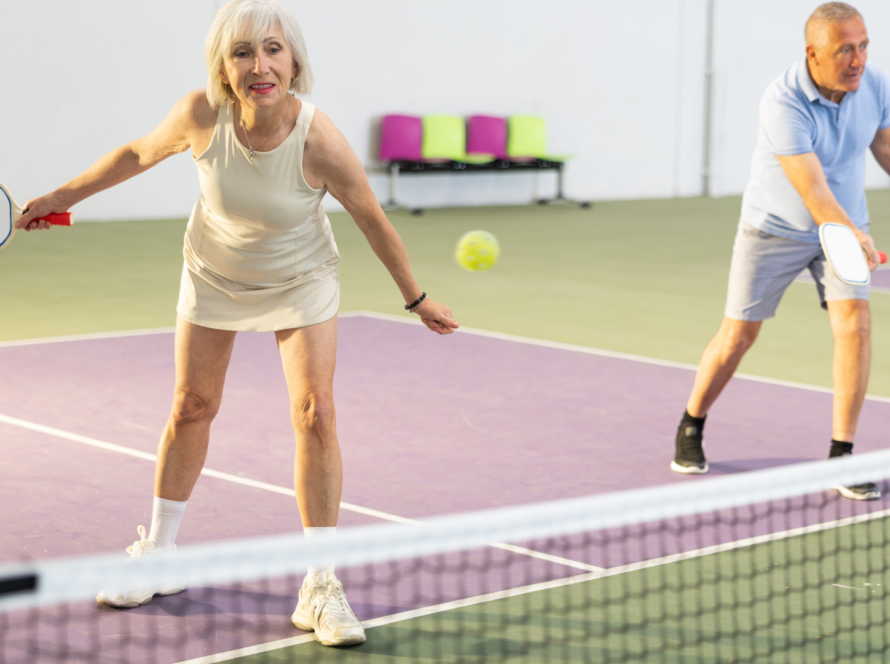
Pickleball’s popularity has exploded—from around 3 million U.S. players in 2019 to nearly 9 million in 2025. With that growth came a wave of “pickleball-specific” shoes…and a chorus of complaints that they fall apart in weeks.
If that sounds familiar, you’re not imagining it. The very ingredients that make a shoe feel quick and grippy for pickleball also make it wear faster—especially on gritty outdoor courts. In this guide, we’ll break down the trade-offs, the role of court surfaces, the forces your feet actually produce, the most common failure modes, and the simple habits that can add dozens of hours to your shoes’ life.

The Big Trade-Off: Grip and Speed vs. Durability
“Why do pickleball shoes wear out so fast?” Short answer: softer, grippier rubber and more compliant midsoles.
- Outsole hardness (Shore A scale):
- Indoor gum rubber: ~52 (very soft, great grip on wood)
- Outdoor pickleball blends: ~65–72 (balanced)
- Classic tennis outsoles: 75+ (harder, more durable)
- Softer rubber boosts grip by roughly 15–25% on sealed wood floors but can more than double abrasion in standardized wear tests. Translation: amazing stop-and-go traction, shorter life.
Midsole foams also trade bounce for longevity:
- ASICS FlyteFoam (EVA/cellulose blend): lightweight and lively, but loses notable rebound after long mileage.
- Skechers HYPER BURST (CO₂-infused EVA): springy, yet less tolerant of heat in hot cars or summer garages.
- HEAD Lateral Control+ (dual-density PU/EVA): slightly heavier, but typically stretches usable life.
These choices make shoes feel fast, low, and connected—exactly what players want around the kitchen line. But the bill comes due in wear.
Court Surfaces and “Court Chemistry”
Where you play matters as much as what you wear.
- Indoor hardwood: Great glide and grip—until cleaning chemicals get involved. The common acrylic-silica film used to keep basketball courts squeaky clean can raise rubber wear rates by roughly a third at the same grip level.
- Outdoor acrylic (“blue/green”) courts: These surfaces are mixed with sand (often 60–80 mesh silica). Every slide drags quartz across your outsole like 800-grit sandpaper. You’ll feel it—and see it—as fast edge wear and smoothed tread.
If you split time between indoor and outdoor play, use dedicated pairs. Don’t bring an indoor gum rubber outsole onto a gritty outdoor court.
Pickleball Biomechanics: Why Edges Burn First
Pickleball’s unique pattern—short sprints, abrupt stops, and constant lateral shuffles—produces big forces in tiny spaces.
- Peak lateral shear forces up to ~3.8× bodyweight can happen in under 0.2 seconds during split-step volleys. The kitchen keeps exchanges tight, so your shoes do many “mini-brakes.”
- Singles vs. doubles: Singles racks up more distance per hour, but braking events per game are similar. That’s why even “stationary” doubles players still cook the outsole edges.
- Toe drag trends: Right-handed players most often burn the left medial toe first; lefties the opposite.
Watch your wear map: Rounded, smooth edges and a thinning toe bumper are classic pickleball signatures.
The Five Failure Modes You’ll See First
1) Outsole abrasion
- Signs: Bald herringbone, smooth edges, thinning at toe or lateral forefoot.
- Trigger: Sanded outdoor acrylic, aggressive slides, pivot-heavy play.
2) Midsole fatigue
- Signs: Shoe feels “flat,” less pop or cushioning; deeper creases; sore feet/backs.
- Trigger: Compressed EVA that hasn’t rebounded between sessions.
3) Upper failure
- Signs: Holes or splits at the toe drag zone; mesh fraying; delaminated films.
- Trigger: Toe scraping, gritty courts, salty sweat, and sharp lateral stops.
4) Heel-counter collapse
- Signs: Heel slop, poor lockdown, creases or deformity around the heel.
- Trigger: Hard orthotics without external TPU support; yanking shoes on or off without unlacing.
5) Liner and insole packing
- Signs: Hot spots, blisters, sliding inside the shoe, squeaks.
- Trigger: High mileage, thin socks, moisture left to stew between sessions.
Environmental and Usage Factors You Can Control
- UV heat and storage: Direct sun and hot cars accelerate foam oxidation and warping.
- Sweat chemistry: Saltier sweat can double mesh tear propagation over time. Air shoes out promptly and swap insoles if they stay damp.
- Body mass: More force = faster compression. An extra 10 lb over ~180 can noticeably speed midsole breakdown.
- Orthotics: Hard inserts can stress heel counters. If you wear them, look for shoes with sturdy external heel support.
- Sock choice and lacing:
- Cushioned or double-layer socks reduce internal abrasion.
- Lock-lacing cuts heel slip but increases eyelet stress; choose models with reinforced eyelets.
How Long Should Pickleball Shoes Last?
It depends on hours, surfaces, and style:
- Light indoor play: 70–120 hours
- Mixed indoor/outdoor: 50–90 hours
- Mostly outdoor acrylic: 40–70 hours
Smart budgeting tip:
- A $130 pair that lasts 65 hours costs about $2.00 per court-hour.
- Rotating two pairs lets midsoles rebound (80% in 24 hours, ~93% by 48 hours) and can stretch life from ~50 to ~70 hours. Over 200 hours of play, that can save you around $75–80 in replacement costs.
Replacement triggers:
- Outsole traction is gone in your push-off zones
- Midsole feels dead or your joints feel beaten up after normal sessions
- Uppers tear at the toe or eyelets
- Heel lockdown is sloppy even with fresh laces
Brand Technologies: Claims vs. Measurable Wear
Most brands blend rubber compounds and toe guards to balance grip and life:
- ASICS: AHAR Plus outsoles, PGUARD toe wraps
- Nike: Drag-on style upper films; React foam in some models
- K-Swiss: Aösta 7.0 rubber (on the harder side), Durawrap toe guards
- HEAD: HyBrasion+ outsoles, Lateral Control+ chassis
- Skechers: Goodyear-branded compounds (often softer indoor mixes)
- Tyrol: Vibram Megagrip outsoles and sturdy toe shields
Independent abrasion tests often rank sturdier tennis-style or hybrid models higher for outsole life, with some dedicated pickleball shoes skewing softer for indoor traction. If you mostly play outdoors, consider models with harder rubber and robust toe wraps.
Maintenance Hacks That Add Hours (and Comfort)
- Rotate two pairs; never play consecutive days in the same pair
- Use “court-only” shoes—parking lots and asphalt chew rubber fast
- Clean outsoles with warm water and a soft brush; avoid leaving soap residue
- Air-dry insoles and use cedar shoe trees to wick moisture and maintain heel shape
- Reinforce hot spots (toe and medial forefoot) with a thin coat of Shoe Goo or Tuff-Toe after break-in
- Unlace to remove your shoes—don’t yank them off by the heel
- Keep them out of hot cars and direct sun
Disposal, Recycling, and Smart Alternatives
When it’s time to retire a pair:
- Recycling and donation:
- Nike’s Reuse-A-Shoe (selected stores)
- Soles4Souls for gently used pairs
- TerraCycle mail-in boxes if local options are limited
- DIY up-cycle:
- Demote indoor shoes to outdoor practice, outdoor shoes to yardwork
Do you really need “pickleball” shoes?
- Volleyball shoes: Excellent on wood, less durable outdoors, usually lighter and cheaper
- Tennis shoes: Built for gritty acrylic courts—typically more durable, slightly heavier
- Cross-trainers: Fine for casual players under 2 sessions per week
If you play less than 4 hours a week, a light tennis shoe may outlast a soft indoor pickleball model at equal or lower cost—especially outdoors.
FAQ
Q: How many hours should my pickleball shoes last?
A: Most players see 40–120 hours depending on surface and style. Outdoors on acrylic tends to be 40–70 hours; indoor wood is often 70–120 hours.
Q: Can I use one pair for both indoor and outdoor pickleball?
A: You can, but it’s a fast track to early wear. Use dedicated pairs. Soft indoor outsoles get shredded by outdoor sand; outdoor pairs can feel too slick on sealed wood.
Q: Do I really need pickleball-specific shoes?
A: Not always. If you mainly play outdoors or want maximum durability, a tennis shoe is a smart pick. If you mostly play indoors and value quickness and grip, a pickleball or volleyball shoe can feel great.
Q: Which brand lasts the longest?
A: Durability varies within brands. Look for harder outsoles (often in tennis lines), robust toe guards, and external heel support. Try on for fit first—blisters and poor lockdown kill shoes and comfort faster than any logo.
Q: How do I know it’s time to replace them?
A: If traction is gone in your push-off zones, midsoles feel dead, uppers tear, or heel lockdown is sloppy even with fresh laces, it’s time.
Conclusion
Pickleball rewards soft, grippy rubber and flexible, responsive midsoles—the same features that make shoes wear out faster. Your court surface, climate, body mass, movement pattern, and maintenance habits can easily double or halve a shoe’s life.
Track your hours, rotate pairs, reinforce hot spots early, and choose the right shoe for your main surface.