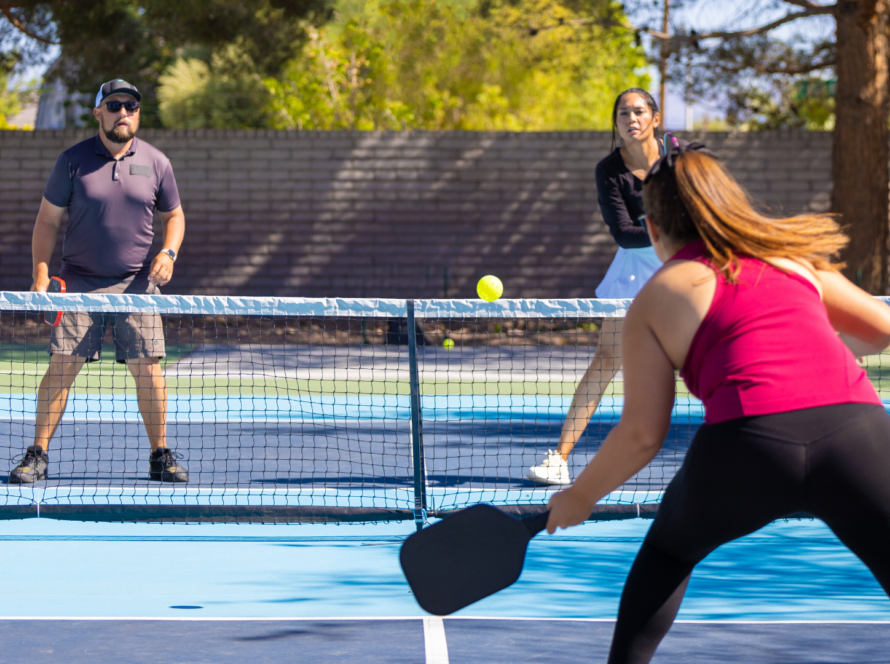
If it feels like your pickleball shoes go from grippy to slick in a blink, you’re not imagining things. Pickleball puts unusual, high-shear stress on footwear—especially around the outsole edges and forefoot. Even top-tier court shoes can hit their limits quicker than you expect.
The good news? Once you understand what’s chewing through your tread and flattening your cushioning, you can choose smarter, maintain better, and easily get more hours out of every pair. Below, we break down the mechanics, the materials, realistic lifespans, clear replacement cues, and practical strategies you can start using today.

The Real Reason Pickleball Eats Shoes
Abrupt footwork creates outsized wear
Pickleball footwork is quick-fire and lateral-heavy:
- Quick split-steps and curved, C-shaped shuffles can create impact forces around two to three times a player’s body weight, especially along the outer edge of the outsole.
- Forward lunges to reach a shot focus pressure on the inside of the forefoot for just a split second—enough to gradually wear down softer rubber compounds.
- In a 90-minute recreational session, players can rack up over 1,800 direction changes—similar to elite-level tennis movement, but packed into a smaller court with faster, sharper bursts.
Translation: the outer edge and forefoot of your shoes are constantly getting ground down and torqued.
What’s Inside a Court Shoe (and What Fails First)
Outsole: your first line of defense
- Hard materials are chosen to achieve high resistance to surface penetration, offering the utmost protection. Harder materials will be more durable and tend to offer a greater resistance to wear either by friction or erosion in reaction to steam, oil, and water.
- Tread patterns matter too. Full or modified herringbone grips acrylic-coated concrete best. Circle-pivot patterns (popular in volleyball).
Midsole: where cushioning quietly disappears
- Many pickleball shoes still rely on compression-molded EVA (CMEVA) midsoles, which tend to lose cushioning and responsiveness over time with regular play.
- FF BLAST+ is the latest type of midsole foam that Asics puts on its flagship models. It is lighter than standard FF BLAST foam and features up to 15% better cushioning. This means it absorbs 15% more energy on impact. At the same time, it returns 15% more energy on each step using the bounce effect
Upper and shank: protection and stability
- Materials like hot-melt TPU film and monofilament mesh can make a shoe feel lighter and faster on the court—but that airy feel usually comes with a tradeoff in structure and support.
- If you notice your shoes twisting a bit during quick cuts, it might be because they don’t have a TPU shank or torsion plate. Those features help keep the midfoot stable, so skipping them in cheaper models can sometimes lead to quicker wear around the edges.
How Long Do Pickleball Shoes Really Last?
Think in court hours, not months:
- Budget: 50–60 hours
- Mid-tier: 70–90 hours
- Flagship: 100–120 hours
What that means for most players:
- Play 4–5 times/week (~8 hrs/week): 2–3 months
- Play 2–3 times/week (~4 hrs/week): 5–6 months
- Play 1 time/week: 10–12 months
A helpful comparison: 80–100 court hours is roughly like 300–350 running miles in a daily trainer. If you wouldn’t run a race in a flattened shoe, don’t play a ladder in one either.
Replace or Risk It: Clear Warning Signs
Don’t wait for a fall to force the issue. Replace when you notice:
- 1 mm or more of tread depth loss in your pivot zone or obvious bald spots
- Deep midsole creases that stay when you’re not wearing the shoe (the “wrinkle test”)
- The shoe rocks side-to-side when placed on a flat table (lost torsional stability)
- New heel, knee, or Achilles aches that vanish with a fresh pair
What’s Next: Innovations to Watch
- Graphene-infused rubber promising up to 2× abrasion resistance
- BASF E-TPU midsoles tuned for lateral sports (seen in Adidas Avacourt)
- RFID-based tread wear sensors that alert you when it’s time to replace
Quick Checklist: Is It Time to Replace?
- More than 80 court hours on the pair
- Outsole lugs flattened or bald spots
- Deep midsole creasing that stays
- New heel pain or achy knees after play
- Shoe fails the “table rock” stability test
If you check 3 or more boxes, retire the pair.
FAQ: Pickleball Shoe Durability
Q: How long should pickleball shoes last?
A: Most players see 70–90 court hours in mid-tier shoes and 100–120 in flagship models. That’s 2–3 months if you play 4–5 times per week, or about 5–6 months if you play 2–3 times per week.
Q: Can I play pickleball in running shoes?
A: Not recommended. Running shoes are built for forward motion, not aggressive lateral stops. They typically lack a shank, side-wall support, and herringbone traction—raising your risk of slips and sore ankles.
Q: What’s the difference between indoor and outdoor court shoes?
A: Outdoor shoes benefit from durable, full-herringbone rubber optimized for acrylic-coated concrete. Indoor surfaces often require non-marking rubber. If you play both, look for “non-marking” labeling plus a robust outsole compound.
Q: How do I track shoe wear without fancy tools?
A: Log play hours in a notes app and inspect your pivot zones monthly. A simple depth check (comparing worn tread to a fresh pair or product photos) and the wrinkle test are great signals.
Conclusion
Pickleball chews through shoes because your feet are constantly braking, shuffling, and lunging on gritty surfaces—and most midsoles and outsoles have clear, predictable limits. Aim to replace around the 70–120-hour mark depending on your model, watch for the warning signs, and use rotation, reinforcement, and smart storage to stretch every dollar.
Ready to extend your shoe life? Start by tracking your play hours this week, inspect your pivot zones, and consider rotating in a second pair with a durable herringbone outsole. Your grip—and your joints—will feel the difference.