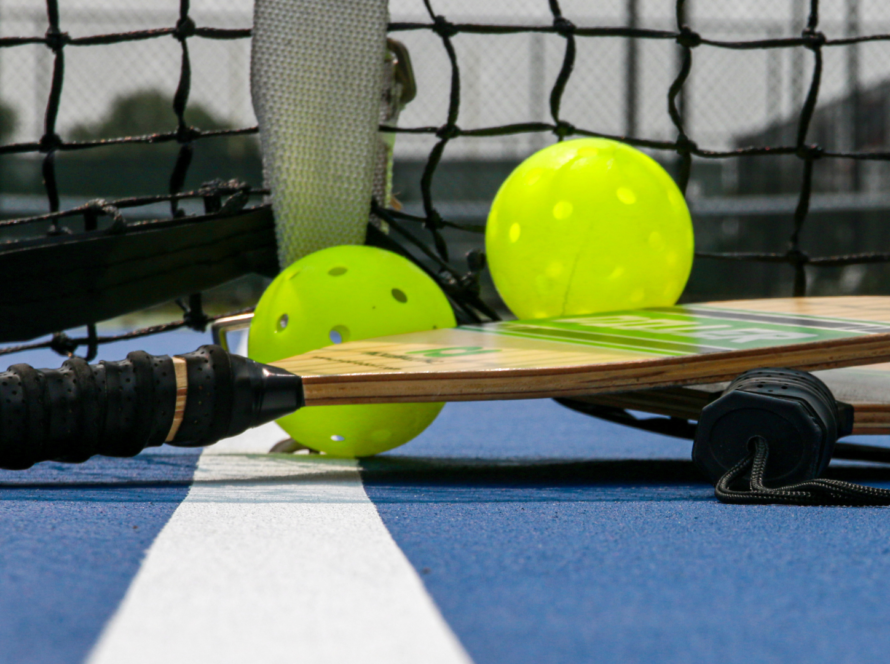
You rip a passing shot that kisses the sideline. “Out!” your opponents yell. “Looked in from here,” your partner whispers. Now what? Few moments in recreational pickleball create more awkwardness than in-or-out calls. The good news: the USA Pickleball rulebook makes this straightforward—if you know where to look.
In this guide, we’ll cut through the noise and give you a clear, friendly framework based on the 2025 rules. You’ll learn exactly who gets to call a ball in or out, how to handle disagreements without drama, common myths, and practical drills that sharpen your eye so you can play confidently and keep the good vibes going.

The Short Answer: Who Gets to Call In or Out?
- In self-officiated play, only the players on the side where the ball lands make the line call (USA Pickleball 2025, Rule 6.A).
- You should not call “out” unless you clearly see space between the line and the ball (6.C).
- If partners on the same side disagree, the ball is in (6.D).
- Spectators may not make line calls (6.E).
- Referees or line judges can overrule player calls only in officiated play (6.F, 13.E).
Key takeaway: In recreational pickleball, the side the ball lands on makes the call—period. Opponents cannot overrule. When in doubt, it’s in.
Note on foot-faults: Players may call opponent service foot-faults and non-volley zone (kitchen) foot-faults (13.D). This exception often confuses newcomers into thinking they can overrule line calls too. They cannot.
Myths (And What the Rules Actually Say)
Myth 1: “If I saw it clearly, I can change your call.”
Fact: Not permitted. Your only option is to ask politely for reconsideration. Try: “I had it different—any doubt on your side?” If they say no, play on.
Myth 2: “The player on the baseline has the best view.”
Fact: Depth perception plummets with distance. The players closest to the bounce usually have the best angle. Trust the side where the ball landed.
Myth 3: “We can use phone video to decide.”
Fact: Unless a sanctioned event has an approved replay system in place, outside video cannot be used to reverse calls.
Game-Ready Etiquette That Prevents Conflicts
- Call it immediately, loudly, and clearly. A firm “OUT!” with a raised open palm removes ambiguity.
- If you are not 100% certain, the ball is in (6.C).
- Skip “Are you sure?” It comes off as confrontational. Better: “I had it different—any doubt on your side?”
- If tension lingers, offer a replay as a goodwill move—even if your original call stands by rule.
- Keep play flowing. If controversy persists in a club setting, agree in advance to replay after 10–15 seconds of discussion.
Special Situations That Trick Even Experienced Players
Balls touching the line vs. shadow illusions
- Only the center of the ball must touch the line to be good.
- Outdoor ball holes cast deceptive shadows. Train your eyes to look for daylight (space), not color.
Fast skids on indoor floors
- The ball can compress and “skip” inward after first contacting outside the line.
- It’s the first contact that matters. Make your call based on the initial touch point.
Sun and glare at twilight
- Consider a pre-game agreement: If neither team can see the bounce, replay the point. It preserves fairness and fun.
Club ladders and round-robins
- Many club sheets adopt a simple rule: “If a call can’t be resolved in 15 seconds, replay.” Suggest your club add this to keep things friendly.
Doubles Partner Dynamics: Communicate Like a Team
Default system that keeps you both honest and fast:
- “Mine” = I saw it clearly; I’ll make the call.
- “Yours” = I did not see it; your call.
- “No” (or silence) = uncertainty; ball should be called in unless your partner clearly saw space.
- If both partners call “out” simultaneously, the call stands.
- If only one partner calls “out” and the other didn’t see it, the benefit of doubt makes the ball in (6.D).
Simple drill: Have a partner feed quick sideline balls to each half. Each player calls only the balls landing on their own half, using “mine/yours/no” language.
Foot-Faults vs. Line Calls: Why the Mixed Messages?
USA Pickleball Rule 13.D lets either team call:
- Service foot-faults (server steps on/over the baseline)
- Non-volley zone foot-faults (volleying while touching the kitchen)
That narrow permission does not extend to line calls. Line calls remain the responsibility of the side where the ball lands (6.A). Don’t conflate the two.
Tournament Play: When Overrules Actually Happen
- In officiated matches, the referee’s call has priority.
- Line judges may be assigned; a referee can overrule a line judge when clearly in position to see the play.
- Some pro events offer limited video replay challenges. Recreational games and most amateur events do not.
If you’re playing a sanctioned event, listen to the pre-match briefing so you know if judges or video challenges are in use.
Train Your Eyes: Simple Ways to See Bounces Better
- Eye-training drill: From a kneeling or stationary stance on your service line, have a coach or partner softly drop balls inches in and out. Call only when you see space.
- Head position mantra: “See the bounce—freeze your gaze for one frame after contact.” Don’t look up early.
- Eyewear: Yellow-tint lenses can heighten contrast on overcast days. Be cautious with polarized lenses; they can dim ball color and reduce contrast.
What To Do If Opponents Keep Trying To Overrule
- Gentle reminder: “Per rule 6.A, we make line calls on our side. Happy to replay if you think that’s fair.”
- If it continues, pause play and ask for a court monitor, referee, or club organizer.
- If no one is available and sportsmanship breaks down, you can decline to continue. Protect the experience for everyone.
Quick Reference: Who Can Call What?
- Your side decides: In or out on your side; double bounces on your side; balls off your body or paddle; your own NVZ contact.
- Either team may call: Service foot-faults and NVZ foot-faults (13.D).
- Not allowed for opponents: Overruling your in/out call; using spectators or phone video to decide.
FAQs
Q1: If we disagree across the net, do we have to replay?
A: Not by rule. The call belongs to the side where the ball landed. That said, a replay is a goodwill option when tension rises or visibility was poor.
Q2: What if my partner and I disagree on a call?
A: The ball is in (6.D). If one partner is unsure, benefit of the doubt goes to the opponents. Build a simple “mine/yours/no” plan to avoid mixed signals.
Q3: The ball landed on the baseline and I saw yellow. Out, right?
A: Not necessarily. Shadows and the ball’s holes can deceive. The question is whether you clearly saw space between the ball and the line. If not 100% sure, it’s in (6.C).
Q4: Can we use slow-motion phone video to settle a point?
A: No, unless an approved replay challenge system is part of the event. Spectator input and outside video must be ignored in normal play.
Q5: Can I call a double bounce on my opponents?
A: In self-officiated rec play, each side is responsible for faults on its own side, with explicit exceptions for service and NVZ foot-faults. You can ask opponents to consider the double bounce or offer a replay, but you can’t enforce it across the net.
The Bottom Line (And Your Next Step)
In recreational pickleball, the side the ball lands on makes the line call. If you aren’t 100% certain, the ball is in. Opponents can ask for reconsideration—but they can’t overrule. Use clear communication, call promptly, and when in doubt or poor visibility strikes, replay to preserve the fun.
- Share this guide with your regular group so you’re all on the same page.
- Add a 10–15 second “if unresolved, replay” note to your club rules.
- Run the kneeling in/out drill for five minutes before play this week. Your eyes will thank you.
Play fair, play fast, and keep the good vibes rolling.