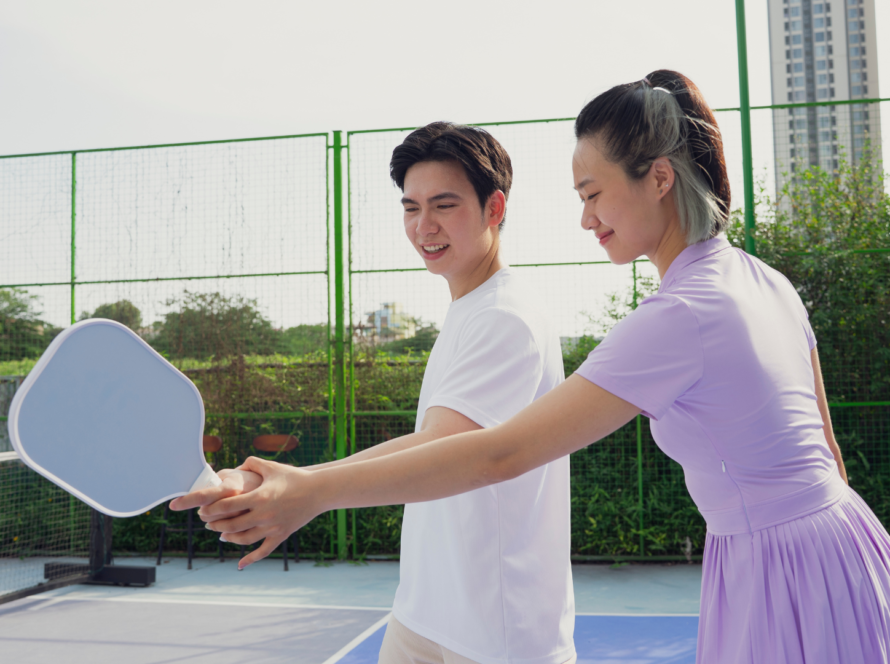
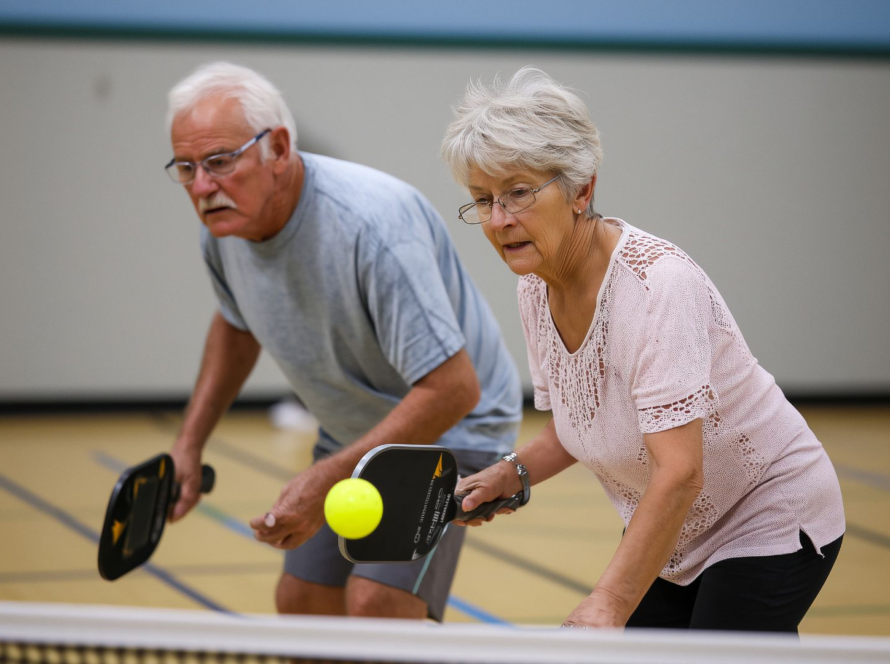
Pickleball’s joy is how quickly you can jump in—and how long you can play. But after 50, your feet and ankles ask a little more of your shoes. The right court shoe cushions hard stops, stabilizes sharp cuts, and eases hot spots from bunions or plantar fasciitis so you can play longer with fewer aches.
In this guide, you’ll learn exactly what to look for in “senior-smart” pickleball shoes, see my 2025 shortlist of top models, and get fit, maintenance, and budget tips. Whether you play indoors or out, prefer a roomy forefoot or a snug glove fit, you’ll find options that match your feet and your game.

Why “senior-smart” pickleball shoes matter
- Feet change with age. After 50, the natural fat pad under your heel thins, collagen stiffens, and balance reactions slow. Common foot issues—bunions, hammertoes, plantar fasciitis, and mild neuropathy—become more prevalent. Proper footwear can soften impact and reduce pressure on sensitive areas.
- Court shoes tame impact and wobble. During lateral stops, true court shoes lower peak tibial acceleration by roughly versus running shoes, helping joints and tendons feel better post-play.
- Injury prevention is real. A 2023 insurance claims review found that in players 55+, nearly half of pickleball injuries involved the foot/ankle—and about a third tied back to inadequate footwear. The right pair is one of the easiest risk reducers you can buy.
How to choose senior-smart pickleball shoes
1) Cushioning that protects without feeling mushy
- Look for heel and forefoot crash pads, gel, or nitrogen-infused foams. Midsoles with a softer durometer (under ~55 Asker C) absorb shock well.
- A heel-to-toe drop of 6–12 mm can off-load the Achilles—great if your calves feel tight or you’ve had tendinopathy.
- Quick picks: Skechers Viper Court Elite (nitrogen-infused midsole), ASICS Gel-Resolution 9 (rear/forefoot GEL), Wilson Rush Pro Ace (12 mm drop).
2) Midfoot and arch structure to resist twisting
- TPU or graphite shanks help stop torsional twisting on off-balance reaches.
- If you use orthotics, choose shoes with removable 5–6 mm insoles and a little extra interior depth.
- Quick picks: New Balance FuelCell 996v5 (orthotic-friendly), Skechers Viper Court Elite (TPU midfoot cage).
3) Last shape and width options for bunions or wider feet
- An “anatomic” last or generous forefoot reduces pressure on bunions and hammertoes.
- Brands with true width options: K-Swiss, New Balance, Fila, and select ASICS “Wide” models. Prince’s T22 line is also known for depth and forefoot room.
- Quick picks: K-Swiss Express Light Pickleball (available in 2E), Prince T22 Lite (deep toe box; 2E/4E options).
4) Lateral stability and outsole grip that matches your court
- Look for flared outriggers and medial sidewalls to keep your center of gravity inside the shoe during cuts.
- Tread matters: herringbone/hex patterns for outdoor asphalt or concrete; softer gum rubber for indoor wood/PVC.
- Quick picks: ASICS Gel-Resolution 9 (Dynawall lateral cradle), Diadem Court Burst (medial stabilizer wing).
5) Manageable weight to keep your cadence quick
- Targets: under 11 oz (men’s 9) or under 9.5 oz (women’s 7). Overly heavy shoes can fatigue calves faster.
- Quick picks: Babolat Jet Mach 3 (ultralight), K-Swiss Pickleball Supreme (light with good drop).
6) Breathable, durable uppers with toe-drag protection
- Engineered mesh and modern woven uppers keep air flowing and resist tearing.
- Look for toe caps or drag guards if you slide or scrape.
- Quick picks: Babolat Jet Mach 3 (Matryx Evo upper), K-Swiss Pickleball Supreme (DuraWrap toe guard), ASICS with PGUARD.
7) Easy on/off and secure lockdown, especially with arthritis
- BOA dials, quick-pull laces, and hands-free heel designs make entry easier and ensure a consistent snug fit without tugging.
- Quick picks: New Balance FuelCell 996v5 BOA, Head Sprint Pro (quick-pull system), Kizik hands-free options for casual play.
8) Minimal break-in so you can play right away
- Knit or seamless PU-mesh uppers typically break in within one session; full-grain leather can take a week.
- If a shoe feels stiff in-store, it likely won’t transform into a slipper—choose comfort from minute one.
The best pickleball shoes for seniors in 2025
These models blend cushioning, stability, width options, and reasonable weight. Choose based on your foot shape, court surface, and support needs.
- K-Swiss Express Light Pickleball: Plush Surge foam, seam-free interior, and wide (2E) options. Versatile for indoor/outdoor. Approx. 11.1 oz.
- K-Swiss Pickleball Supreme: 6 mm drop for calf relief, roomy toe box, DuraWrap Flex toe guard. Best outdoors. Approx. 10.8 oz.
- Skechers Viper Court Elite: EcoFlight nitrogen-infused midsole, TPU midfoot cage, light and lively feel. Indoor/outdoor. Approx. 10.3 oz.
- ASICS Gel-Resolution 9: Excellent lateral control (Dynawall) and GEL cushioning. Outdoor specialist. Approx. 12.2 oz.
- New Balance FuelCell 996v5 (standard & BOA): FuelCell bounce, ABZORB crash pad, wide widths. Outdoor. Approx. 11.2 oz.
- Prince T22 Lite: Deep toe box and protective toe cap; available in 2E/4E for truly wide feet. Indoor/outdoor. Approx. 12.0 oz.
- Wilson Rush Pro Ace: Higher 12 mm drop can ease Achilles/heel issues; comfy sleeve fit. Indoor/outdoor. Approx. 11.5 oz.
- Fila Volley Zone: APMA-accepted and budget-friendly with solid cushioning. Indoor/outdoor. Approx. 12.4 oz.
- Babolat Jet Mach 3: Ultralight feel with a Kevlar-threaded upper and strong heel padding. Outdoor rocket. Approx. 10.1 oz.
- Diadem Court Burst: Zero break-in knit collar, medial stabilizer wing for trustworthy cuts. Outdoor. Approx. 11.4 oz.
Pro tip: If you’re between two fits, prioritize comfort across the forefoot and midfoot first. You can always refine heel lockdown with lacing techniques (see below).
Special foot conditions and smart tweaks
- Plantar fasciitis: Favor an 8–12 mm drop (e.g., ASICS Gel-Resolution 9, Wilson Rush Pro Ace) and consider a 3/4-length orthotic like PowerStep Pinnacle+ or Superfeet Green.
- Bunions: Look for a generous forefoot or stretch panels (Prince T22 Lite). Heat-moldable uppers (e.g., Salming Kobra) can reduce hot spots.
- Diabetic neuropathy: Choose seam-free linings and extra-depth designs (Orthofeet Coral Court). Consider Medicare PDAC-coded options when applicable. Always check with your clinician.
- Hallux rigidus (stiff big toe): A rocker-style outsole helps; you can also add a carbon Morton’s extension plate under the insole.
If you have significant pain, numbness, or ulcer risk, consult a podiatrist before changing footwear.
Fit and maintenance checklist
- Measure at mid-afternoon when feet are most swollen.
- Aim for one thumb’s width (about 1/2 inch) beyond your longest toe.
- Wear your actual play socks when fitting. Moisture-wicking options like Thorlo Pickleball Crew or Wrightsock Coolmesh II reduce blisters.
- Use the runner’s loop (lock lacing) on the top eyelets to secure the heel and prevent slippage.
- Replace insoles every 6 months or 60–70 court hours.
- Replace shoes every 9–12 months for three-times-a-week play (around 300–400 miles equivalent).
- Clean outsoles with a soft brush and mild soap; avoid leaving shoes in hot cars—excessive heat hardens EVA and shortens cushioning life.
Budget and value tips
Price bands to set expectations:
- $60–$90: Entry models for casual or try-it-out play (Fila Volley Zone, Head Revolt Evo 2.0).
- $90–$130: The sweet spot for most seniors—balanced cushioning, stability, and durability (K-Swiss Express Light, New Balance 996v5).
- $130–$180: Premium tech, lighter uppers, and pro-level cushioning (Babolat Jet Mach 3, ASICS Gel-Resolution 9).
Smart savings:
- Sign up for first-order coupons at specialty retailers.
- Some Medicare Advantage OTC allowances may reimburse orthopedic-coded shoes (e.g., Orthofeet Court series).
Quick pre-play foot and ankle prehab
Five minutes before you hit, five minutes after you finish:
- Calf “step” stretch: 3 x 30 seconds each leg
- Ankle alphabet: trace A–Z with each foot
- Towel scrunches or marble pickups: 2 minutes total
- Short-foot/arch doming: 10 reps, 5-second holds
- Balance pad single-leg stands: 3 x 30 seconds (progress to eyes closed)
A consistent 6-week routine like this has been linked to fewer ankle sprains among pickleball players.
Frequently asked questions
Q: Can I use volleyball or squash shoes for pickleball?
A: Yes—indoors. Those shoes have gum-rubber outsoles and good lateral support for hardwood or PVC courts. For outdoor asphalt/concrete, they’ll wear down quickly; choose an outdoor-rated pickleball/tennis outsole.
Q: Are minimalist or barefoot shoes safe for seniors?
A: Generally not recommended for players over 55. Very low stack heights and minimal cushioning increase plantar and forefoot pressures and can aggravate metatarsal pain.
Q: What socks work best for pickleball?
A: Look for acrylic or CoolMax blends for moisture control and blister reduction. Padded heel/tab designs like Balega Hidden Comfort or Thorlo Pickleball help reduce in-shoe shear.
Q: How often should I replace my pickleball shoes?
A: For three-times-a-week play, plan on 9–12 months. If you see outsole bald spots, feel new aches, or the midsole looks creased and flat, it’s time.
Q: How can I keep my shoes from smelling?
A: Rotate pairs, let them fully dry between sessions, and use cedar shoe trees. UV ozone sanitizers (e.g., SteriShoe+) can kill odor-causing microbes in about 15 minutes.
The bottom line
The perfect senior pickleball shoe checks seven boxes:
- Plush, resilient cushioning
- Real midfoot structure
- Roomy or stretch-friendly forefoot options
- Dependable lateral stability and court-specific tread
- Sub-12-ounce weight when possible
- Breathable, seam-free interiors
- Minimal break-in
Try on late in the day with your match socks, lock your heel with the runner’s loop, and add orthotics if needed.