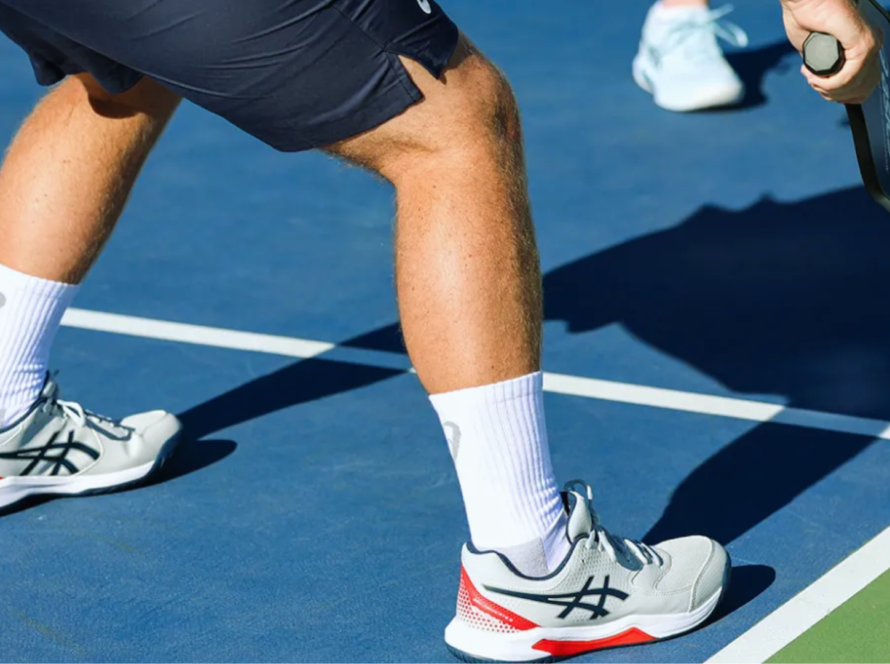
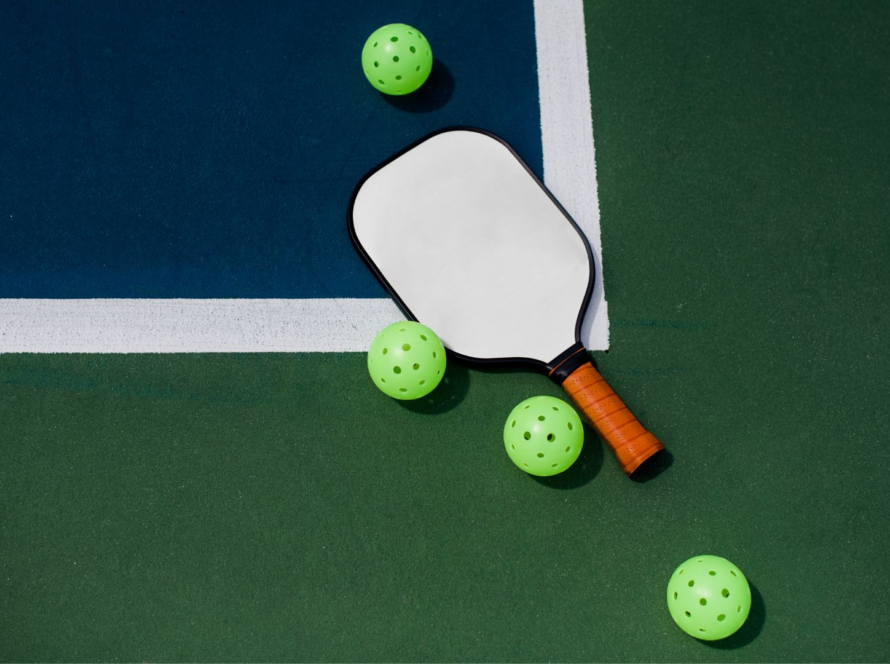
Pickleball’s boom isn’t slowing down. In the U.S., participation rocketed from 4.8 million in 2021 to 36.5 million in 2025—an eye-popping growth curve that’s filling courts nationwide. With more players comes a simple, often overlooked reality: your shoes matter more than you think.
Below, you’ll find a clear, no-jargon guide to picking the best pickleball shoes in 2025, the top models to consider, and practical tips that make new shoes feel great from day one.

Why Pickleball Shoes Matter (and Why Running Shoes Don’t Cut It)
- Court shoes are engineered for multi-directional movement, with torsional rigidity to resist foot twisting, lateral outriggers for side-to-side stability, and grippier rubber compounds tested for court traction (ASTM F2913).
- Running shoes are designed for straight-line motion and high-cushion transitions. They typically lack the sidewall support, toe-drag protection, and outsole durability you need on acrylic or post-tension concrete courts.
- The result of wearing the wrong shoes: sloppy footwork, hot spots/blisters from shear, faster outsole wear, and higher risk of knee or ankle irritation.
If you’re playing once a week or more, move into a proper court shoe—preferably a pickleball-specific model or a hard-court tennis shoe if PB versions aren’t available.
How to Choose Pickleball Shoes: Key Factors That Actually Matter
Fit and Lockdown: Heel Counter and Collar
- Look for a deep, molded heel cup to reduce heel slip and control over-pronation.
- Padded or asymmetric collars (like New Balance’s Ultra Heel) reduce rubbing at the Achilles.
- Quick check: on tiptoe, your heel shouldn’t lift.
Cushioning vs. Court Feel: Find Your Sweet Spot
- Low-to-ground shoes (heel stack under ~18 mm) offer razor-sharp response for quick cuts.
- Cushioned shoes (heel stack over ~24 mm) protect knees and hips on hard surfaces. Examples:
- Newer foams (nitrogen-infused, castor-bean EVA blends) try to balance bounce with stability.
Match Your Foot Type
- Over-pronators: Choose shoes with medial support or posted foams and a straighter last. Examples: ASICS Gel-Resolution 9 PB, Mizuno Wave Exceed Tour 6 PB.
- High arches/supinators: Seek neutral shoes with well-cushioned midsoles.
Breathability and Moisture Management
- 3D engineered mesh, laser-perforated synthetics, or Babolat’s Matryx EVO Kevlar/PA6 woven uppers keep feet cooler in long sessions.
- Anti-odor insoles like Ortholite X-40 or EcoStep help on multi-match days.
Sustainability Credentials (If That Matters to You)
- Recycled uppers: Adidas Adizero Cybersonic PB (63% recycled).
- Bio-based midsoles: On Court Pro PB uses 20% castor-bean EVA.
- Vegan-approved lines: Wilson Rush Pro Ace, K-Swiss Pickleball Supreme.
Customization and Lacing
- Removable insoles (usually 4–6 mm thick) let you use prescription orthotics without cramping the toebox.
- Variable lacing systems (Nike Flywire, Diadem Quad-Wrap) allow midfoot tuning without compromising heel hold.
- Try a lace-lock/runner’s loop if you’ve got narrow heels.
Sock Synergy
- Technical quarter-crew court socks (Swiftwick Flite XT, Thorlo Court) reduce shear blisters and add light ankle proprioception.
Wear Indicators and Replacement Timing
- Heel lean test: place shoe on a flat surface; if the unweighted heel leans laterally >5 mm, the midsole has collapsed.
Care and Storage
- Don’t cook your shoes in a hot car (>120°F). EVA softens and deforms.
- Hand wash, stuff with newspaper, and air-dry. Avoid machine dryers; heat can damage shanks and glues.
Podiatrist Quick-Checks (APMA-Inspired)
- Torsion: Twist the shoe; it should resist twisting, only flexing about 10–15°.
- Flex point: Bends at the ball of the foot, not mid-arch.
- Heel counter: Firm and stable when squeezed.
- Removable liner: Essential if you use orthotics.
- Fit: Thumb-width at the toe; secure heel with no lift on tiptoe.
Best Pickleball Shoes of 2025 by Player Type
Recreational Beginner
- Priorities: comfort, value, generous fit.
- Checklist: under $110, wide toe box, removable insole, balanced traction.
Competitive 4.0+
- Priorities: torsional rigidity, precise fit, durability.
- Checklist: integrated shank, outsole warranty, TPU/Pebax chassis, under 13 oz target.
Senior or Joint-Sensitive Players
- Priorities: shock attenuation, rocker geometry, arch support.
- Checklist: 24+ mm heel stack, APMA-style insole, softer rubber durometer.
Injury Return (Achilles, plantar fasciitis)
- Priorities: 8–12 mm heel-toe drop, plush heel foam, secure heel counter.
Wide or Bunion-Friendly
- Priorities: EE/2E widths, stretch mesh forefoot, rounded toe cap.
Top 2025 Models Worth a Look
- Diadem Court Burst: Core-Tech cage with nitrogen-infused midsole; zero break-in comfort for all-rounders.
- K-Swiss Express Light PB 3.0: Budget-friendly with DURAWRAP Flex toe guard and a supportive shank.
- HEAD Motion Pro: 360° sock-fit upper and grippy TRI-NGR rubber; built for hard cuts outdoors.
- Skechers Viper Court Pro: APMA-certified insole and Goodyear outsole; a go-to for plantar fasciitis relief.
- ASICS Gel-Resolution 9 PB: Dynawall 2.0 stability and rear/forefoot GEL cushioning for controlled lateral play.
- Babolat Jet Mach 3 Pickleball: Ultralight, low-profile feel; Matryx EVO Kevlar upper and Michelin DIN 20 rubber.
- Wilson Rush Pro 4.0 PB: 4D Support Chassis balances agility and stability; a reliable all-court pick.
- New Balance FuelCell 996v5 PB: Nitrogen-infused bounce with durable NDurance rubber and solid toe drag protection.
Pickleball Shoes vs. Tennis, Volleyball, and Running Shoes
- Motion patterns:
- Pickleball/tennis: lateral shuffles, split steps, toe drags.
- Volleyball: vertical jumping and quick in-place reactions.
- Running: linear forward gait.
- Outsoles:
- Pickleball/tennis: non-marking, harder-wearing blends (Michelin/Goodyear).
- Volleyball: softer gum rubber (excellent indoor grip, too sticky outdoors).
- Running: softer blown rubber, sometimes carbon plates—not for lateral braking.
- Uppers and sidewalls:
- Pickleball/tennis shoes have reinforced medial/lateral wraps and toe-drag guards—critical for NVZ lunges.
- Heel-toe drop:
- PB averages 4–10 mm; tennis 8–12 mm; volleyball 6–8 mm; running varies 8–12 mm (often higher in “supershoes”).
Key takeaway: If you can’t find a pickleball-specific shoe, a hard-court tennis shoe is your best substitute. Avoid running shoes for regular play; volleyball shoes are great indoors but can be too grabby outdoors.
FAQ
Q1: Do I really need pickleball-specific shoes?
A: If you play weekly or more, yes. They provide lateral stability, toe-drag protection, and court-ready traction that running/cross-trainers lack. If PB models are sold out, pick a hard-court tennis shoe.
Q2: How often should I replace my pickleball shoes?
A: About every 60–70 outdoor hours of play, or when you’ve lost most of the tread edges. Also replace sooner if you feel more joint ache, notice heel lean, or see upper separation.
Q3: What’s the best shoe for plantar fasciitis or sore heels?
A: Look for cushioned midsoles, supportive insoles, and a moderate drop (8–12 mm). Favorites include Skechers Viper Court Pro (Arch Fit insole) and ASICS Gel-Resolution 9 PB.
Q4: Can I wear indoor volleyball shoes for outdoor pickleball?
A: Not ideal. Gum rubber can feel too sticky on outdoor acrylic, increasing knee torque and wearing down quickly. Save them for indoor play.
Q5: How tight should my shoes feel?
A: Snug in the midfoot and heel (no lift on tiptoe), with a thumb-width of space at the toes. If you use orthotics, ensure the stock insole is removable.
Conclusion: Choose Smarter, Play Longer
The right pickleball shoes combine stability, cushioning, and a secure fit so you move confidently and protect your joints—all while enjoying the sport’s fast growth and faster rallies. Start by matching shoe type to your playing level and foot type, then fine-tune with lacing, socks, and a sensible rotation strategy.
Ready to upgrade? Try two contenders side-by-side (one low-to-ground, one more cushioned), test heel hold with a lace-lock, and do a few quick lateral shuffles in-store. Your knees, ankles, and win column will thank you.