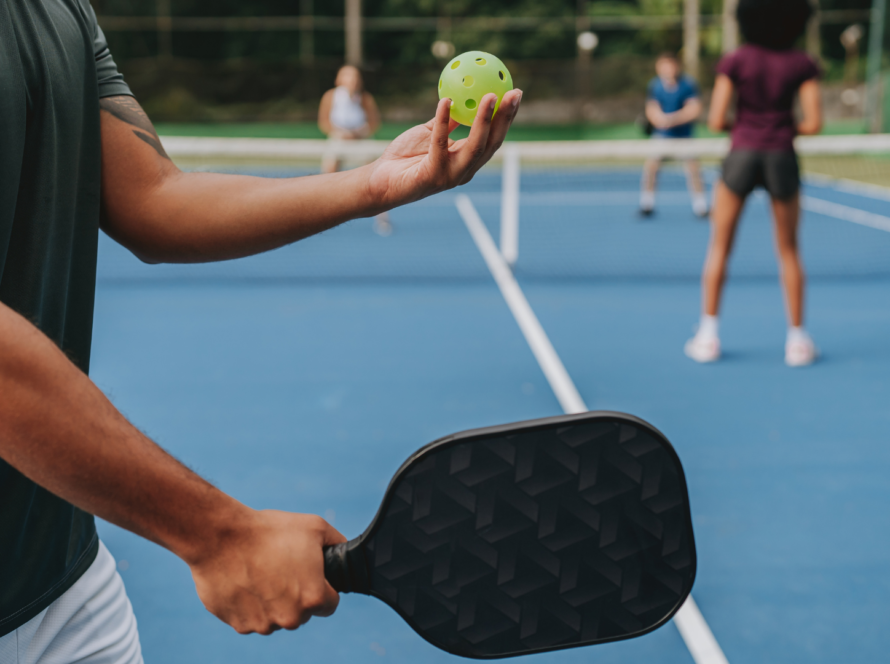
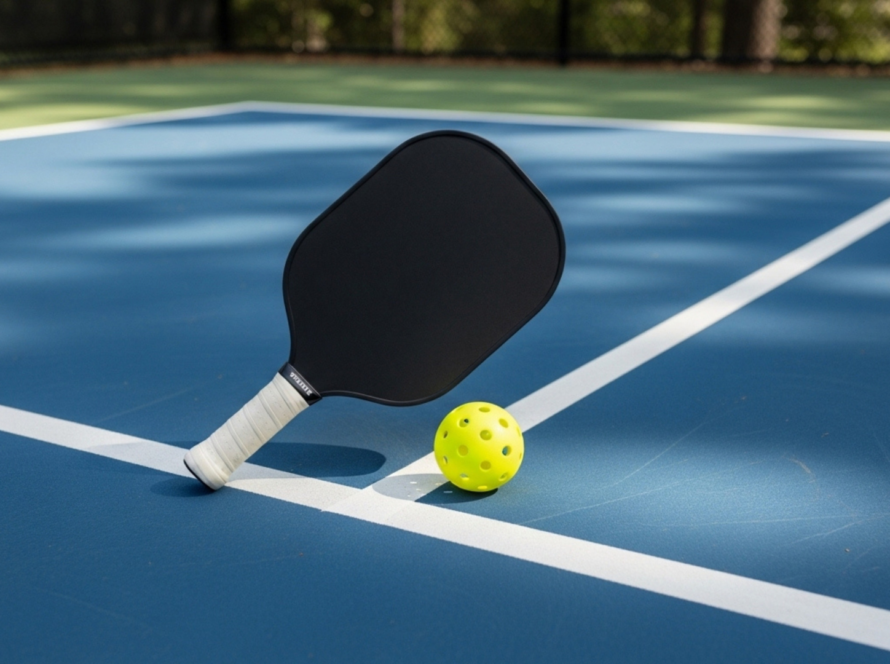
If you’ve ever asked “Can I lean over the kitchen?” you’re not alone. The non-volley zone (NVZ)—better known as the kitchen—is the most searched, most argued-over set of pickleball rules. The good news: once you learn a handful of principles, the NVZ becomes simple, predictable, and even a weapon in your game.
This guide distills the 2025 USA Pickleball/IFP Rulebook plus referee best practices into clear, real-world advice. We’ll cover what’s legal, what’s a fault, the momentum trap, Ernes and Berts, common myths, and smart tactics you can use today.

What Exactly Is the Kitchen?
- The non-volley zone is the two-dimensional surface that extends 7 feet (2.13 m) from the net on both sides.
- The NVZ line is part of the NVZ.
- “Volley” means you hit the ball before it bounces.
In plain terms: the kitchen limits where your body (and anything you’re wearing or holding) can be during a volley. It doesn’t restrict swinging through the airspace above the NVZ.
The Core Non-Volley Zone Rules (Fast Version)
According to Section 9 of the 2025 USA Pickleball/IFP Rulebook:
- You may not volley while touching the NVZ or its line (Rule 9.B).
- During a volley, you can’t let your momentum carry you into the NVZ afterward, even if the ball is already dead (Rule 9.C).
- If you’ve been in the NVZ, both feet must re-establish completely outside the NVZ (and off the line) before you can volley (Rule 9.D).
- Anything you wear, carry, or drop counts—paddle, hat, sunglasses, towel, even a spare ball (Rule 9.E).
- Wheelchair play has specific allowances for front wheels, but rear wheels are treated like feet (Rule 9.F).
What’s freer than many players realize:
- You can stand in the kitchen and hit after a bounce.
- You can reach over the NVZ in the air.
- You can jump the kitchen for a volley, so long as you don’t touch the NVZ at any point during or after the shot.
The Momentum Rule Explained (Rule 9.C)
Think of momentum as the “no fall-in” clause.
- If your momentum after a volley causes any part of you (or your gear) to touch the NVZ or its line, it’s a fault—even if the ball was already unreturnable.
- The fault is called at the moment you touch the NVZ, not at contact with the ball.
- There’s no time limit. You must regain balance and control outside the kitchen before you can step in.
Practical takeaway: Control your finish. If you’re lunging forward, you’re at risk—even on “winner” volleys.
A simple drill to fix momentum faults
- Split-step Freeze: Volley, then hold your finish until you’re completely balanced. Say “reset” out loud to cue yourself not to drift forward.
Re-Establishing Your Position (Rule 9.D)
If you were in the kitchen for a dink, you must re-establish outside before volleying.
- Both feet must be fully outside the NVZ and off the line.
- One foot out is not enough.
Pro tip: After any kitchen touch, make it a habit to step both feet back so you’re volley-eligible.
Dropped Items, Apparel, and Paddle (Rule 9.E)
Anything that touches the NVZ during a volley can trigger a fault.
- If your hat, sweatband, water bottle, or paddle lands on or in the NVZ during the point where a volley occurred, it’s your fault.
- If your opponent’s paddle flies into your NVZ on their follow-through, the fault is on them, not you.
Keep loose items off the court and secure your hat/glasses when the wind picks up.
Wheelchair Modifications (Rule 9.F)
Wheelchair rules mirror stand-up play with one key difference:
- Front (small) wheels may enter the NVZ during a volley.
- Rear (large) wheels may not touch the NVZ or line until the volley is complete. Treat rear wheels like “feet.”
Crossing the Net and Swinging Over the NVZ
- Your paddle may cross the plane of the net after you’ve hit the ball on your side, as long as you don’t touch the net or the NVZ on your side (Rule 11.I).
- The airspace above the kitchen is fair game. You can lean or reach as far as you want—just don’t touch down in the NVZ.
Erne vs. Bert: Advanced but legal
- Erne: You run or jump outside the sideline and volley near the net post, landing outside the NVZ extension.
- Bert: The same move but poached across your partner’s side in doubles.
- Both are legal if you never touch the NVZ before, during, or after contact.
Commonly Misunderstood Scenarios
- “I touched the NVZ line after the ball bounced. Fault?” No. The kitchen rules apply to volleys only. If the ball bounced, you can stand in the kitchen.
- “My follow-through hit the net post, but not the net. Fault?” Yes. Posts, straps, and the center base count as the net (Rule 11.L).
- “I jumped, volleyed, and landed outside the sideline beyond the NVZ. Legal?” Yes, if you never touched the NVZ or its line.
- “My partner was in the kitchen and stumbled onto the line after my volley winner. Fault on our team?” Yes. Any NVZ fault by either partner on a volleyed ball faults the team.
Strategy: Turn the NVZ Into Your Edge
Why the kitchen rule exists
- It prevents net smashes from dominating every rally and preserves the soft-game (dinking) that makes pickleball strategic.
How to leverage the rule
- Target momentum: If you see an opponent lunging, block the ball back at their feet. Their momentum may carry them into the kitchen.
- Command your balance: Use “reset” as a cue word after each volley so you don’t drift into the NVZ.
- Dink with purpose: Stand in the kitchen for bounce shots to take time away from opponents, but step back with both feet if you anticipate a volley opportunity.
- Learn the Erne: It punishes wide, floaty dinks and forces opponents to play tighter to the middle.
Footwork cues that pay off
- After any kitchen touch: two quick steps back to get both feet legal for the next volley.
- On attackable balls: split-step, strike, then freeze. If you can’t freeze, you probably over-swam or over-committed.
Referees, Rec Play, and Who Makes the Call
- Self-officiated play: You call your own kitchen faults, not your opponent’s (Rule 13.D.1). Be honest and consistent.
- Refereed play: Referees are trained to watch feet first, then the ball. Verbal claims after the fact don’t overturn what they saw.
- Video review: At the pro level, slow-motion can confirm foot faults. In amateur play, the call is immediate and stands.
What Changed in 2025?
- Rule 9.C.1 clarifies momentum faults include anything you’re wearing or carrying.
- Wheelchair Rule 9.F now more clearly defines the front-wheel exception.
- Rule 11.I clarifies you may cross the net plane with your paddle after contact on your side if you avoid net contact.
Quick Legal vs. Fault Checklist
Legal
- Standing or jumping in the kitchen to hit a ball after it bounces.
- Reaching your arm or paddle through the air over the NVZ.
- Executing an Erne or Bert without touching the NVZ.
- Jumping the kitchen for a volley and landing outside the NVZ.
Fault
- Any body part, paddle, or apparel touches the NVZ or its line during a volley.
- Momentum carries you into the NVZ after a volley—even if the ball is dead.
- Hat, paddle, or other item drops into the NVZ during a volleyed rally.
- You volley while any part of a foot is on or in the NVZ.
FAQ: Pickleball Kitchen (NVZ) Rules
Q1: Can I volley while standing on the NVZ line?
A1: No. The line is part of the NVZ. Any volley with a foot or anything else on the line is a fault.
Q2: If the ball bounces in the kitchen, can I step in and hit hard?
A2: Yes. The non-volley rule only applies to volleys. After a bounce, you may stand in the kitchen and hit however you like.
Q3: My paddle crossed the net after contact. Is that legal?
A3: Yes—if the initial contact was on your side and you didn’t touch the net or the NVZ on your side.
Q4: Do I have to get both feet out of the kitchen before I can volley?
A4: Yes. You must re-establish with both feet fully outside the NVZ and off the line before volleying.
Q5: What if I volley legally but my hat flies off into the kitchen?
A5: That’s a fault on you. Anything you wear or carry counts if it lands in the NVZ during a volleyed rally.
Conclusion: Master the Kitchen, Master the Point
The NVZ isn’t mysterious once you know the big three: don’t touch it on a volley, don’t let momentum carry you in, and get both feet out before your next airborne swing. Practice the split-step freeze, use “reset” as your cue, and look for chances to exploit opponents who can’t control their momentum.
Want a deeper dive? Grab the free 2025 USA Pickleball Rulebook, bookmark this guide, and share it with your doubles partner. The more you master the kitchen rules, the more confidently—and aggressively—you can play at the line. See you in the soft game.