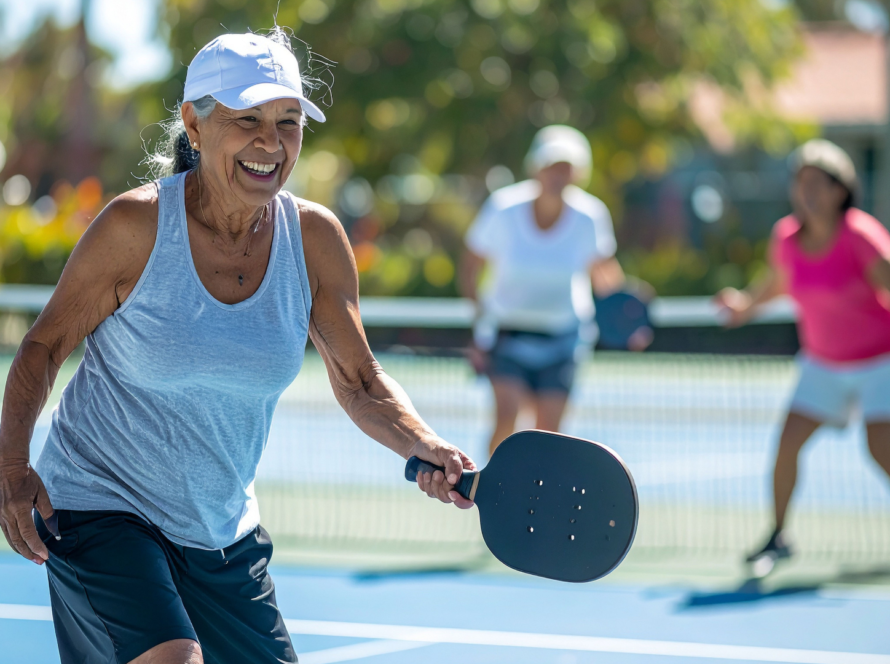
Pickleball is explosive, fast, and full of quick stops and cuts—exactly the movements that put big forces on your ankles, knees, and feet. The right shoes aren’t just “nice to have.” They’re key equipment that can help you play better and stay out of urgent care.
In this guide, you’ll learn what makes a great pickleball shoe (and why running shoes often fall short), how to match a shoe to your foot type and playing surface, and the best models to consider in 2025 across budgets and widths. Whether you’re new to the game or leveling up to league play, you’ll walk away confident about your next pair.
Why Pickleball Requires Special Footwear
Pickleball’s rapid, multi-directional bursts can generate shear forces up to 4–5x your body weight on the ankle and knee (Sports Biomechanics, 2023). No wonder 70% of pickleball injuries seen in urgent care involve the lower extremity, and 40% are acute ankle sprains (Mayo Clinic Sports Med., 2022).
A few more reasons shoes matter:
- Outdoor hard courts (concrete/asphalt) are about 20% less forgiving than typical acrylic tennis courts, so cushioning is critical (USTA surface data).
- Lateral movements dominate. You need wraparound stability and traction that grabs during side-to-side cuts and split steps.
- Court-specific outsoles help prevent slips and skids. The wrong tread can feel like playing on ball bearings.
Bottom line: Court shoes with real lateral support and surface-specific traction are the number-one controllable factor in reducing injury risk.
Key Shoe Features for Injury Prevention
Look for these features to protect joints and boost performance:
- Lateral support: Medial and lateral TPU wraps, outriggers, and shanks to resist rollover.
- Stable, secure fit: Lockdown that prevents heel slip and foot swim.
- Cushioning/shock absorption: Adequate stack and rebound for repeated hard stops.
- Traction for your surface: Outdoor vs. indoor compounds and tread patterns matter.
- Durability: High-abrasion rubber and reinforced toecaps for toe drags and pivots.
- Weight balance: Under ~14 oz (men) / ~12 oz (women) reduces calf fatigue while keeping structure.
- Breathability: Mesh with fused overlays helps manage heat; hot, swollen feet blister more easily.
- Midsole tech: EVA for light bounce, PU for longevity, and gel/air pods for targeted shock zones.
- Gender-specific lasts: Women’s models often have a narrower heel/lower instep for better lockdown and fewer heel-blister issues.
Outdoor vs. Indoor Outsoles
Choosing the right outsole keeps you stable and reduces tread wear:
- Outdoor (concrete/asphalt): Deep herringbone or omni-directional patterns with harder rubber (think Michelin or AHAR+). Built to resist abrasion.
- Indoor (wood/gym tile): Non-marking gum rubber with siping and stickier compounds for quick brake-starts.
Tip: If you play both, own two pairs. Mixing surfaces flattens tread fast and kills grip.
Match Shoe Type to Your Biomechanics
Your foot mechanics should guide your pick:
- Over-pronator (low arch): Choose models with medial posting or firmer density under the arch for control (e.g., ASICS Gel-Resolution 9, Adidas Barricade).
- Neutral gait: Prioritize balanced cushioning and total-foot wrap.
- Supinator/high arch: Look for a flexible forefoot and plusher midsoles (e.g., Diadem Court Burst, Babolat Jet Mach 3).
Not sure? A quick video of your stride or a retailer gait check can help. If you’re between categories, err toward stability for outdoor play.
Sizing and Fit Guidelines
- Shop at day’s end when feet are 3–5% larger.
- Wear your match-weight socks and any insoles you’ll use.
- Aim for a “thumbnail” (about ½ inch) of space in front of your longest toe.
- Do a “lateral rock test” in-store: try to topple off the shoe’s edge; it should resist rollover.
- If heel slippage occurs, use a runner’s loop/heel-lock lacing to secure the rearfoot.
Insoles and Socks: Small Upgrades, Big Payoffs
- Insoles: Options like Superfeet Carbon and Currex AcePro—or custom orthotics—can reduce plantar fascia strain by 15–25% (Journal of Foot & Ankle Research, 2021).
- Socks: Synthetic or wool blends with compression arch bands reduce blister incidence by up to 58% vs. cotton (APMA data).
Tip: If you add an insole, re-check fit. You may need to remove the factory sockliner or go up half a size.
Maintenance and Replacement
- Replace shoes after 60–70 hours of play or when herringbone is smooth in pivot zones.
- Alternate two pairs. Midsoles rebound by ~25% overnight (NIH material fatigue study), and rotating extends life.
- Clean outsoles regularly—pebbles wedged in treads act like mini ball bearings.
- Store in a ventilated, room-temperature space. Heat can warp EVA and weaken glue.
Common Injuries Shoes Can Help Reduce
The right shoe setup can lower your risk of:
- Ankle sprains and rollovers (lateral support and torsional control)
- Plantar fasciitis and heel pain (arch support and cushioning)
- Achilles tendinopathy (avoid abrupt heel-drop changes)
- Metatarsalgia and stress fractures (adequate forefoot cushioning)
- Shin splints (stability for over-pronation and shock absorption)
- Toe-drag abrasions (reinforced toecaps, especially for scrappy defenders)
Recommended Shoes: Top Picks for 2025
All models below are court-oriented with injury-prevention features. Fit notes and prices are approximate.
Outdoor/indoor all-rounders:
- HEAD Motion Pro (Outdoor/Indoor): 360º wrap stability fins, HyBrasion+ outsole, wishbone shank. Fit: medium-narrow. ~$149.
- New Balance 996 v5 (Men & Women) (Outdoor/Indoor): FuelCell foam, NDure toe guard, multiple widths from narrow to 4E. Great for wide feet. ~$149.
- FILA Volley Zone (Budget) (Outdoor/Indoor): Pivot-point outsole, molded cage. Under ~$90.
Outdoor specialists:
- ASICS Gel-Resolution 9: Dynawall 2.0 lateral counter, Gel + FF Blast+ cushioning. True-to-size stability star. ~$160.
- Diadem Court Burst: Lightweight EVA with “Burst Foam” forefoot pad, X-support chassis. Narrow heel lockdown. ~$150.
- SQAIRZ Pickleball: Square toe box to reduce toe-jam bruising, Sta-Put laces, ankle collar wings. Roomy forefoot. ~$165.
- K-Swiss Express Light Pickleball (Budget): DuraWrap flex cage, Ortholite comfort. Value pick. ~$105.
- Nike Zoom Vapor Pro 2: Zoom Air forefoot, stretchy internal sleeve, low-to-ground ride. ~$160.
- Adidas Barricade 13: Torsion System, geo-fit heel, durable upper with recycled content. Snug and supportive. ~$160.
- Babolat Jet Mach 3: Matryx EVO Kevlar-reinforced upper, KPRS-X heel pad, super light (~12 oz). ~$159.
- Tyrol Striker Pro V 2024: Wide base, Vibram rubber, shock-eraser midsole; designed with seniors in mind. Standard 2E width. ~$140.
- Mizuno Wave Exceed Tour 6: PoWnCe lightweight midsole, Wave plate for torsional control. Light and springy. ~$145.
Indoor specialists:
- HEAD Motion Pro (non-marking versions available).
- New Balance 996 v5 indoor models (gum rubber).
- FILA Volley Zone (non-marking).
If you’re between sizes or widths, start with New Balance 996 v5 for the width options, or Tyrol/SQAIRZ if you need extra forefoot room.
Quick Buying-Decision Flowchart
- Mostly outdoor courts?
- Yes → Choose outdoor outsole models (e.g., ASICS Resolution 9, Barricade 13, Jet Mach 3).
- No → See indoor/non-marking options (NB 996 v5 indoor, FILA Volley Zone).
- Need wide fit?
- Yes → New Balance 996 v5 (multiple widths), Tyrol Striker Pro V, SQAIRZ Pickleball.
- No → Proceed to stability/cushion preference.
- Over-pronate or want max stability?
- Yes → ASICS Gel-Resolution 9, Adidas Barricade 13, HEAD Motion Pro.
- No → Consider lighter options for speed.
- Working with a budget under $100?
- FILA Volley Zone, K-Swiss Express Light Pickleball.
- Want the lightest possible feel?
- Babolat Jet Mach 3, Mizuno Wave Exceed Tour 6, Nike Vapor Pro 2.
Additional Prevention Tips
- Do a dynamic warm-up: 5 minutes of band walks, carioca, and calf raises.
- Strengthen peroneals and glutes: Weak hip abductors correlate with 2x ankle-sprain risk.
- Cross-train on softer surfaces 1–2 days a week to give joints a break.
- Listen for midsole “bottoming out.” An audible slap on landings = cushioning is cooked.
FAQs
Q: Can I play pickleball in running shoes?
A: You can, but it’s not ideal. Running shoes are built for forward motion, not side-to-side stability. Court shoes have lateral support and traction patterns that reduce rollover risk and improve stops and starts.
Q: How often should I replace my pickleball shoes?
A: About every 60–70 hours of play, or sooner if your tread is smooth in pivot zones, your ankles feel wobbly, or you hear cushioning “slap” on landings. Heavy outdoor play usually wears shoes faster than indoor.
Q: Outdoor vs. indoor shoes—do I really need both?
A: If you regularly play both, yes. Outdoor compounds are harder and less grippy on gym floors; indoor gum rubber can chew up fast on asphalt. Separate pairs protect your joints and your wallet in the long run.
Q: How do I know if I over-pronate?
A: Clues include excessive wear on the inside edge of your shoes, knees collapsing inward during squats, or arch collapse on video. If unsure, choose a stability-oriented model (ASICS Resolution 9, Adidas Barricade) or get a quick gait check.
Q: What if I get heel slippage or blisters?
A: Try a runner’s loop (heel-lock) lacing and consider women’s/lower-instep lasts if you have a narrow heel. Pair with synthetic or wool socks and ensure about a half-inch of toe room.
The Takeaway
Court-specific shoes with real lateral architecture are the best insurance policy you can buy for pickleball. Match outsole to surface, support to your foot type, and replace pairs before the structure dies. If you want a short list to start with: ASICS Gel-Resolution 9, New Balance 996 v5 (for width options), and HEAD Motion Pro mix stability, traction, and comfort without feeling clunky.
Ready to upgrade? Shortlist two models, try them with your game-day socks and insoles, and do the lateral rock test before you commit. Your joints—and your game—will thank you. If you found this helpful, share it with your doubles partner and subscribe for future gear guides and drills.