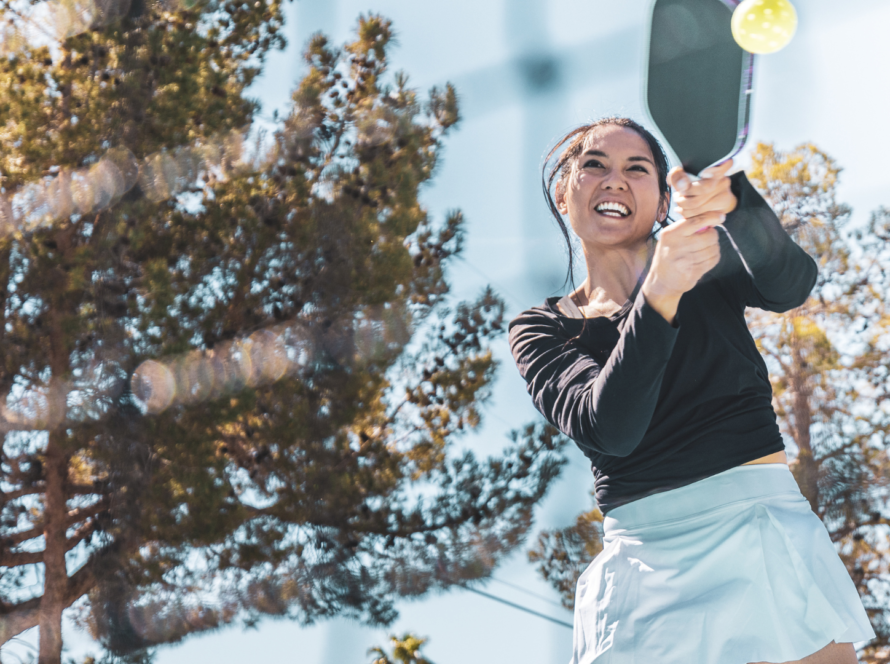
Pickleball is explosive, fast, and surprisingly hard on your feet. Between quick lateral cuts, split-steps, and stop-start sprints, a standard running shoe simply can’t keep up. The right pair of pickleball shoes can boost your stability, reduce injury risk, and help you move more confidently—whether you’re dinking at the kitchen or chasing lobs.
This guide breaks down everything beginner to intermediate players need to know: how pickleball footwear is different, what features actually matter, how to size and replace your shoes, and the best pickleball shoes to consider in 2025. Let’s get you on court with footwear that works as hard as you do.
Why Pickleball Shoes Are Different
- Built for side-to-side play: Players average 300–500 lateral micro-cuts per game and spend ~70% of rally time in a semi-squat “ready” stance. Those fast stops can load the inside of your forefoot up to 3× body weight on hard courts—much higher than steady-state running [5][6].
- Injury patterns are unique: The top three lower-limb issues in amateur pickleball are lateral ankle sprains, plantar fasciitis, and patellar tendinopathy. Worn-out midsoles or the wrong shoe type amplify the risk [6][7].
- Courts are hard—really hard: Outdoor acrylic-on-concrete has very little give (Shock-Attenuation Index < 10%) compared to basketball hardwood (25–40%). That’s why advanced cushioning and stable platforms matter so much [8].
Bottom line: court-specific shoes aren’t hype. They’re engineered for pickleball movement, surface grip, and repetitive lateral stress.
The Key Parts of a Pickleball Shoe (and what they do for you)
Outsole and Traction
- Best all-around treads:
- Herringbone or modified herringbone grips well on gritty outdoor acrylic and indoor gym floors, channeling dust away.
- Circle-pod/siped patterns (think suction-cup pods) shine on dusty rec-center floors.
- Durable rubber compounds:
- High-Abrasion Rubber (AHAR+) on many Asics outdoor models.
- NDurance on New Balance, lab-rated for strong abrasion resistance.
Tip: If you slide or feel “grabby” stops are jerky, check your tread pattern and rubber hardness. Indoor shoes typically use softer, non-marking gum rubber. Outdoor shoes favor harder blends that last longer on rough acrylic.
Midsole and Cushioning
- EVA foam: Light, responsive, but packs out quickest (around 60 court hours).
- PU (polyurethane): Denser, longer-lasting cushion; often a “workhorse” feel.
- E-TPU “energy beads”: High rebound, stays livelier in heat.
- Nitrogen-infused foams (e.g., FuelCell): About 10% more energy return than standard EVA—great pop without mushiness.
- Gel/Air pillars: Targeted heel deceleration to take the sting off hard landings.
Pick your feel: maximum plush for comfort and heel protection, or firmer, springy foam for quick transitions and court feel.
Lateral Stability (your ankle’s best friend)
- Midfoot shank (carbon, Pebax, or TPU): Resists twisting and keeps your foot planted during cuts.
- Outrigger flange (wider forefoot lip): Adds roll-over resistance when you push off laterally.
- Internal heel counter: A rigid heel cup that locks the calcaneus; linked to ~20% fewer inversion sprains in lab settings [11].
If you’ve had ankle issues, favor shoes with a visible chassis, a moderately wide base, and a firm heel counter.
Uppers and Fit Systems
- Engineered mono-mesh: Light, airy, fastest-feeling—less durable for toe draggers.
- Sandwich-mesh with rubber print: Balanced airflow and abrasion resistance.
- Knit collars: Comfy entry and ankle hug; ensure you can re-lock fit if they stretch (secondary eyelets help).
- Quick-closure options: Boa dials or speed-lace systems are handy if you have limited dexterity.
Toe-Drag Protection
Reinforced toe caps—RPU Drag-Guard, PGuard, Durawrap—are essential if you “shuffle-drag” during dinks or backhand digs.
Heel-to-Toe Drop
A 7–9 mm drop is the pickleball sweet spot. It lowers your center of gravity for stability while protecting the Achilles more than zero-drop options [12].
Weight Benchmarks (Men’s US 9 for reference)
- Ultra-light: under 11 oz—nimble and speedy.
- Midweight: 11–13 oz—balanced cushion, support, and durability.
- Tanks: 13+ oz—maximum support and stability for heavier movers or pronators.
How to Choose: A Simple, Smart Checklist
- Confirm your primary court: indoor (wood/synthetic) or outdoor (acrylic on concrete).
- Measure both feet at day’s end—your feet swell 4–6% over a day.
- Know your foot shape: width, arch height, instep volume, past injuries.
- Match features to needs:
- Chronic ankle sprains → wider base + robust shank + firm heel counter.
- Plantar fasciitis → plush heel, good arch interface, removable insole for orthotics.
- Hot climates → 80%+ mesh uppers for airflow.
- Try-on protocol:
- Wear your game-day socks (padded, moisture-wicking).
- Lace a heel-lock (runner’s knot).
- Do mini split-steps, side lunges, and stop-starts in the store.
- Replace when:
- 60–100 outdoor court hours, or
- Outsole “balds” at pivot points, or
- Midsole shows deep compression lines (the “wrinkle test”) and feels flat.
Indoor vs Outdoor: What Changes?
- Indoor (wood/synthetic):
- Grip: medium; dust is the issue.
- Tread: fine herringbone or circle pods.
- Rubber: softer, non-marking.
- Durability: 80–120 hours (less abrasion).
- Outdoor (acrylic on concrete):
- Grip: high; grit is the issue.
- Tread: deeper herringbone + pivot chevrons.
- Rubber: harder, carbon-infused blends.
- Durability: 60–90 hours (rough surface chews rubber faster).
The Best Pickleball Shoes in 2025 (reader favorites and proven performers)
- Asics Gel Resolution 9: Tank-like stability with a supportive chassis; great for overpronators and players wanting maximum support.
- Babolat Jet Mach 3 Pickleball: Kevlar-reinforced upper with Michelin rubber; nimble but durable outdoors.
- Wilson Rush Pro 4.0 Pickleball: 4D Support Chassis stabilizes heel and forefoot; confident on lateral moves.
- Head Revolt Pro 5.5: Triple-density midsole and lock-down strap—excellent for heavier players who want cushioning plus control.
- Adidas Barricade 13: Ankle “Geofit” pods and torsion support; slightly heavier but nearly bulletproof.
- Skechers Viper Court Pro: APMA-approved Arch Fit insole, roomy toe box—great comfort pick and value.
- On THE ROGER Clubhouse Pro: CloudTec cushioning with a sleek, lifestyle look; best for players who want style with real court chops.
- Tyrol Drive V: A favorite among seniors; supportive heel stack and medial posting for pronation control.
Pro tip: Women often do best in women-specific lasts (narrower heel, lower instep) to avoid slippage. If you need more width, brands like New Balance, K-Swiss, and Tyrol offer multiple widths.
Price Tiers: What to Expect in 2025
- $70–90: Entry court shoes (good for brand-new players; basic support and traction).
- $90–120: Value performance (solid cushioning and grip; fewer premium materials).
- $120–150: Flagship performance (the sweet spot for most players—balanced tech and durability).
- $150–180: Premium/pro tour (max tech, more specialized foams and chassis).
- $180–220: Boutique/limited (lifestyle + tech; you’re paying for design and exclusivity too).
Accessories That Make a Real Difference
- Orthotics and insoles:
- Off-the-shelf options like Superfeet Carbon (low volume) or Currex AcePro can improve arch interface and heel comfort.
- Chronic plantar fasciitis? See a sports podiatrist for custom orthotics. Choose shoes with removable 5 mm insoles to make room.
- Socks:
- Double-layer anti-blister socks cut shear forces significantly and help prevent hot spots.
- Copper or silver yarns help control odor on travel days.
- Ankle braces:
- Lace-up or hinged braces (e.g., McDavid 195, Ultra Zoom) fit inside most mid-volume court shoes. Consider sizing up half a size.
- Break-in and care:
- Most modern uppers are play-ready day one. Leather hybrids may need 1–2 sessions.
- Rotate two pairs to extend life by 25–30% (foam rebounds between uses).
- Don’t bake your shoes in a hot car—excess heat can weaken glue bonds.
- Travel tip:
- Stuff socks into your shoes to keep the upper from collapsing and save bag space.
FAQs
Q: Can I just use my running shoes for pickleball?
A: Not recommended. Running shoes are built for straight-line motion with softer sidewalls, higher stacks, and narrower bases—factors that can double your risk of ankle roll in court-style pivots. Choose court-specific shoes for stability and safety.
Q: How often should I replace pickleball shoes?
A: If you play three times a week, plan on every 4–6 months. Tournament or daily grinders may need a new pair every 2–3 months, or roughly 60–100 outdoor court hours, depending on surface and body weight.
Q: I have wide feet. What are my options?
A: Look at New Balance (2E/4E), K-Swiss Express Light Wide, Tyrol Drive series, and certain Yonex “Wide” models. Also try removing the stock insole and using a thinner aftermarket insole to free up volume.
Q: Are there women-specific lasts, and do they matter?
A: Yes. Women’s models from Asics, New Balance, and Adidas often have narrower heels and lower insteps to prevent slippage and improve lockdown. If you’re between men’s and women’s sizes, use the women’s last when possible.
Q: Is a zero-drop or minimalist pickleball shoe a good idea?
A: Not at this time. Most minimalist designs don’t meet lateral stability guidelines for court sports and may elevate injury risk in side-to-side play.
The Bottom Line
Great pickleball shoes do three things: they grip the court you play on, they cushion repetitive landings, and they lock your foot in during hard lateral cuts. Start with your court surface, match features to your feet and injury history, and use the try-on checklist to dial in fit. Then set a reminder to replace your pair around 60–100 outdoor hours—before the midsole “dies” and your joints pay the price.
Ready to upgrade? Shortlist two or three models from the 2025 picks above, bring your game socks, lace a runner’s knot, and test quick lateral moves in-store. If you want personalized recommendations based on your foot type and court, drop a comment with your shoe size, width, and playing surface—I’m happy to help you find your perfect match.