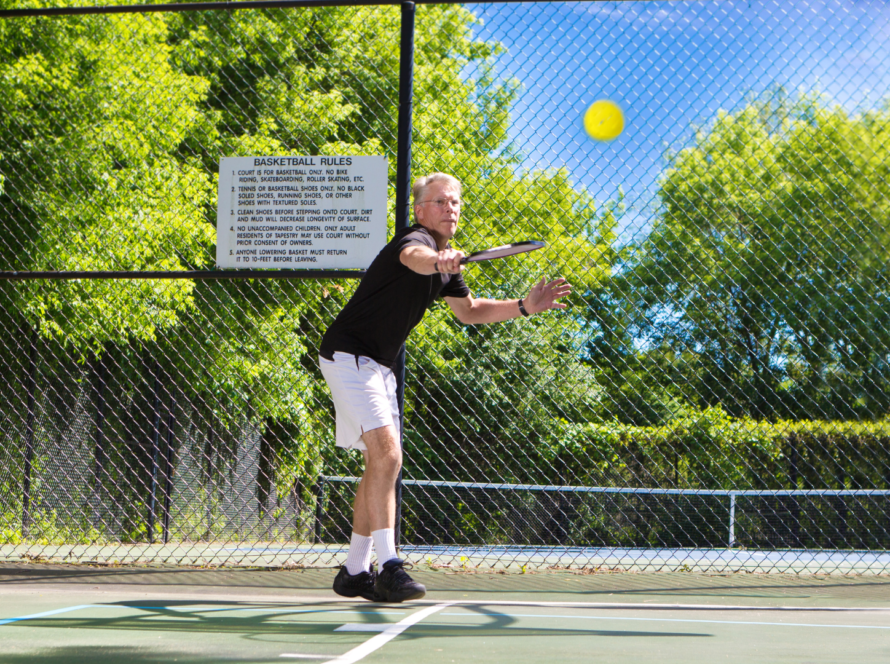
Indoor pickleball plays very differently from outdoor matches—and your shoes should match. Gym floors and PVC sport tiles are slicker than concrete, and most pickleball footwork is side-to-side, not straight ahead.
That’s why running shoes feel skittish indoors and why a purpose-built indoor pickleball shoe can immediately upgrade your traction, stability, and confidence. This guide breaks down exactly what to look for, the best indoor shoes of 2025, how to get your fit right, and how to make them last.
Why you want a dedicated indoor pickleball shoe
- Movement matters: About 70–80% of pickleball footwork comes from lateral shuffles, micro hops, and abrupt stops—not long forward strides. Shoes must prioritize side-to-side stability and quick braking.
- Surface matters: Indoor courts—sealed maple, polyurethane, or PVC tiles—offer less bite than outdoor concrete. You need non-marking, tacky rubber that grips without streaking.
- Injury prevention: Proper court shoes significantly improve ankle containment and midfoot control, reducing common ankle and knee issues for recreational players [5].
What to look for (the performance checklist)
Traction that grips without streaking
- Non-marking, high-friction rubber in the #60–#65 Shore A range.
- Micro-siped or omni-directional herringbone tread under 1.5 mm for gym floors.
- Look for “indoor” or “all-court” versions when possible.
Lateral stability and roll-over protection
- Wrapped sidewalls and outriggers are key (ASICS DYNAWALL, Wilson 4D-Support, Adidas Torsion 2.0).
- Firm heel counters help keep your ankle centered during hard cuts.
Cushioning that rebounds fast
- Supercritical EVA foams (FuelCell, Enerzy, Floatride) feel lively and recover quickly between points.
- TPU or Pebax shanks add torsional rigidity to keep your arch supported during pivots.
Durable, breathable uppers
- Mono-mesh or jacquard knit uppers breathe well indoors.
- Heat-welded or TPU yarn reinforcements protect high-wear zones (toes, medial quarter).
Fit that can be customized
- Removable 5 mm insoles let you swap in orthotics.
- Half sizes and width options (2E, 4E) are available from New Balance, SQAIRZ, Babolat, and Yonex.
Best indoor pickleball shoes of 2025
Below are standout models of indoor pickleball shoes from the 2025 cycle. We’ve grouped them by player needs so you can zero in quickly. Weights are for men’s US 9; women’s typically run ~1 oz lighter.
Max grip on slick floors
- HEAD Motion Pro 2.0 ($159, 12.6 oz): Drift-Control outsole feels planted on polished wood. Great for players who slide unintentionally on other shoes. Best for traction-first buyers [1][4].
Comfort-first, step-in feel
- Diadem Court Burst ($150, 14.5 oz): Plush BurstFoam midsole and a generous fit. If you play long rec sessions and prefer a cushy ride, start here.
Stability and ankle containment
- Wilson Rush Pro 4.0 Pickleball ($140, 12.7 oz): 4D-Support Chassis keeps your ankle centered on aggressive lateral moves. Excellent for pronators or players rehabbing ankle sprains.
- Skechers Viper Court Elite ($160, 12.4 oz): Stable platform with EcoFlight cushioning and a stout heel counter. Locks in the rearfoot without feeling brick-like.
Speed and featherweight feel
- Mizuno Wave Exceed Tour 6 ($150, 11.6 oz): Fast, springy, and surprisingly supportive thanks to the Wave Plate and ENERZY foam. Great for quick-twitch players.
- Yonex Sonicage 4 ($135, 11.9 oz): Power Cushion+ is lively, and the shoe disappears on your feet. Ideal for players who rely on quick acceleration and recovery steps.
Durability and lockdown for hard movers
- Nike Zoom Vapor Cage 4 Pickleball ($165, 13.3 oz): Kurim cage and Zoom Air cushioning deliver abrasion resistance and a secure wrap. Best for habitual toe-draggers and aggressive sliders.
- Adidas Barricade 13 Indoor ($160, 13.5 oz): Torsion 2.0 and Geofit pods create a locked-in midfoot with classic Barricade durability. Built for high-volume play [2].
Arch support and all-arounders
- ASICS Gel-Resolution 9 ($150, 13.1 oz): DYNAWALL + GEL cushioning gives predictable support with strong midfoot control. A safe, do-everything pick for most players.
Cushion plus fit options
- New Balance 996 v6 ($149, 12.8 oz): FuelCell foam and NDure overlays, with multiple widths on offer. If your foot never loved “standard” fits, try this first.
Wide base and balance
- SQAIRZ XRZ ($185, 13.9 oz): Broad, stable platform with Sta-Put lacing. Excellent for players who want a planted feel and consistent balance across long rallies.
Wide feet on a budget
- Babolat SFX3 All Court ($119, 13.8 oz): Known for volume in the forefoot and a forgiving fit. Friendly price and easy break-in.
Budget speed pick
- K-Swiss Express Light 3 ($105, 12.0 oz): Surgelite midsole and a nimble feel for under $110. Great starter shoe for indoor rec leagues.
Eco-minded option with bounce
- ON THE RISE EvoFlow ($170, 11.8 oz): Recycled Pebax midsole and lively rebound. For players who want performance with a lighter footprint.
Pro tip: Major brands run 25–30% off sales in April and October during seasonal changeovers. If you’re budget-sensitive, set a calendar reminder.
Indoor vs. outdoor pickleball shoes (quick compare)
- Outsole rubber: Indoor is softer and tackier for gym floors; outdoor is harder for concrete wear.
- Tread depth: Indoor is flatter (<1.5 mm) for more surface contact; outdoor uses deeper lugs (3–4 mm).
- Uppers: Indoor often has more open mesh (less debris); outdoor uppers are tighter to block dust and grit.
- Durability focus: Indoor reinforces toe-drag and medial quarter; outdoor emphasizes outsole life.
Bottom line: You can play indoors in “all-court” or outdoor pairs, but traction and braking precision are noticeably better with a true indoor outsole.
Get the fit right (simple hacks that work)
- Measure at home: Stand on a sheet of paper in socks, trace both feet, and measure the longest length and widest width. Cross-reference brand charts—many now publish internal last dimensions, not just US sizes.
- Nail the toe box: Aim for a thumb-width of space in front of the longest toe, with zero heel lift.
- Volume adjusters: If the forefoot feels sloppy but length is correct, swap in a 6 mm PU insole or add a thin tongue pad to fill space.
- High arches: Prioritize a supportive shank and removable insole (ASICS Gel-Resolution 9, NB 996 v6, SQAIRZ XRZ).
- Low arches/pronation: Look for broader lateral outriggers and sturdy heel counters (Wilson Rush Pro 4.0, Skechers Viper Court Elite).
- Break-in: Most modern court shoes need 1–3 hours of light play. If hotspots persist past two sessions, the last shape may not match your foot.
Care and longevity
- Rotate pairs: Alternating two pairs can extend lifespan by ~25% and lets foams re-expand between sessions.
- Clean smart: Use a damp microfiber cloth and mild dish soap. Avoid bleach and heat; air-dry only to preserve glue and midsole integrity.
- Know the replacement signs:
- Outsole bald spots wider than a quarter
- Midsole compression lines 5 mm or deeper
- A heel counter that feels soft or pliable when pinched
- Typical lifespan: 60–80 indoor hours for lightweight, speed-focused shoes; 100–120 hours for sturdier models.
Price tiers and value
- Budget (<$100): K-Swiss Express Light 3, Prince T22, ASICS Gel-Game 10
- Mid-range ($100–$140): Yonex Sonicage 4, Wilson Rush Pro 4.0, New Balance 996 v6
- Flagship ($150+): SQAIRZ XRZ, HEAD Motion Pro 2.0, Nike Vapor Cage 4, Mizuno Wave Exceed Tour 6
Tip: Try two sizes or two models from the same “category” (speed vs. stability), then keep the one that feels locked-in after a short break-in. Many brands offer 30-day “comfort” guarantees or play-test windows.
Quick buyer checklist
- Non-marking label on the outsole
- Lateral outriggers/sidewall wrap for stability
- Fit: thumb-width in toe box, zero heel lift
- Removable insole (orthotic-friendly)
- Weight: under 13 oz for speed, 13–14.5 oz for stability
- Breathability: at least 60% mesh coverage if your feet run hot
- Warranty: look for 6-month outsole or 30-day comfort guarantees
FAQ: Indoor pickleball shoes
Q1: Are “indoor” volleyball or basketball shoes okay for pickleball?
A: Often, yes—if they have non-marking rubber and good lateral support. However, pickleball-specific models tend to use flatter, omni-directional tread and lateral outrigger shapes that better match pickleball’s micro-adjustments and abrupt stops.
Q2: What does “non-marking” actually mean?
A: It refers to rubber compounds that won’t leave dark streaks on wood or PVC floors. Look for a “non-marking” stamp under the outsole. These compounds are typically softer and tackier, boosting indoor grip.
Q3: How long should a pair last indoors?
A: Expect roughly 60–80 hours for lightweight “speed” shoes and 100–120 hours for burlier stability models. Replace sooner if you see bald spots, deep midsole creases, or a soft heel counter.
Q4: I have plantar fasciitis—what should I prioritize?
A: A supportive midfoot shank, secure heel counter, and the ability to use your preferred orthotic. Models like ASICS Gel-Resolution 9 and New Balance 996 v6 are solid starting points; always pair with the right insole and sock thickness for your foot.
Q5: Do I need a different size for indoor vs. outdoor shoes?
A: Usually your size is the same. That said, indoor shoes can feel more snug due to wrap and support features. Measure both feet and compare to brand charts; consider width options if you’re between sizes.
Final takeaway
Indoor court shoes for pickleball are a true performance and safety tool. Prioritize non-marking traction, lateral stability, and a last shape that matches your foot. With the 2025 line—ranging from budget-friendly speed (K-Swiss Express Light 3) to eco-minded bounce (ON THE RISE EvoFlow)—there’s a great option for every player and price point. Ready to feel the difference? Pick two contenders, test them on your home court, and keep the pair that keeps you planted and confident.