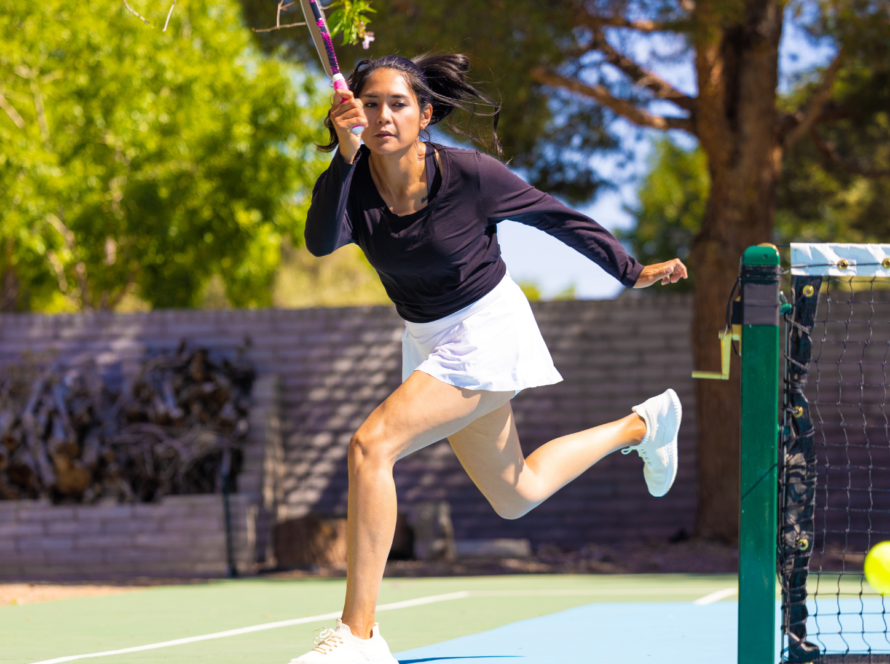
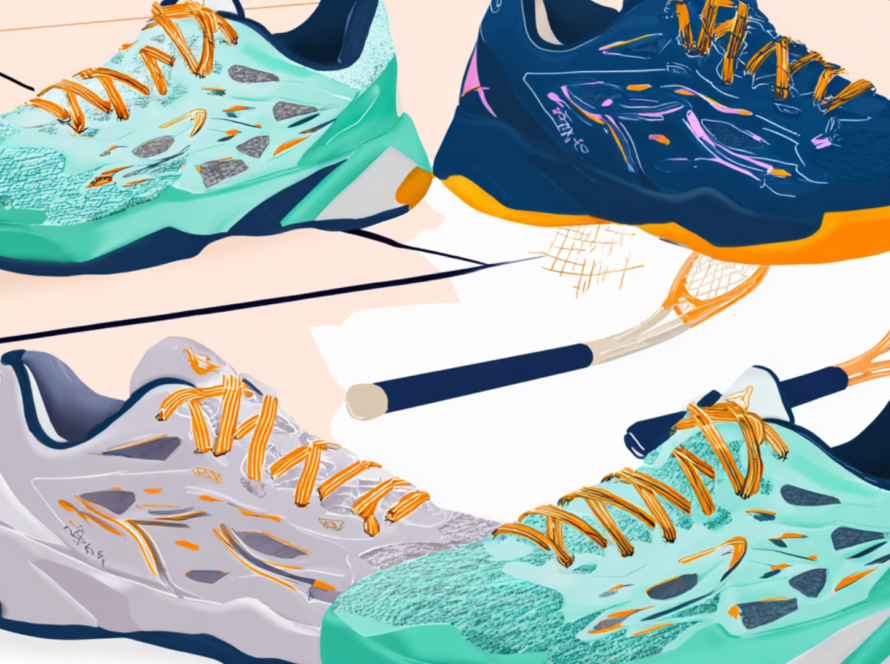
Indoor pickleball moves differently than outdoor play—and your shoes should too. Hardwood, Taraflex, and modular tiles all run “grippier” than acrylic, which changes how your foot loads, pivots, and stops. The right indoor-specific pickleball shoes give you the non-marking grip, side-to-side stability, and cushioning you need to play faster with less risk.
Whether you’re brand new to leagues or an improving intermediate chasing more confident split-steps, this guide translates lab data and real-world reviews into plain-English advice. You’ll find our best indoor pickleball shoes for 2025, how to pick the perfect fit, and simple maintenance tricks that make your investment last.
Why indoor-specific pickleball shoes matter
Indoor courts are a different surface physics problem than outdoor acrylic.
- Grip: Maple hardwood and Taraflex have a higher coefficient of friction, so non-marking, softer compounds (often natural “gum” rubber) deliver secure traction without black streaks.
- Movement: About 80–85% of pickleball steps are lateral or diagonal. Shoes with real torsional rigidity and sidewall bracing keep your ankle from collapsing when you plant hard for a dink or Erne.
- Impact: Indoor floors don’t “give” like asphalt. Peak forces can exceed 4× body weight on jumps and explosive split-steps, so plush yet resilient midsoles matter.
Bottom line: Non-marking grip + lateral stability + resilient cushioning is the winning triangle for indoor pickleball shoes.
Quick picks: Best indoor pickleball shoes of 2025
- Best overall: HEAD Motion Pro 2.0 – 360° wrap outsole, HyBrasion+ rubber, TRI-NRG cushioning; outstanding all-around grip and stability.
- Best value: K-Swiss Express Light Pickleball 2 – Great support under $110, DuraWrap Flex upper, and wide sizes available.
- Best cushioning: New Balance FuelCell 996v4.5 / 996v5 BOA – Plush, bouncy ride with a carbon flange; optional BOA micro-adjust fit.
- Best for wide feet: FitVille Amadeus Court Pro (Wide & Extra-Wide) – True 4E/6E options with solid sidewall support.
- Best lightweight speed shoe: Adidas Adizero Cybersonic – About 10.4 oz with EnergyRods for snap; great for quick feet.
- Best ankle support: SQAIRZ XRZ – High-wrap rearfoot chassis and squared toe box; extra secure for players with prior sprains.
- Most durable: Babolat Jet Mach 3 All-Court – Michelin DIN20 outsole + 6-month guarantee; kevlar-reinforced upper.
- Green choice: Wilson Rush Pro Echo 2 Sustainable – Recycled upper, algae-based foam, FSC rubber; lower-carbon option.
- Women-specific last: ASICS Gel-Resolution 9 (W) – Narrower heel and higher arch sculpt; 6-month outsole warranty.
- Volleyball crossovers (great indoors): Mizuno Wave Momentum 3 and ASICS Sky Elite FF 2 – Gum rubber grip and superb ankle lockdown.
How to choose indoor pickleball shoes (without overthinking it)
Traction and the non-marking outsole
Look for non-marking rubber that’s softer and tacky on hardwood or Taraflex.
- Trusted compounds: Natural gum rubber, Michelin DIN20 (Babolat), Goodyear G227 (Skechers), AHAR+ Indoor (ASICS).
- Tread patterns: Herringbone works, but radial pivot circles under the ball of the foot (seen on HEAD Motion Pro, Yonex Eclipsion) reduce shear during quick pivots.
- Lab hint: On slip-meter tests (0–1 scale), 0.80+ is elite. Top performers: Yonex Power Cushion 88D (0.89), HEAD Motion Pro (0.88), Skechers Viper Court Elite (0.87).
Lateral stability and ankle protection
Most pickleball steps are lateral. Prioritize structure here.
- Sidewalls and plates: TPU/carbon sidewalls (e.g., Adidas 3D Torsion, SQAIRZ Sta-Bilt) help control foot roll and can reduce ankle-sprain risk.
- Outriggers: Slightly wider outsoles (Prince T22.5, Nike GP Challenge 1) add a few millimeters of base without bulk.
- Collars: If you’re coming from basketball or have a history of ankle sprains, consider mid-cut collars (Nike Zoom NXT Mid, Salming Recoil Ultra Mid).
Cushioning, energy return, and heel-to-toe drop
You want soft landings that still feel quick.
- Top foams: New Balance FuelCell (
70% energy return), Skechers EcoFlight (68%), Mizuno Enerzy (67%), ASICS FF BLAST+ (63%). - Drop sweet spot: 6–8 mm keeps you low enough to pivot fast with enough padding in the heel for hard stops.
Fit and comfort: shape matters more than brand
Start with your foot shape, then pick the model.
- Toe-box profiles:
- Racer/narrow: Adidas Ubersonic 4.
- Anatomical/wide: Altra PlayCourt 1.
- Squared/roomy: SQAIRZ XRZ.
- Wide options: K-Swiss Express Light (2E/4E), FitVille (4E/6E), select New Balance widths.
- Lockdown tech: BOA PerformFit (NB 996v5 BOA), Mizuno Dynawrap, Diadem Dynamic Fit help secure the midfoot for confident cuts.
Fit notes worth knowing:
- Diadem Court Burst runs about a half-size small for men (true to size for women).
- HEAD Revolt Pro 4.0 runs standard but breathes cooler thanks to ventilation windows.
Weight vs. stability trade-offs
Ultra-light shoes (<11.0 oz men’s US 9) feel fast but can be less torsionally stiff.
- Rule of thumb: Every 1 oz saved reduces metabolic cost by ~1% but may cut torsional stiffness by 3–5%. If you’ve had ankle issues, err toward support.
Durability, guarantees, and real value
Indoor courts can chew through soft rubber. Look for reinforcements and warranties.
- 6-month outsole guarantees: ASICS Gel-Resolution 9, Babolat Jet Mach 3, Wilson Rush Pro 4.0, K-Swiss Hypercourt Supreme.
- Tough uppers: Kurim PU (Diadem Court Burst), Dyneema yarns (Adidas Cybersonic).
- Cost-per-hour math: A $140 shoe lasting 70 hours costs $2/hour; a $95 pair lasting 35 hours costs $2.71/hour. “Cheap” can be more expensive.
Price bands (2025)
- $60–90: Entry (Decathlon Kuikma PS 560, ASICS Upcourt 6) — fine for casual rec.
- $90–120: Performance value (K-Swiss Express Light, Wilson Rush Pro, FitVille Wide).
- $120–150: Premium (New Balance 996, Adidas Ubersonic, Skechers Viper Court).
- $150–180: Flagship (HEAD Motion Pro 2, Yonex Eclipsion 5, Diadem Court Burst).
- $180+: Niche/custom (Salming Rebel Knit X BOA, Nike Vapor Pro 2 Tour).
Model highlights: who should pick what?
- HEAD Motion Pro 2.0: Players who want maximal grip plus stable pivots. The 360° wrap outsole and TRI-NRG midsole make it a true “do-everything” indoor shoe.
- New Balance 996v4.5 / 996v5 BOA: Comfort-first buyers or those logging lots of court hours. FuelCell foam stays bouncy; BOA adds precise lockdown.
- Adidas Adizero Cybersonic: Quick movers and lighter players who prioritize speed. Very light with EnergyRods for snap.
- SQAIRZ XRZ: Anyone craving ankle security or a roomier toe box; squared front gives toes space to splay under load.
- Babolat Jet Mach 3: Durability-focused players and toe-draggers; Michelin rubber and 6-month outsole guarantee.
- Skechers Viper Court Elite: Players who want sticky indoor traction with proven outsole longevity (Goodyear compound holds depth well).
- ASICS Gel-Resolution 9 (Women): Female players needing a women-specific last with strong torsional control and a warranty.
Fit, break-in, and maintenance tips
Nail these basics and your shoes will feel better and last longer.
- Sizing:
- Leave 7–10 mm (about a thumbnail) of toe room.
- Using thick orthotics (>3 mm)? Go up a half size or choose a model with a removable insole (many NB/ASICS).
- Break-in:
- Wear around the house for 2 hours, then do dynamic lunges.
- Heat-moldable options (SQAIRZ, Salming) can be oven-baked at 175°F for ~4 minutes. Follow brand instructions.
- Socks:
- Choose quarter or crew height with targeted compression (e.g., Swiftwick Flite XT) to limit in-shoe sliding.
- Replacement timing:
- About every 45–60 court hours, or when pivot-zone tread is ≤1 mm, or the midsole feels “dead.”
- Easy longevity wins:
- Rotate two pairs to let midsoles rebound (adds ~15% life).
- Wipe soles with a damp microfiber before play to restore tack.
- Don’t cook your shoes in the car; heat degrades EVA/PU foams.
- Use a runner’s loop to stop heel slip; try a “window” lace to relieve top-of-foot pressure.
Injury prevention essentials (beginner to intermediate)
- Over-pronation: If you collapse inward late in matches, consider models with medial posting/support (ASICS DuoMax, stability-plate designs).
- High weekly load (10+ hours): Choose ≥25 mm heel stack and a stiff shank for patellar tendon comfort on repeated jumps.
- Ankle history: Look for shoes with higher torsional stiffness or mid-cut collars. Support plates that resist twisting can make a meaningful difference.
FAQ: indoor pickleball shoes
Q: Can I use volleyball or badminton shoes for indoor pickleball?
A: Often yes. Gum-rubber volleyball models like Mizuno Wave Momentum 3 or ASICS Sky Elite FF 2 grip well and offer great ankle lockdown. Just confirm they’re non-marking and feel stable during side-to-side cuts.
Q: Do I really need a non-marking sole?
A: Yes. Many gyms require it, and non-marking compounds are tuned for hardwood grip. You’ll get better traction and avoid leaving streaks.
Q: How long should indoor pickleball shoes last?
A: For most players, 45–60 court hours. Heavy players or toe-draggers may see less; lighter or more efficient movers may get more. Check tread depth in the pivot zone and midsole “bounce.”
Q: Are BOA dials worth it?
A: If you like micro-adjustability or have a hard-to-lock midfoot, BOA can be excellent. They also make on-the-fly tweaks between games easy.
Q: What heel-to-toe drop should I look for?
A: A 6–8 mm drop hits the sweet spot indoors—enough heel cushion without feeling tippy in quick pivots.
Conclusion: your next step
If you remember one thing, make it this: Non-marking grip and lateral support are non-negotiable for indoor pickleball. Start with your foot shape, pick the stability level you need, and choose a cushioning package that keeps you fresh after two hours of play. Then maintain them—wipe the soles, rotate pairs, and replace around 45–60 hours.
Quick takeaways:
- Non-marking grip + lateral support = safer, faster footwork.
- Modern foams (FuelCell, FF BLAST+, EcoFlight) set the comfort ceiling.
- Fit your foot shape first; brand loyalty second.
- Write your purchase date on the tongue and monitor tread at the pivot.
- The best indoor pickleball shoes are the ones you forget about mid-rally.
Ready to level up? Try our quick picks above, match the fit notes to your feet, and hit your next session with confidence.