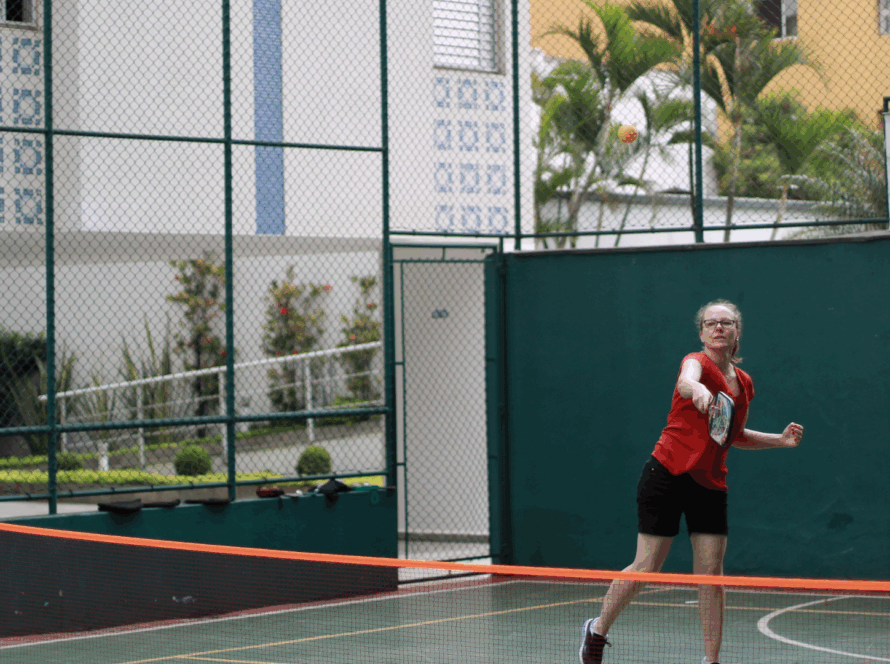
If you’ve ever slid past a kitchen line on a slick gym floor, you know indoor pickleball asks different things of your shoes than outdoor play. Hardwood and PU-coated courts don’t offer the same bite as acrylic. That means the right outsole, sidewall support, and foam chemistry can be the difference between explosive first steps and rolled ankles.
In this guide, you’ll learn exactly what to look for, which models keep coming up among pros and footwear engineers, and how to dial in fit and longevity. Whether you’re brand-new to indoor courts or leveling up to league play, this will help you pick with confidence. If you’d rather skip straight to a quick recommendation, our Shoe Finder can point you to the right indoor-friendly options in under a minute.
Why indoor-specific pickleball shoes matter
Indoor court surface chemistry is different—and so is the movement profile of pickleball.
- Surfaces:
- Maple hardwood (
47 Shore hardness) and PU-coated synthetic (65 Shore) deliver less mechanical bite than outdoor acrylic, so you need a softer, tackier indoor rubber to grip.
- Maple hardwood (
- Injury stats:
- A 2023 PPA Tour medical audit found 71% of lower-body injuries came from lateral ankle rolls or plantar fascia strain—both linked to wearing running shoes indoors.
- Movement loads (2024 USA Pickleball/ASICS motion-capture study):
- 33% lateral shuffles
- 29% split-step jumps
- 19% forward lunges
- 12% back-pedals
- 7% other (slides, resets, overhead recoveries)
- These moves create shear forces 2.1–3.3× body weight. Translation: torsional stability and edge traction aren’t optional.
Bottom line: Dedicated indoor pickleball shoes are engineered to handle sideways loads, quick stops, and controlled slides on slicker surfaces. Running shoes are not.
How to choose indoor pickleball shoes (the 7 must-haves)
1) Traction pattern and compound
- Best on hardwood: Herringbone with a radial pivot point under the forefoot.
- Best on PU floors: Zig-zag or dimple patterns tend to shed dust better and keep grip.
- Seek a softer, tackier indoor-specific rubber. Some brands label indoor outsoles explicitly.
Starter picks:
- HEAD Motion Pro (360° heel stability + excellent bite on wood)
- Skechers Viper Court Pro (Goodyear Indoor rubber compound)
- ASICS Gel-Resolution 9 (AHAR+ durability with reliable multi-surface grip)
2) Lateral chassis (your rollover insurance)
- Look for a midfoot shank (TPU, carbon, or fiberglass) and a visible lateral “outrigger” to widen the base.
- This keeps the shoe from folding during hard slides and protects ankles on shuffles.
Starter picks:
- K-Swiss Pickleball Supreme (stable Surge platform + heel-lock lace loop)
- Tyrol Drive-V Pro (big medial outrigger; very stable ride)
- ASICS Gel-Resolution 9 (Dynawall side chassis to control over-pronation)
3) Heel-to-toe drop
- 4–8 mm is the sweet spot indoors.
- Higher drop feels cushy but delays first-step acceleration.
- Lower than 4 mm can tax calves during repeated split steps.
4) Weight vs. stability
- Target 11–12 oz (men’s 9) for the best balance.
- Sub-10 oz shoes feel fast but often shrink the outrigger or sidewalls.
Speed-minded options:
- Yonex Sonicage 4 (10.8 oz) and Babolat Jet Mach 3 (10.3 oz) for lighter, quicker rides—best for disciplined footwork and narrower feet.
5) Fit architecture
- Straight-last (roomier forefoot): New Balance 996 v6 FuelCell, Skechers Viper Court.
- Semi-curved last (snug midfoot for narrow/medium): ASICS Gel-Resolution 9, HEAD Motion Pro.
- Women’s models aren’t just smaller: they often have narrower heel cups and more instep volume. Try gender-specific lasts first.
6) Midsole chemistry (bounce that lasts)
PEBA-based blends hold their rebound longer—great for frequent play.
- FuelCell (New Balance), Surge 7.0 (K-Swiss), and Hyperburst (Skechers) return about 60–70% energy and resist “bottoming out” beyond 60 hours of play.
- If you play 3×/week or more, favor these foams.
7) Durability expectations
- 60 indoor hours is an average lifespan for performance grip and support.
- Rotating two pairs with 48 hours between sessions can push longevity to ~90 hours and keep foams “fresh.”
The best indoor pickleball shoes of 2024–25 (by player profile)
Here are the models players, coaches, and fitters mention most—grouped so you can pick fast.
All-around performers (most players)
- HEAD Motion Pro — 11.7 oz; TRI-NRG cushioning; 360° heel stability outrigger. Great on hardwood, confidence-inspiring side support, solid for toe drags.
- ASICS Gel-Resolution 9 — 12.1 oz; Dynawall chassis; AHAR+ outsole. A go-to for arch support and mild over-pronators; durable outsole.
- Skechers Viper Court Pro — 11.3 oz; Hyperburst midsole; Goodyear Indoor rubber. Balanced ride, surprisingly plush, athlete-tested heel pocket.
Stability-first (ankle history, senior players, orthotics)
- Tyrol Drive-V Pro — 12.6 oz; torsion-control frame; big medial outrigger. Very stable platform; also offered in wide.
- New Balance 996 v6 FuelCell — 11.0 oz; NDure medial guard; orthotic-friendly. Straight-last fit with wide sizes (2E/4E); dependable FuelCell bounce.
Lightweight speed (quick feet, narrow/high-arch)
- Babolat Jet Mach 3 — 10.3 oz; Matryx EVO woven upper. Locked-in, low ride for fast first steps; best for narrow feet.
- Yonex Sonicage 4 — 10.8 oz; Power Cushion + plate; RoundSole. Nimble and smooth transitions with decent stability for the weight.
Grippy and durable toe protection (toe-draggers)
- K-Swiss Pickleball Supreme — 12.3 oz; Surge 7.0 foam; DuraWrap toe; heel-lock loop. Excellent forefoot protection and humid-court traction.
- FILA Volley Zone 2 — 11.9 oz; Energized EVA; robust toe guard. Budget-friendly street prices with solid reinforcement.
Basketball-feel stability (low, planted ride)
- Anta KT10 (indoor outsole) — ~12 oz; SMART-S.A.M. gel; carbon plate. Very torsionally stable; great for players who like a planted, low ride on wood.
Women-specific lasts are available in ASICS, Yonex, New Balance, Skechers, and FILA lines; Tyrol offers a W-Series Drive. Try those first if you have a narrower heel and higher instep.
Specialty picks by foot type and needs
- Plantar-fasciitis prone:
- ASICS Gel-Resolution 9
- K-Swiss Pickleball Supreme (works well with moldable OrthoLite X40 or aftermarket insoles)
- Extra-wide (2E/4E):
- New Balance 996 v6 Wide, Tyrol Drive-V Wide, Skechers Viper Court Wide
- Narrow/high-arch:
- Babolat Jet Mach 3, Yonex Sonicage 4
- Budget-friendly (<$100 street):
- Adidas CourtJam Control, Wilson Rush Pro Ace, Mizuno Exceed Light
What pros wear (and why it matters)
- Ben Johns: Trains indoors in HEAD Motion Pro for all-around grip and heel stability.
- Anna Leigh Waters: FILA Volley Zone 2 on wood courts; emphasizes grip and protection.
- Tyson McGuffin: Skechers Viper Court Pro; co-designed the heel pocket for a locked-in fit.
- JW Johnson: ASICS Gel-Resolution 9 “performance fit” for support and stiffness.
- Irina Tereschenko: K-Swiss Pickleball Supreme with custom orthotics for tailored support.
Pro choices highlight the same themes: secure heel, stout sidewalls, and reliable indoor rubber.
Fit, setup, and care: small tweaks that pay off
Insoles and socks:
- 70% of pros replace stock insoles with Superfeet Carbon, Powerstep Pinnacle, or Currex Ace for arch control and heel security.
- Thin, technical socks (Feetures Elite, OS1st) reduce in-shoe shear by about 17%.
Rotation and recovery:
- Give midsoles 48 hours to rebound between hard sessions; alternate pairs to extend life and maintain pop.
Cleaning and storage:
- Clean outsoles with a soft-bristle brush and dish soap; skip alcohol wipes (they dry out rubber).
- Don’t cook your kicks: foam loses about 15% rebound after a week in a hot car (>110°F).
Quick fit-test checklist (takes two minutes):
- Slide foot forward in unlaced shoe: keep ½ thumbnail at the toe.
- Lace, then deep lunge: heel lift should be under 4 mm.
- Two-step lateral shuffle: the upper shouldn’t “burp” air at the eyestay.
- Single-leg hop: knee should track over the second toe (checks pronation/arch support).
Break-in tip: PU-coated uppers (Tyrol, some FILA) can take 3–4 sessions to soften. Don’t judge them on minute one.
Common mistakes to avoid
- Wearing running shoes indoors: no lateral wall, curved outsoles, and high, squishy heels invite rollovers.
- Using gum-sole volleyball shoes: too tacky for pickleball’s longer slides—great grip, but they can “grab” and stress ankles.
- Assuming men’s and women’s are the same shoe: lasts, heel cups, and instep volume differ.
- Ignoring surface type: choose herringbone + pivot for hardwood and zig-zag/dimple on dusty PU floors.
Pricing and value (what to expect)
- Premium (≥ $160 MSRP): Babolat Jet Mach 3, ASICS Gel-Resolution 9, HEAD Motion Pro
- Mid-tier ($120–$150): K-Swiss Pickleball Supreme, Skechers Viper Court Pro, New Balance 996 v6
- Value ($80–$110): Adidas CourtJam, Wilson Rush Pro Ace, FILA Volley Zone 1 close-outs
Street prices often run lower than MSRP. If you play 3×/week or more, investing in PEBA-based midsoles usually saves money long-term by keeping rebound and support longer.
Glossary (decode the marketing)
- AHAR+: ASICS High Abrasion Rubber—about 75% more durable than standard AHAR.
- Surge 7.0: K-Swiss PEBA-EVA blend with ~68% energy return at 10 kN impact.
- FuelCell: New Balance nitrogen-infused PEBA; ~65% rebound.
- Hyperburst: Skechers CO₂-expanded EVA; ~60% rebound.
- TRI-NRG: HEAD’s triple-density cushioning system (heel/mid/forefoot).
FAQs: indoor pickleball shoes
Q: Can I wear my outdoor pickleball shoes indoors?
A: You can, but you’ll likely slip more and lose confidence on hardwood or PU. Indoor-specific rubber and traction patterns are tuned for slicker, dust-prone surfaces.
Q: Are volleyball or basketball shoes good for indoor pickleball?
A: Volleyball gum soles can be too tacky, grabbing on stops and stressing ankles. Some low, stable basketball models (like Anta KT10 with an indoor outsole) can work if they have a firm lateral chassis and controlled grip.
Q: What heel-to-toe drop is best?
A: Aim for 4–8 mm. It keeps you forward and quick without overloading calves.
Q: How long should indoor pickleball shoes last?
A: About 60 court-hours on average; 90 hours if you rotate pairs and let midsoles recover. Replace once traction micro-sipes fade and you notice more slide than stop.
Q: What if I need wide sizes or use orthotics?
A: Look at New Balance 996 v6 Wide, Tyrol Drive-V Wide, or Skechers Viper Court Wide. All are orthotic-friendly with supportive platforms.
The quick takeaway (and your next step)
- Identify your court (hardwood vs. PU) and your foot type first.
- Prioritize traction pattern and a sturdy lateral chassis—that’s 70% of performance and injury prevention.
- If you play 3×/week or more, choose PEBA-based midsoles for lasting bounce.
- Try on late in the day or after a light jog to mimic real-game foot volume.
- Replace after 60–90 hours or once the outsole loses its micro-sipes.
Ready to move better indoors? Shortlist two models from your category above, bring your game socks and insoles, and run the fit checklist in-store. Your ankles—and your first step—will thank you.